
Export woes cloud Thai outlook: MPC


Play
Shipment growth target this year cut to 4.4% on weakening global demand, stronger baht
The inflation report released by the Bank of Thailand’s Monetary Policy Committee (MPC) at its October 17 meeting confirmed that harder times lie ahead for the Thai economy – particularly the export sector, which is under pressure from weakening demand and potential spikes in the baht.
The central bank in effect slashed the 2012 export-growth target from 7 per cent to 4.4 per cent. Though robust domestic demand should help gross domestic product achieve growth of 5.7 per cent this year, the BOT – which lowered its 2013 export target from 10.8 per cent to 9 per cent – projects GDP growth next year at 4.6 per cent, down from the previous forecast of 5 per cent.
After the MPC’s surprise policy-rate cut by 25 basis points on October 17, further cuts are anticipated on the back of easing inflation pressure.
Lower rates would in effect slow down capital inflows, which are currently at full stream after quantitative-easing polices in major economies. Excess liquidity is now running to countries that offer higher interest rates than host countries, predominantly in Asia. International investors purchased nearly US$500 million (Bt15.4 billion) more in sovereign securities than they sold this week through yesterday, according to data from the Thai Bond Market Association.
According to the BOT, the Thai currency rose 0.32 per cent against the weighted-average US dollar from end-September to 30.722 yesterday. The stronger baht will hurt the competitiveness of Thai exporters, which contribute an aggregate 70 per cent of GDP. In the first nine months of this year, exports declined 1.13 per cent from the same period last year.
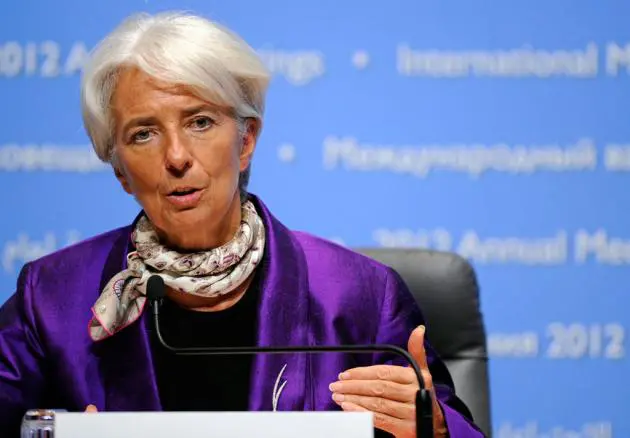
In Tokyo this month, managing director Christine Lagarde of the International Monetary Fund (IMF) said: “Accommodative monetary policies in many advanced economies are likely to spur large and volatile capital flows to emerging economies. This could strain the capacity of these economies to absorb the potentially large flows and could lead to overheating, asset-price bubbles and the build-up of financial imbalances.”
Heavy capital inflows to Asia notably preceded the bubbles that led to the 1997 financial crisis. Kasikornbank president Banthoon Lamsam, however, remains optimistic that the situation now is different.
“We need to be on alert. Stocks may rise, but will we be infatuated by this? Unlike in the past, commercial banks are not lending for speculative purposes. They are sufficiently disciplined and well regulated. Lending for speculative purposes is not as easy as in 1997. Without loans to fuel speculation in the stock market or property, bubbles won’t happen,” he said yesterday.
Greater impacts on the export sector and fears of bubbles seem to have motivated the MPC’s surprise cut in the policy rate last week. The lower rate is not expected to spur lending growth, but is seen as likely to slow down capital inflows that have increased as a result of quantitative easing in developed economies.
The rate cut also took place before the Hong Kong dollar came under attack as foreign investors fled advanced economies to Asia, seeking higher returns.
This week, the Hong Kong Monetary Authority intervened in the market several times, costing it more than US$1.8 billion. The interventions marked the first time the de facto central bank has intervened in the currency market in three years. More intervention is expected, as the Hong Kong dollar has been pegged to the US dollar for 29 years. Whenever the greenback hits either end of the HK$7.75-$7.85 band, interventions are deemed necessary.
In the latest inflation report, the MPC said overall strength in domestic demand would sustain growth this year, but added: “Thailand’s growth momentum is poised to soften for the rest of this year, with exports suffering from weak global demand more than expected.”
The impact of the weakness in global demand on exports has become more evident. Manufacturing exports have been hit the hardest, especially electronic products and electrical appliances, for which foreign orders have started to decline.
Additionally, agricultural exports are likely to continue to contract, partly because of the increase in rice prices due to the government’s rice-pledging scheme.
In the coming period, the MPC expects the export weakness to have a more visible impact on production, sentiment and private spending. On the other hand, a decline in imports appears to involve mainly raw materials, intermediate goods and capital goods, reflecting the dissipating investment in post-flood reconstruction.
External risks
The global economy, given its weak prospects and uncertainty, continues to be the major risk to the Thai economy, the MPC said. Growth momentum in the euro zone and the United States remains weak and recovery is poised to take time, while the impact of sluggish global demand on Asian economies is likely to be greater than assessed. Despite some positive impact on near-term sentiment, recent monetary-policy easing in Europe and the US is unlikely to change the deteriorated global growth outlook.
Additional risks from domestic factors, though not as important as those on the external front, arise from uncertainty regarding the government’s spending on long-term water-management and infrastructure projects, according to the committee. The imbalances will continue and emerging markets including Thailand will have to suffer the results, it said.
IMF chief Lagarde, in her address to the Canadian International Council in Toronto on Thursday, noted that the problems would remain in the absence of global action to solve problems in the global financial system, which is “the source of the crisis”.
She noted that commitment and actions were necessary “because, to date, policies in the major advanced economies have not been sufficient to rebuild confidence, and the world’s financial system is still not functioning well”.
“For now, though, the financial sector – the source of this crisis – is holding down the recovery in key parts of the global economy. Considering the staggering economic and human costs over the past six years, we must do whatever it takes to make sure this does not happen again,” she said.
Signs of weakening
The Bank of Thailand has revised downwards several key economic forecasts, reflecting the worsening global outlook. (Previous forecasts are shown in parentheses.)
Item 2012 (%) 2013 (%)
Export growth 4.4 (7) 9 (10.8)
GDP 5.7 (unchanged) 4.6 (5)
Headline inflation 3 (2.9) 2.8 (3.4)
Core inflation 2.1 (2.2) 1.7 (1.9)
Source: The Nation
