
All eyes on ABE after Japan poll triumph


Full alert on expanded monetary and fiscal moves from new government
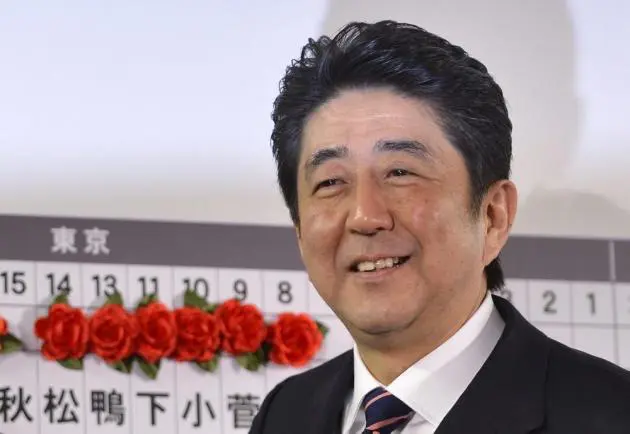
The Bank of Thailand, the Commerce Ministry and exporters are on alert over Japan’s economic policies, following the return to power of Shinzo Abe’s Liberal Democratic Party with a mandate to act on pledges of expanded fiscal and monetary stimulus.
Abe, expected to be the next prime minister, vowed in his successful election campaign to let inflation rise as high as 3 per cent in order to overcome spiralling deflation-stagflation, a situation in which consumers avoid spending on expectation of further falling prices.
It remains to be seen what policies Japan will introduce, Bank of Thailand Governor Prasarn Trairatvorakul said yesterday. If printing money is the chosen option, it would flood the global market with more liquidity, which would affect exchange rates of other countries.
“With greater liquidity, money will find the places to go. This could lead to volatility in stock markets and land prices. If the inflows cannot be balanced with outflows, the exchange rate could be affected. This is what we have to monitor,” he said, adding that whatever policies were launched, they would affect Thailand as Japan is one of the Kingdom’s major trade partners.
Abe has described Japan as being “in a critical situation” in terms of its economy, education and the recovery of areas struck by last year’s devastating earthquake and tsunami.
“We need to get out of it,” he said, acknowledging that his party had won Sunday’s vote by a bigger margin than predicted.
Japan is now Thailand’s second-largest export destination, accounting for 10.3 per cent of Thai shipments. Exports to Japan came in at Bt612 billion over the first 10 months of the year.
Paiboon Ponsuwanna, chairman of the Thai National Shippers’ Council, is worried about the potential negative impact of the election outcome. “Thai exporters will certainly be affected if there are policies to weaken the yen. Depreciation would make Thai exports to the country more expensive,” he said.
Yet, he acknowledged that sectors reliant on imports would benefit from a weakening of the yen, as Japanese goods and raw materials would be cheaper.
Japan is Thailand’s largest source of imports, with Bt1.28 trillion of shipments - 19.8 per cent of import value in the first 10 months of 2012.
Commerce Minister Boonsong Teriyapirom said the government would closely monitor policies under Abe’s administration, in order to draw up appropriate measures to promote trade with Japan. He expects the Liberal Democratic Party to come up with similar policies to those in place before it lost power three years ago, however.
According to the Commerce Ministry’s target, Thai shipments to Japan are projected to grow by 5 per cent next year to US$24.5 billion (Bt750 billion). Exports to Japan declined by 3.3 per cent to $19.7 billion during the first 10 months of this year.
With the Liberal Democratic Party victory, the yen yesterday fell to its weakest level since April 2011 versus the US dollar and the euro, in line with Abe’s promises to weaken the currency through more central-bank easing in order to revive the ailing economy.
Japanese stocks closed 0.94 per cent higher yesterday, at 9,828.88 points.
The election result means “the monetary policy which Abe has been advocating will become a real possibility”, said Yuji Saito, director of the foreign-exchange department in Tokyo at Credit Agricole. “The market may try to weaken the yen beyond the psychological level of 85 per dollar.”
The yen declined to as low as 84.48 per dollar yesterday, the weakest level since April 12 last year. The unit also fell 0.4 per cent to 110.38 per euro, after touching 111.32, the weakest since March 21 this year.
“This is going to have a tremendous impact on the fortunes of Japanese exporters and the economy,” Ed Rogers, chief executive officer at Tokyo-based Rogers Investment Advisors, said in a Bloomberg Television interview. “The moves in the dollar-yen indicate that the world at large believes that we’re starting on the path to reflation.”
The yen has strengthened sharply against the greenback, resulting in lower competitiveness. For instance, before the 2008 financial crisis, the unit was moving 10 times lower than South Korean won, at 1,000 won per 100 yen. Yet, after the
crisis, the gap narrowed to 1,000:70, making Japanese goods more expensive than Korean ones.
“Japanese exporters have been affected by the strong yen. As such, a weakening yen would benefit the Japanese economy, allowing the resurrection of the export sector. Given the close relations of the Asian economy and Japan, Japan’s regained economic strength should benefit regional trade and investment,” Chantavarn said.
She said printing money might not help, if there were no demand to spend. “It needs a rethink. In increasing money supply when demand is low, the extra money would go nowhere. The problem in Japan is that demand is low. Without demand, people don’t spend. Without confidence, people will refrain from buying houses or cars,” she added.
Teerana Bhongmakapat, professor of economics at Chulalongkorn, said high inflation might not lead to more spending by Japanese consumers, despite what Nobel laureate Paul Krugman believes. Krugman has advocated that the Bank of Japan and other central banks in advanced states suffering economic woes should have moderate inflation in order to force consumers to spend. He and other economists argue that when consumers are expecting a future rise in the price of goods, they decide to spend now rather than later. “In theory, Krugman is right, but the Japanese may think differently from the Americans. They may continue to save more when the yen weakens,” he said.
