
Stocks, costs under watch
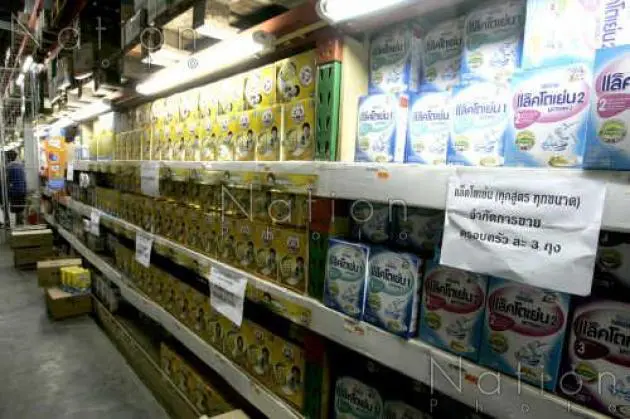


Business operators foresee an increase in goods prices despite the Internal Trade Department's insistence that prices should be left as they are for at least three months after the nationwide increase in the minimum wage.
The department said yesterday that most consumer-goods prices should not need to be increased for at least three months after the wage increase, as producers would generally have enough stock from last year to cover the period. After that, the agency will continue to monitor closely the stocks of goods and companies’ production costs, with price increases only deemed reasonable if they have a small effect on end users.
The minimum daily wage of Bt300 went into effect nationwide on January 1. If companies increase prices without clear justification for doing so, the Commerce Ministry will include the product or service in question in its price-control list.
As a priority, the department is considering adding palm fruit and car-care services to the control list, the latter to ensure fair practice for consumers amid high demand after the successful first-car-buyer scheme.
A study by the department showed that goods prices would likely be increased as a result of the minimum-wage hike by no more than around 30-80 satang per unit.
Higher labour and transport costs will affect prices by 0.35-0.8 per cent per item, depending on weight, while vegetable prices will be hit the hardest because of higher wages in the transport sector, it found.
Wiboonlasana Ruamraksa, director-general of the Internal Trade Department, said the rise in the daily minimum wage to Bt300 should result in manageable cost increases for most goods producers.
“Goods prices should not be changed for at least three months, since producers will have stocks from last year. The wage increase will only have a small impact on producers and retailers,” she said.
She explained that most food and consumer-goods manufacturing plants were in Bangkok and nearby provinces, which had already adjusted to the wage-rise policy as it was implemented in six provinces last April.
COMPETITIVE RETAIL MARKET
Moreover, the department said that with a highly competitive retail market, consumers should not be hit hard by rising production costs as companies would need to maintain their retail prices to ensure competitiveness and maintain market share.
The department’s study also found that producers of garments, leather goods and furniture, as well as small and medium-sized enterprises, would be affected the most by the minimum-wage increase, and that retail prices in these labour-intensive sectors could rise by 2-6 per cent.
Wiboonlasana said that although clothing prices could be hit hard by the rising cost of labour, fashionable goods were beyond the control of her department.
The agency will, however, closely monitor the prices of student uniforms as the new school term approaches, she said.
Moreover, fast-food prices should be increased by no more than Bt1 per dish, she added.
Rising fuel-tariff costs and cooking-gas prices, meanwhile, should affect goods prices by only 4 satang per unit.
Under the plan to increase the price of cooking gas by 50 satang per month, the cost of a 15-kilogram canister will rise by Bt7.50. The knock-on effect on the price of cooking food will be by only Bt0.025 per dish, said the department head.
To relieve the impact of the minimum-wage increase on consumers, the agency will send its mobile Blue Flag shops, which sell cheap consumer goods and foods, to communities and industrial estates around the country.
The first mobile unit will be sent out on Friday, after which about 10 units will be despatched to targeted locations per day, Wiboonlasana said.
Milin Veeraratanaroj, deputy managing director of Tang Ngee Soon Superstore in Udon Thani, said the Bt300 minimum wage and the increase in electricity charges would result in a rise in consumer-product prices in February or March.
“We have seen a signal of price adjustments since the end of last year as suppliers have cut their budgets for trade promotions by 2-3 per cent,” Milin said.
Prices have increased gradually on many products. Dish-washing liquid, while sold in smaller sizes – 600cc and 550cc, down from 700cc – has gone up from Bt16-Bt17 to Bt26. The price of a 325ml can of carbonated drink has risen from Bt12 to Bt15, while three-in-one instant coffee has gone from Bt85 for a pack of 30 sachets to Bt95 for a pack of 27.
Milin said prospects were not good for the retail market this year as a result of the government’s first-car scheme. Most of the people who took advantage of that tax-rebate programme were middle-class, and they would now carry the burden of making payments on their cars and the cost of fuel. This will result in less spending cut on personal and household products.
Thai Preeda Industry vice president Veerapong Lourvanij said the higher minimum wage had raised the cost of producing its fish sauces by 15-20 per cent, as the company had to raise wages from Bt260-Bt280 a day to Bt300. Labour accounts for about 20 per cent of the total production cost for its fish sauces.
However, the company has no plan to reduce staff, 50 per cent of whom are full-time, but to encourage skilled workers to increase their productivity and reduce waste during the production process.
