
Cyprus wins eurozone backing


Play
Brussels - Cyprus on Monday hammered out a new bailout deal with its international creditors, casting aside a despised bank depositor tax in favour of forced losses on large players in its two biggest lenders.
The agreement came hours before the European Central Bank had beenexpected to cut off emergency funding to the Cypriot banking sector in the absence of a deal.
"I'm happy because we shall have a (bailout) programme and that it is to the best interests of the Cyprus people and the European Unionas a whole," said Cypriot President Nicos Anastasiades, who thrashedout the agreement after more than 10 hours of talks in Brussels.
Eurozone finance ministers, who had also gathered in the Belgian capital, then promptly gave their blessing to the bailout while the chief of the International Monetary Fund (IMF) said she would recommend her institution participate financially too.
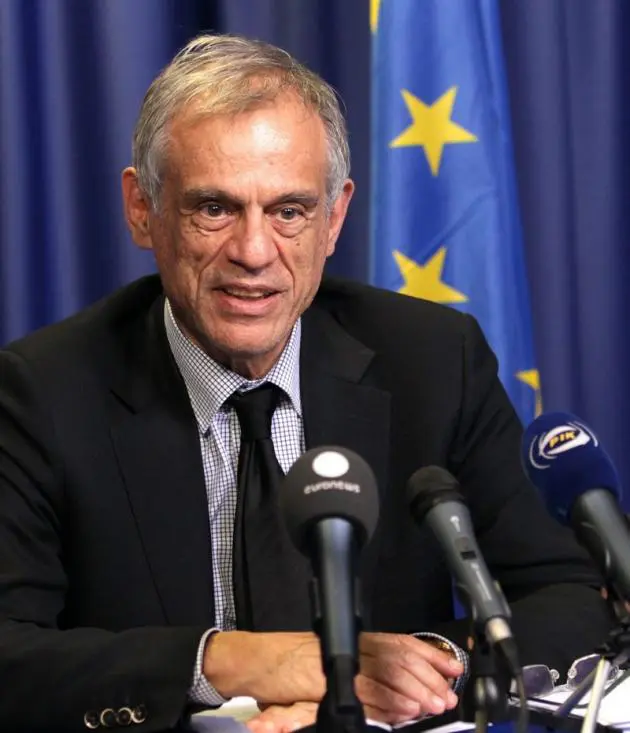
"I believe we have averted literally the possibility of bankruptcyand we have ensured the prospects of generations to come," Cypriot Finance Minister Michael Sarris said. "It's a good night for Cyprus and the eurozone." "We've put an end to the uncertainty that has affected Cyprus and the euro area over the last few days," said the president of the ministers' Eurogroup panel, Jeroen Dijsselbloem. "I'm convinced that this solution is better than the one we reached last week." The Cypriot parliament rejected that agreement amid widespread anger in the Mediterranean island nation over a provision that bank depositors big and small would have to contribute through a one-time tax.
The levy was meant to make up the difference between the10-billion-euro (13-billion-dollar) bailout and the needs of Cyprus for shoring up its troubled banking sector and struggling economy, estimated at about 17 billion euros.
Instead, the rescue package now foresees that losses would be forced on holders of shares, bonds and deposits above 100,000 euros in the country's largest and second-largest banks.
The latter, Laiki Bank, is to be wound down "immediately" and split into a "good bank" with viable assets and a "bad bank" with assets to be run down, the Eurogroup said.
The good bank would be incorporated into the larger lender, the Bank of Cyprus, which would have to assume not only Laiki's healthy assets but also its about 9 billion euros in European Central Bank emergency loans, a measure that Anastasiades was said to have vigorously opposed.
Shareholders, bondholders and depositors in Laiki would take the biggest hit but it was also "inevitable" that those in the Bank of Cyprus will be affected too as part of the lender's recapitalisation, Dijsselbloem said.
He said the approach had been considered before but had not proven politically acceptable until the situation in the Cypriot banking sector "deteriorated fast" over the past week.
The island's banks have foundered with their heavy exposure to Greek debt, and the extent of their losses still has to be determined, Dijsselbloem said.
According to Dijsselbloem, the losses to be forced upon high-end Laiki depositors, termed a bail-in, would be worth 4.2 billion euros alone. Big depositors in Cyprus include many major companies and foreign investors, notably from Russia.
"It would be unrealistic to claim that we will not sustain substantial losses," Cypriot Finance Minister Michalis Sarris said in Brussels.
