
Good news pulls SET out of doldrums


Play
No property price controls, Japan move welcomed
Thai shares and property prices are set for further advances, on a series of positive news that includes the absence of property-price controls here and the Bank of Japan’s monetary-easing policy, stock analysts say.
The National Anti-Corruption Commission yesterday also ruled that Prime Minister Yingluck Shinawatra made no attempt to conceal assets through the conflicting reports of her Bt30-million loan to her commonlaw husband.
Somboon Chitphentom, Bank of Thailand senior director for the Prudential Policy Department, said yesterday that the central bank saw no need to launch any additional measures to control property loans.
According to February’s BOT economic and finance report, the number of new residential units totalled 8,833 in February in Bangkok and its vicinity, up 99.9 per cent from the previous month. Most of the rise was in condominiums, totalling 8,383, up 124.9 per cent from January.
The central bank said in the report that both supply and demand for condominiums rose partly because of supportive financial conditions. However, the BOT is closely monitoring the property market for prudent policy decision-making, Somboon said.
Outstanding mortgage loans at the end of 2012 stood at Bt1.3 trillion, up 11.7 per cent from the previous year. Of total, mortgage loans for condominium purchase rose 24.4 per cent on year to Bt150 billion. Outstanding loans for single-house purchases advanced 10.3 per cent on year to Bt1 trillion. The rest was for other types of property.
The stock market in the past week was reeling on anticipation of additional controls like those imposed in Hong Kong, Singapore and mainland China.
Fund inflows to Asia are boosting asset prices in those economies as investors’ appetite for high-risk, high-return assets creeps up.
The average price of condominiums in Bangkok’s Sukhumvit area has nearly doubled from Bt80,000 per square metre two years ago to Bt150,000, according to a survey by The Nation.
Flowing first to the bond market, more funds are expected to be relocated to the Stock Exchange of Thailand this year.
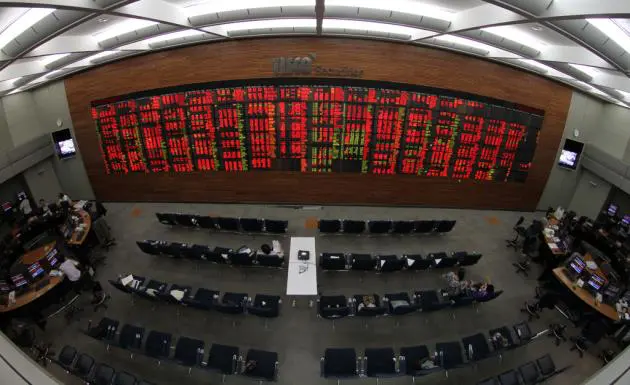
Thanks to the absence of new price-control measures and the end of the case against Yingluck, the SET Index yesterday staged a strong rebound, gaining 7.94 points or 0.52 per cent on turnover of Bt60 billion after plunging as deep as 40 points in the morning.
Boosting the sentiment was the Bank of Japan’s more aggressive monetary easing, to double the money supply and achieve a 2-per-cent inflation target at the “earliest possible time, with a time horizon of about two years”.
Benjarong Suwankiri, economist of TMB Bank, commented that the policy overhaul is more intense than expected. He foresees the weakening the Japanese yen against the greenback. This will benefit Thai industries which import machinery from Japan, particularly the automotive industry.
The Bank of Japan is joining the US Federal Reserve and other major central banks in soaking the economy in money. Chasing for higher returns out of the country, some excess liquidity is flowing to higher-growth economies like Thailand.
In the first quarter of this year, the SET Index increased about 10 per cent, while jumping by more than 30 per cent last year.
Kongkiat Opaswongkarn, chief executive officer at Asia Plus Securities, said corrections would be normal after those sharp increases. In the long term, he remains positive on the SET’s outlook.
Investors appear to be more bullish in equities than in gold, leading to a recent slump in gold prices to near US$1,500 per ounce.
Jitti Tangsitpakdi, president of the Gold Traders’ Association of Thailand, warned investors not to speculate on gold in the next few days as the price could drop below $1,500 an ounce on profit-taking.
