
PTT to revise investment plan


Play
Giant goes for Fortune's top 500 list in 5 years
PTT plans to focus on long-term investments overseas while mergers will result in only three core businesses, generating Bt4 trillion to Bt5 trillion revenue per year and pushing the energy company into Fortune’s top 50 list within five years.
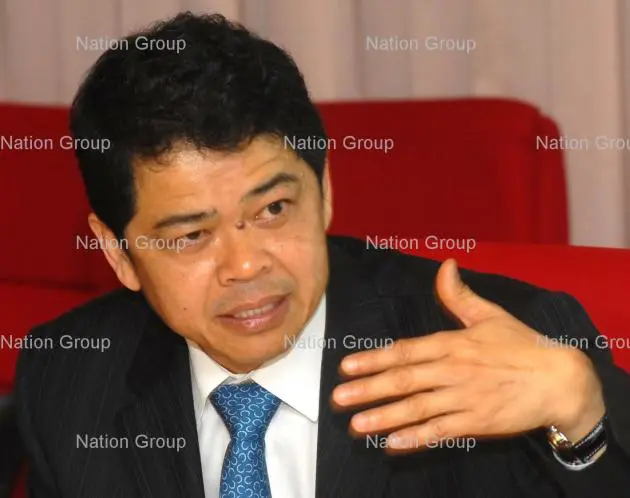
PTT’s board of directors plans to revise the company’s five-year investment plan next month, reviewing the short-, medium- and long-term factors that are relevant to energy utilisation and investments of the PTT group of companies. Despite some reduction in planned investment figures earlier this year, they will not change significantly during the August revision, said PTT director Prasert Bunsumpan, who is also chairman of PTT Global Chemical.
Earlier, PTT notified the Stock Exchange of Thailand about changes to its short-term investment plans to reflect the changed global economic environment. The group’s board of directors lowered its 2013 investment plan to Bt52.62 billion from Bt98.84 billion, mostly pertaining to overseas investments for which project details were not yet specified.
Prasert said PTT would not allow factors affecting investments in the short term to divert the course of the company’s long-term plans. For the long term, PTT must seek new energy sources overseas to ensure the company’s continuing growth, as local energy sources are limited and declining.
More than 50 per cent of PTT’s future (five to 10 years) investments will be overseas. The United States, which typically is one of the leading importers of energy, will become a supplier after the major discovery of abundant gas and oil in shale deposits. PTT will explore the potential investment opportunities provided by this development in the US.
PTT has jumped 14 notches from 95th to 81st in Fortune magazine’s list of the world’s top 500 corporations for 2013. It hopes to be in Fortune’s top 50 within five years if it can generate Bt4 trillion to Bt5 trillion in revenue per year. Last year, it posted Bt3 trillion in revenue and underwent some management restructuring to prepare for increased overseas investment activities.
Through mergers, PTT plans to operate only three core businesses – petroleum exploration and production, chemicals, and oil refining through Thai Oil/IRPC. Future merging of PTT Exploration and Production and PTTGC is possible, as the group’s focus is on the petrochemical business, Prasert said.
As for PTTGC investments in Asean countries, the priority is Indonesia, followed by Malaysia, China and Myanmar – whose basic infrastructure still lags behind other nations in this region, Prasert added.
According to PTT’s chief financial officer, Surong Bulakul, future overseas investments will focus on countries with abundant low-cost supplies of raw materials. Investments in those countries will be in the form of joint ventures with the owners of technology and of raw-material sources. PTT has strong financial potential to invest in many future projects as its debt-to-equity ratio is about 0.4:1.
PTTGC chief executive officer Anond Sirisaengtaksin said yesterday that subsidiary PTT Phenol Co had signed a contract for a Bt7-billion loan from a group of major local commercial banks to fund the second-phase construction of a phenol plant that has been in commercial operation since 2009. The construction will require investment of about Bt10.5 billion, Bt7 billion to be funded by bank loans and the remaining Bt3.5 billion by shareholders. Signing the contract were Krungthai Bank, Siam Commercial Bank, Bangkok Bank, Thai Military Bank and Government Savings Bank.
The second-phase phenol plant in Hemaraj East Industrial Estate in Map Ta Phut district of Rayong province is meant to expand production capacity to meet rising local and Asean demand. It is to commence operations by 2015.
