
Envoy notes strong ties between Brazil, Thailand


Play
More visits between the two peoples, rise in business cooperation urged
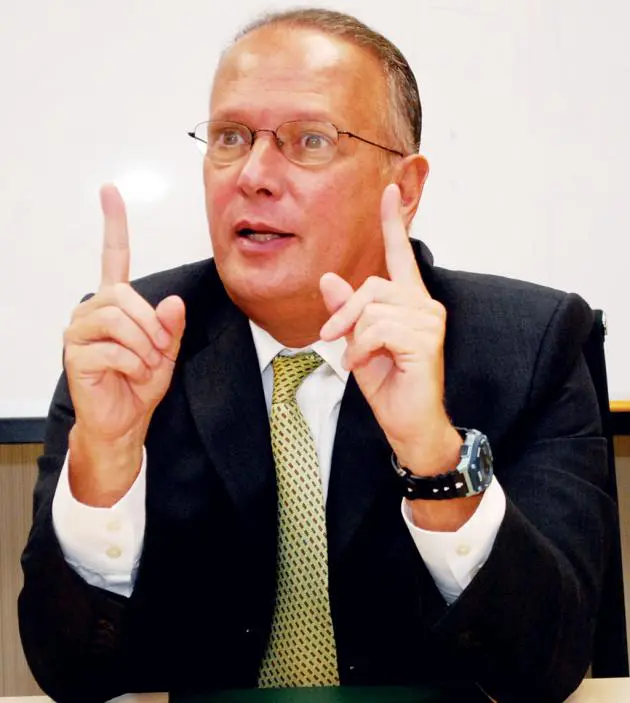
Brazilian Ambassador to Thailand Paulo Vasconcellos says: “We are a key member of the BRIC grouping [which also includes Russia, India and China] and [Group of 20], and recently, a Brazilian has been named the new director-general of the World Trade Organisation, supported by Thailand and other Asean countries.
“His platform is to revive the Doha Round of multilateral negotiations to liberalise global trade.
“These days there are many bilateral FTAs [free-trade agreements] among trading nations just like spaghetti noodles. In the future, we may have serious problems in synchronising the tariffs.
To achieve sustainability, we need an international body like the WTO to manage the global system and prevent conflicts among trading nations, which will result from the many FTAs already in place.
“Thailand and Brazil established diplomatic relations in 1959. People of the two countries have a very good image of the other country, but they know very little about one another.
“[When] people in Brazil talk about Thailand they imagine Thai people riding elephants, and when we talk about Brazil here Thai people just think of football, but there is much more.
“It’s very important that people in both countries learn about bilateral trade and investment. Last year, bilateral trade totalled US$4.7 billion [Bt146 billion], which is much more than the bilateral trade between Brazil and its neighbours such as Columbia or Uruguay.
“Thai businessmen should go to Brazil more often and vice versa to learn about the business opportunities. A month ago, three Brazilian firms took part in an agricultural and food products fair in Bangkok. We would like to bring more Brazilian firms to Thailand next time.
“Major Brazilian exports to Thailand are soybean, which accounts for over 50 per cent of our shipments to Thailand.
“ Other items include iron and steel products (11 per cent), auto parts (10.25 per cent), [and] medicine, fine chemicals and rare minerals (4 per cent).
“For Thailand, auto parts account for more than 40 per cent of the total shipments to Brazil, followed by tyres and rubber products, electronics, textile and artificial fibre. In terms of investment, there are only a few investors such as a farm-equipment factory in Thailand and a hard-disk factory in Brazil.
“In tourism, about 30,000 Brazilians visited Thailand last year and 17,000 were already here in the first six months of this year, growing at a rate of 20 per cent. However, only 5,000 Thais visited Brazil.
“Thailand and Brazil have a lot in common such as the same level of development [and] similar climate, so we can cooperate and share each other’s lessons. Our experience in ethanol dates back 40 years, for example, and we’re now one of the biggest ethanol producers, especially from sugar cane.
“Thailand now produces ethanol from both tapioca and sugar cane, so we can offer expertise in terms of using sugar cane as the raw material. We are the world’s biggest producer of sugar cane, while Thailand is the second-biggest.
“Sugar cane is much better for ethanol for automobiles. In Brazil, vehicles can use three flexible fuels, namely gasoline, natural gas and ethanol, depending on the price of each fuel, and they can mix together.
“The ethanol price may vary according to the harvest, so motorists can adjust their fuel use. The market has required auto-makers to produce automobiles which can use all three fuels.
“PTT also has sent two delegations to Brazil to explore investment opportunities in the energy sector, as we are a big producer of oil and there are projects to extract oil from deep underground layers which needs expertise.
“In agriculture, we work together in rice production, research, sugar cane, cotton, fruit and other farm products due to similar climatic conditions.”
