
Egat mulls sale of planned plant to infrastructure fund


Play
Move part of energy giant's plan to invest Bt303 billion until 2017
The Electricity Generating Authority of Thailand (Egat) might raise Bt2 billion via an infrastructure fund as part of its plan to invest Bt303.18 billion until 2017 in the establishment of power plants and the improvement of the national grid.
Egat Governor Soonchai Kumnoonsate said yesterday that the planned 900-megawatt Unit 2 of the North Bangkok Power Plant might be sold to the infrastructure fund to raise about Bt2 billion. The fund will offer a higher return than banks and give an opportunity to people to own the plant, the governor said.
If the fund receives a warm welcome, the planned Krabi Power Plant might also be sold to it.
Egat’s 2013-17 capital expenditure budget is divided into Bt180.02 billion for the power plants and Bt123.16 billion for the countrywide transmission system. By year, Bt37.51 billion will be spent in 2013, Bt40.58 billion in 2014, Bt64.96 billion in 2015, Bt78.70 billion in 2016 and Bt81.42 billion in 2017.
The financing will be 70 per cent debt and 30 per cent cash. The debt will consist of bonds and the infrastructure fund. The financial adviser for the fund-raising plan is expected to be selected this month.
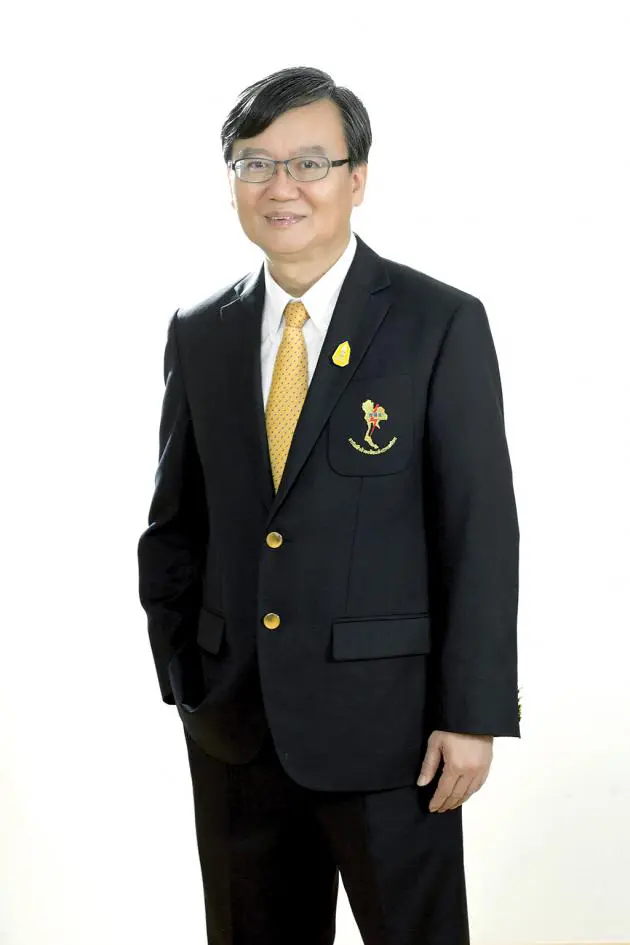
The 12th Egat governor also outlined his policies and mission after taking office on July 31, replacing Sutat Patmasiriwat, whose term expires on August 30. Soonchai was promoted from deputy governor in charge of power-plant development.
He said that one of his urgent priorities is the improvement of the grid, which is part of the state enterprise’s plan approved by the Cabinet with a budget of Bt156 billion.
Egat later revised this plan to include transmission lines at a cost of Bt68 billion, following the brief blackout in 14 southern provinces in May. The Cabinet will be asked to approve this additional investment. One line connects Bangsapan to Surat Thani and one line Surat Thani to Phuket. The whole project will be completed in 2019.
He will also speed up the upgrade of the Sai Noi-Bangkok Noi and Sai Noi-Chaeng Wattana lines to 500 kilovolts each from 230KV to prevent blackouts in Bangkok.
New plants will replace decommissioned ones. Modern power-plant technology is energy efficient and environmentally friendly.
Construction of the 800MW Unit 2 of the Chana Power Plant and the 800MW Unit 4 of the Wang Noi Power Plant will be completed next year, while the 900MW Unit 2 of the North Bangkok Power Plant will be completed in 2015.
The construction of the 600MW Mae Moh Power Plant to replace retiring units will be finished in 2018 and the 800MW coal-fired Krabi Power Plant in 2019.
Egat will also propose to the Cabinet its plan to build a 500MW unit at its Lamtraklong plant to add to the existing 500MW to become part of the power reserve.
Egat will accelerate the development of power lines to carry the new supply of renewable energy from small power producers and very small power producers as well as the establishment of the Asean Power Grid (APG). Egat is developing the 500KV main trunk to serve the APG network in all the country’s regions.
His other urgent tasks are the development of coal-fired plants and the promotion of renewable energy.
Coal-fired plants are needed to ensure national power security and affordable electricity bills. The share of electricity generated from natural gas would be reduced to 40 per cent from 70 per cent in the Power Development Plan of 2013 under a revision expected to be finished by year-end. The share of coal-fired power is expected to be raised to 30 per cent from 18 per cent.
Egat will strive to increase recognition by communities.
“All the projects will be successful if they are accepted by the communities,” he said.
Egat will also increase its purchases of electricity from Laos to 10 gigawatts from the contracted 7GW, of which 5.2GW has already been purchased. It will also negotiate with Myanmar for a new supply deal after the agreement for 10GW already expired.
Egat under his stewardship will also focus on good governance and environmental protection, he added.
