
Thai cuisine conquers Vietnamese


Play
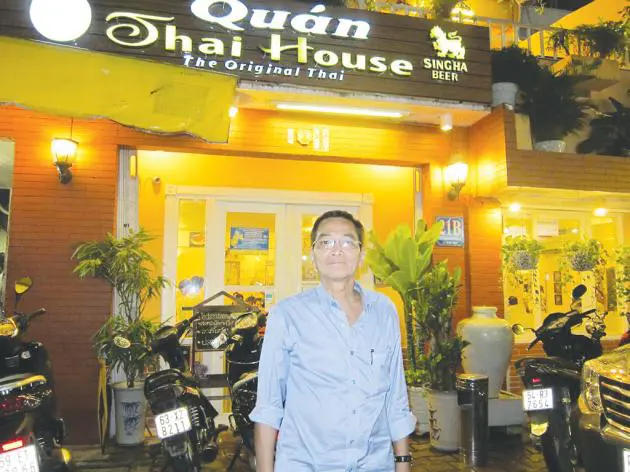
Apart from countries in the West, nowadays the aroma of Thai dishes can be detected in the Asean region as well from restaurants such as Thai House in Vietnam's Ho Chi Minh City.
Opened 14 years ago, the restaurant – a five-minute drive from the airport – is becoming more and more popular. One of the two oldest Thai eateries in the city, it initially only offered 10 tables – a number that has risen to 40 now.
The owner Cheeproj Prapasson said he invested Bt1 million to set it up and success only came three years later, thanks to word of mouth and authentic recipes. At the time there were only two other Thai restaurants, one of which closed down later. Now there are 20 Thai eateries in the city.
‘‘It usually takes a restaurant two or three years to prove itself. Maintaining original tastes is key to the business,” he explained.
He went on to say that the restaurant is at its busiest on the weekends and patrons usually have to be turned away at the door if they don’t have a reservation.
Of the customers, 65 per cent are Vietnamese, 15 per cent Thais and the remainder foreigners. The most regular customers are people working for Charoen Pokphand and SCG operations in Vietnam. Vietnamese diners clearly have no problem with spicy dishes, with the most popular ones being som tam (spicy papaya salad), tom yam kung (hot and sour soup with shrimp), moo ping (grilled pork) and pad thai to name a few.
In order to maintain traditional tastes, Cheeproj said some ingredients need to be imported from Thailand, such as dried chilli, fermented shrimp paste, kaffir lime and kaffir lime leaves. Occasionally, he said, when his staff or family members go home, they also bring back ingredients that are unique to Thailand, such as sa tor (bitter beans).
Prices on the menu range from Bt120 to Bt700, with the most expensive ones being dishes made from pla kao or humpback grouper.
There appears to be more room for growth in the restaurant business in Vietnam, as economic prosperity is giving people more spending power and they are eating out more often.
Hence, Cheeproj said, he was looking to open a new branch downtown. However, barriers remain. The biggest one being rent. He currently pays US$2,500 (Bt78,130) in monthly rent for his restaurant, and it is expected to rise 15 per cent every year.
