
PTT focuses on liquidity


Play
PTT, the national energy conglomerate, is keenly conscious that cushioning itself from external forces and keeping itself sufficiently liquid is not a choice, but a "must" amid the radical changes in the business environment.
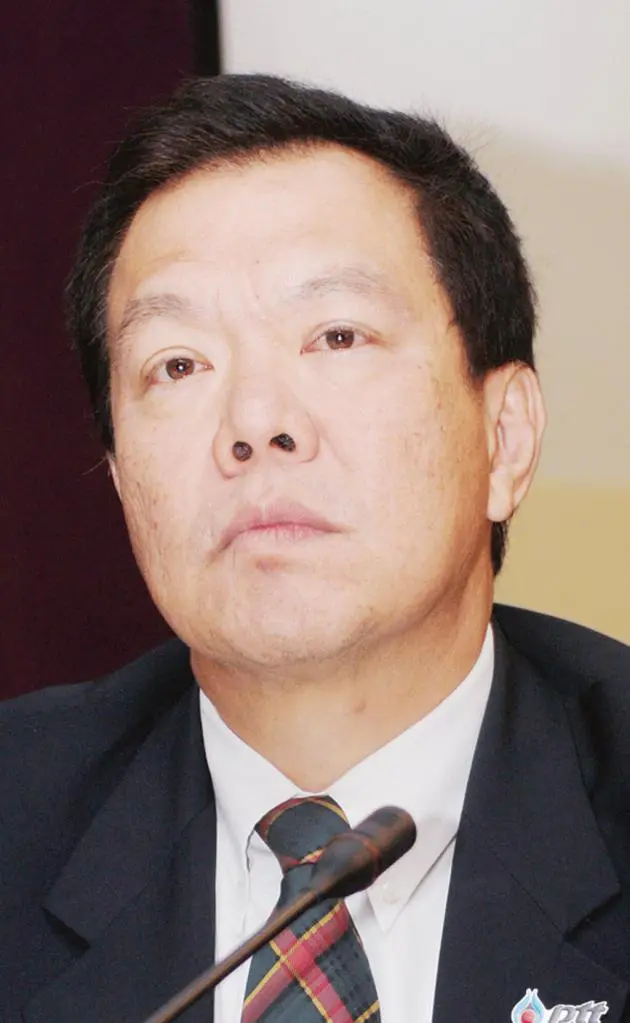
“As for the group, it has given importance to risk management…not only oil price hedging, but also financial risks. Cashflow is necessary to the business,” chief financial officer Surong Bulakul told The Nation.
Interest rates, foreign exchange rates and the capital market are three kinds of financial risk.
Capital flows are highly correlated with foreign exchange rates. The outflow of short-term money does not reflect the performance of the capital market. There is a trend of the baht weakening against the US dollar.
“Every Bt1 per US dollar change will affect Bt5 billion of the group’s consolidated revenues,” he said.
Interest rates are tending to head up as the US is likely to wind down its monetary-easing programme. The money in the market should also flow into some of the government’s Bt2.2-trillion mega-investment projects. This could be a factor pushing up interest rates.
Though inflation driven by food and utilities prices is not a worry, the world oil price hike caused by the political unrest in Syria would be a fear factor. PTT expects the global oil price to reach US$120 a barrel if the situation falls in the worst-case scenario and to flit around $105 if the situation is normal.
“Every $1 of oil change can affect Bt1.3 billion or so of PTT’s revenues,” he said.
The company has protected itself from this risk by hedging 30-40 per cent of its total oil inventory.
For capital market risk, companies would have to stand on their own feet because capital would be drained off.
“However, foreign investors still have confidence in the Thai capital market…the foundation remains strong and the economic growth outlook this year at 4-5 per cent is not adverse. Listed companies should prepare themselves with well-planned risk management. Once the money is back, this should become the market's strong foundation,” he said.
PTT Group has been forging ahead with its programme to streamline its organisation following the financial management plan assigned by the Energy Ministry. The group has already passed the first phase of aligning more than 300 subsidiaries in 28 countries over the world on the same track.
All companies under the group have now adopted a uniform standard for accounting and financial management. They use the same tools to manage data on resources such as materials, currencies and workforce. The group can get this information nearly real-time so that it can manage resources more efficiently than before.
“We are stepping up to the second level called ‘service providing’ ahead of becoming an ‘in-house bank’ as the third step, which targets completion in 2015,” he said.
As a service provider, the group would combine cashflow and service management activities. A regional treasury committee has been formed recently for taxation restructuring, hedging optimisation, client credit ratings, inter-company borrowing and lending, and fundraising traffic for all companies of the group.
“We need to do this way as one-third of consolidated revenues are from overseas businesses,” he said.
Last year, PTT posted Bt2.79 trillion in consolidated sales.
Eventually, the group would have an in-house banking unit that secures investment and business opportunities all over the world via venture capital. It would consult all companies under the group going abroad. The front office depends on each subsidiary’s business policy, but the back office regarding financial management would be centralised by the parent.
For example, if a subsidiary plans to invest in Indonesia, it would operate via a company of the group registered in Singapore, raise funds via the one registered in Hong Kong and handle taxation via one registered in the Netherlands.
“We want our business to be fit and firm,” he added.
