
Corporates' financing costs from capital market may rise


Corporations planning to tap the capital market should beware of higher borrowing costs due to the uncertainty over the United States' plans to taper its quantitative easing programme, according to the SCB Economic Intelligence Centre.
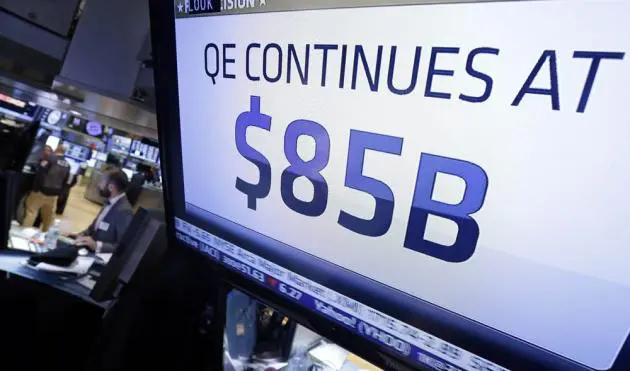
The US Federal Reserve yesterday decided to keep the programme of US$85 billion (Bt2.6 billion) in monthly bond purchases, which means market uncertainty will continue to prevail especially in emerging markets including Thailand, said Sutapa Amornvivat, chief economist and executive vice president of the EIC.
Even though external factors, particularly QE tapering, will pose crucial risks for the economy next year, the research house predicts gross domestic product will expand 4.5 per cent, up from 3.4 per cent expected this year.
The 10-year government bond yield has surged 107 basis points to 4.37 per cent from May 21-September 6 after Fed chairman Ben Bernanke signalled that bond purchases would be scaled back sooner than scheduled. That influenced the decision of corporations to issue bonds.
The rise in borrowing costs could be a barrier for public and private investment.
Three parties are expected to be pinched by higher borrowing costs – big corporations that have to issue bonds to roll over maturing bonds, small and medium-sized enterprises, and the government, which requires funds to support infrastructure investment.
Big corporations and some commercial banks should closely monitor the timing of the Fed’s decision on QE to avoid periods of increased volatility.
Corporations that have to issue bonds for refinancing cannot avoid the impact. SMEs, even though their source of funds is bank loans, have to face higher borrowing costs from the increase in the minimum lending rate (MLR) by commercial banks that have to issue sub-debts for refinancing.
The biggest funding source for banks is deposits, so the borrowing cost to SMEs is not serious compared with big corporations.
The EIC forecasts that the borrowing cost in the bond market will climb to 4.5 per cent in 2016 from 3.82 per cent this year, while the borrowing cost in the financial market (MLR) is expected to rise to 7.25 per cent in 2015 from 7 per cent this year.
The private sector still requires borrowings but to avoid the impact from QE taping, they should be more cautious about borrowing in US dollars to reduce the risk from foreign-exchange volatility, the EIC says.
