
Mega-project 'won't hike public debt'


THAILAND'S PUBLIC DEBT will not exceed 50 per cent of gross domestic product during the eight years of the government's Bt2.4-trillion infrastructure mega-project, the Public Debt Management Office's bond-market adviser Suwit Rojanavanich said.
“This is based on real GDP growth of 4 per cent a year and inflation of 3 per cent,” he said.
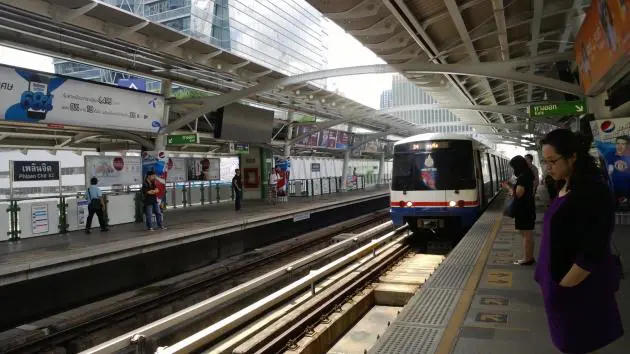
He added that most of the investment would come out of the state budget except for 10 mass-transit lines in Greater Bangkok, costing about Bt700 billion, for which funding would be borrowed from the financial market.
According to the eight-year infrastructure investment plan, which kicks off in the 2015 fiscal year, 5-10 per cent of the total budget will be spent in the first two years. Another half of the total will be spent in the third and fourth years, about 30 per cent in the fifth and sixth years, and the remaining 10 per cent in the final two years.
However, he accepted that if the economy grows more slowly than targeted, public debt might be more than 50 per cent of GDP, though still lower than official target of 60 per cent.
“We are confident that the country’s infrastructure investment will not have an impact on public debt in the long term, but will drive sustainable growth,” he said.
The Public Debt Management Office will borrow in baht primarily from Thai banks, he said.
Vichit Suraphongchai, chairman of the executive committee of Siam Commercial Bank, said Thailand’s commercial banks now were stronger than in 1997 – the year the Asian financial crisis began – and had sufficient funds to support more investment by both the private and public sectors.
Meanwhile, Roengsak Tongsom, director of the Transport Ministry’s Rail Project Development Office, said the state infrastructure mega-project was necessary to develop the country’s logistics system and make Thailand a regional gateway.
As for the Bangkok mass transit system, some projects are already being constructed, some are awaiting funding, some are being designed and some need Environmental Impact Assessment approval.
But Roengsak is confident all of them will be up and running within eight years.
Meanwhile, other logistics projects including railway double-tracking, deep-sea-port development, improvements to the international airports, and highway construction will be ready to get going in fiscal year 2015.
The first priority of the double-tracking project is two lines, Nong Kai-Nakhon Ratchasima-Saraburi-Lam Chabang-Map Ta Phut worth Bt392.57 billion and Chiang Khong-Den Chai-Baan Phachi worth Bt348.89 billion.
They will start in fiscal 2015 and be complete by 2021.
