
Integration with Asia crucial to Europe's prosperity, Thai business leader says


Play
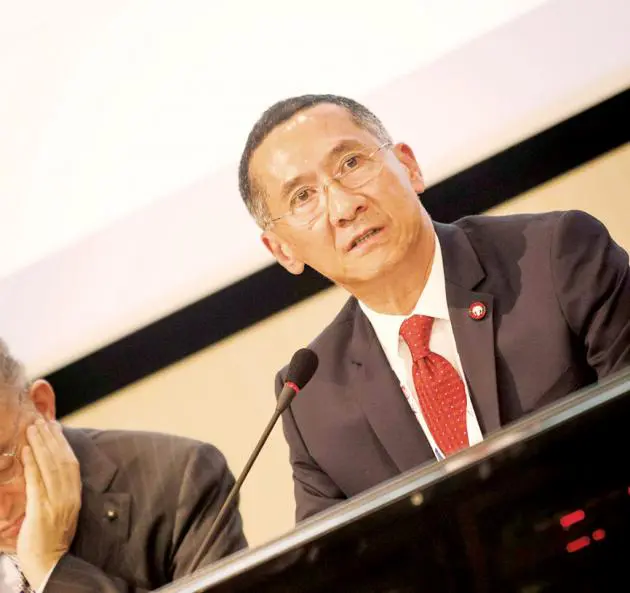
Pradit Phataraprasit, a six-time cabinet member and one of Thailand's leading businessmen, this week addressed more than 370 of Europe's and 440 of Asia's top business leaders on the sidelines of the 10th Asia-Europe Meeting (ASEM) in Milan, urging an imm
The two-day ASEM summit, which ended yesterday, was attended by around 53 Asian and European prime ministers and heads of state, including Thailand’s General Prayut Chan-o-cha. It also hosted a forum for top business leaders to share their points of view with political leaders.
Addressing the group as the keynote speaker on behalf of all Asian businesses, Pradit said the European private sector must grasp the opportunities emerging from deepening Asian integration. He cautioned that a failure to do so would lead to “significant diversions of Asian trade away from the EU, especially since intra-regional Asian free-trade agreements bring down many other barriers to trade and economic cooperation besides tariffs”.
“There are more than 150 intra-regional free-trade agreements in Asia at various stages, as well as the rapidly advancing Regional Comprehensive Economic Partnership, which embraces the 10 member countries of Asean as well as China, Japan, India, South Korea, Australia and New Zealand.”
If agreed, the RCEP would be one of the largest FTAs, covering almost half of the world’s population, a third of global gross domestic product, and around 40 per cent of world trade.
Pradit said the EU would find it much harder to penetrate such integrated economies at a later stage, once trade links become deeper and well established among member countries.
He said the EU should “grasp the opportunity to be a part of the Asian integration process, because this Asian regionalism is not about creating a closed Asian grouping but about producing a unified market conducive to investment and trade”.
He also asked European businesspeople to urge their political leaders to “bring the attention of politicians to the bigger things that they sometimes overlook”, indirectly referring to the slowing down of the trade negotiations with Thailand because of EU disapproval of the military’s seizure of power from the elected government.
According to Pradit, the number of people living in extreme poverty had halved during the 20 years between 1990 and 2010, lifting a billion people “out of wretchedness”, and that the biggest contributor to that “gift of a better life for so many people” was trade liberalisation.
He asked European businesspeople to push “the political leaders of today to move forward with the same clarity of long-term purpose as their post-war predecessors”. He said political leaders needed to have the same will to bring about “a broad and deep engagement between the EU and Asia for the very same reasons as European leaders did after the Second World War – namely enduring prosperity and peace”.
“Many countries in Asia would like to see a balanced presence in the region of the world’s largest political economic groupings, and they would like to have a balanced network of global trading partners,” Pradit said. He added that geopolitical stability in the world in the last 50 years was due to “a political balance in the world”.
He noted that the EU was no longer among the top three trading partners of all Asian countries, as it once was, and that since 2012, it had lost to the United States the position of being China’s top trading partner.
Pradit said the integration of Europe and Asia, and all the economic benefits that flow from integration, “is the most potent medicine we can administer to those stricken with poverty and to economies beset by low growth”, referring to EU economies that have been stagnating.
He said it had been estimated that if all the current free-trade discussions between Asian and European countries were concluded immediately, there would be more than 2 million jobs created inside the EU.
“It is increasingly unlikely that European economies will be able to stimulate recovery through domestic consumption alone, without a boost from trade liberalisation,” he said.
