
A new, unique perspective on Asia's transformation


Play
Region to lead world evolution for sustainable growth
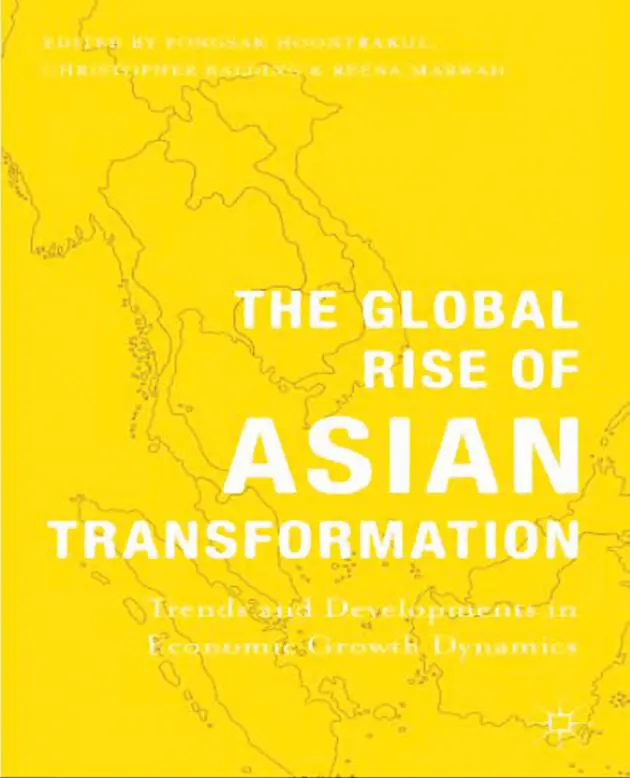
After retiring from a stint at Chulalongkorn University’s Sasin Graduate School in 2013, Dr Pongsak Hoontrakul embarked on a major book project titled “The Global Rise of Asian Transformation”, which promises to bring readers a unique perspective on the Asian Century.
According to Pongsak, Asian countries are catching up with the West by transforming their primarily agrarian societies into industrial powerhouses. Manufacturing is driving innovation, productivity growth and higher standards of living for billions of Asians.
The world is now poised to evolve, led by a unified Asian business landscape capable of driving sustainable global growth within industries and markets.
“I attended a number of World Economic Forum meetings in Davos and other places from 2009 to 2012 as well as conferences held by Asian financial institutions and universities. I also found two fascinating papers that provided a good framework to look into the future – ‘Global Trends 2030: Alternative Worlds’ and ‘Game Changers: Five Opportunities for US Growth and Renewal’. But they offered only a US perspective.
“In July 2012, I organised the Sasin Bangkok Business Forum, and the theme was ‘Asia in Transformation’. In this book I want to give the Eastern perspective on the rise of Asia, namely that of China, India and Asean, as well as the transformation brought by new technology and high economic growth over the past several decades even though recent upheavals have changed political landscape in some countries.
“We’ve seen challenges and the middle-class revolution in China, India and Asean countries where consumers are now able to upgrade from bicycles to motorbikes to pickup trucks and passenger cars – all facilitated by rising incomes resulting from decades of high economic growth.
“We’ve also seen the global implications of big events in Asia on the global supply chain. Two notable cases, first the massive 2011 floods in Thailand and, second, the Fukushima nuclear crisis in Japan, which caused disruptions to global production of iPhones and computer hard-disk drives.
“In my opinion, global economic power is shifting towards the East … Political power may follow but at a slower pace. In other words, Asian countries have gained from the demographic, knowledge or information dividends.
“Over the next five to 10 years, the rise of Asean Economic Community members – Indonesia, Vietnam and Thailand among others – will likely be followed by the rise of India’s middle class, and all these forces will significantly contribute to the global rise of Asia’s transformation.
“The latest oil-price plunge is another major factor, as the much cheaper oil – down 40 per cent this year from around [US]$100 to $60 per barrel – will hugely benefit major consumers like China and Thailand in the short to medium terms. Meanwhile, the US will gain from its energy independence due to shale oil/shale gas technology and the Middle East will see its leverage declining.”
