
Trade with China holds 'huge promise'


Thailand should take advantage of its central geographical location in the heart of Asean given the Thai cur?rency is accepted in Myanmar, Cambodia, and Laos, to promote cross-border trade and investment with China.
Saha Group chairman Boonsithi Chokwatana said that infrastructure as well as the logistics system will be the key driving factors for the Thai government in boosting trade rela?tions with both China and Asean member countries.
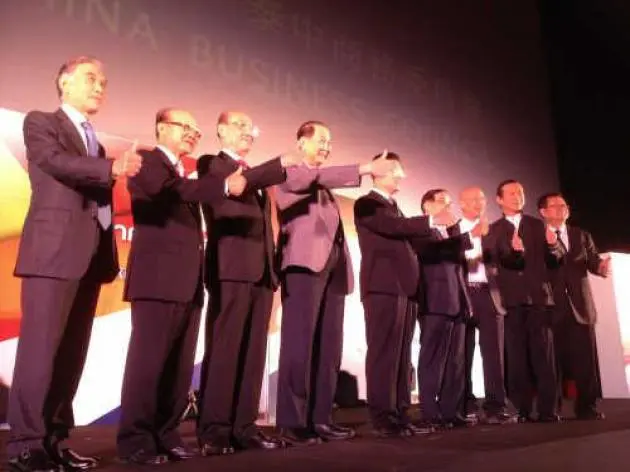
Speaking at a forum yesterday on "The Future of Thailand and China in Asean", hosted by Thailand-China Business Council to celebrate the 40th year of diplomatic relations between Thailand and China, Boonsithi said the Chinese govern?ment’s national agenda is focused on the development of heavy industry and infrastructure in the country. As a result, China has to import small products from other countries.
"Thailand should focus on small goods, such as powdered milk and foods. In the future, we [Thailand] need not set up factories in China but can export products to that country if the transportation network to China is already in place," said Boonsithi.
He said that both the Thai gov?ernment and business entrepreneurs had been doing quite well in balanc?ing trade relations with China and Japan, which are competing with each other in infrastructure develop?ment as well as trade and investment in other countries, including Thailand.
"From a business point of view, we should learn from the Japanese about modification of new business models, such as convenience stores. While from China, we should learn about speed in doing business. Chinese business people also dare to take risks," said Boonsithi.
Speaking at the same forum, Kraisorn Chansiri, chairman of Thai Union Frozen Products, said the com?pany had started to expand its mar?ket for canned tuna in China 11 years ago with the setting up of a sales and marketing subsidiary in Shanghai.
"With its huge population, TUF sees China as having huge potential and that country will likely face short?age of fresh foods in the future. We, however, need to bear losses for the first five to eight years while educat?ing Chinese consumers and making them aware about our canned tuna products," said Kraisorn.
He said the government had a pol?icy to expand investment overseas. Chinese business people have good techniques and knowhow as well as capital for investment. Thai entre?preneurs should take the opportuni?ty to forge business partnerships with Chinese investors.
Kraisorn said that TUF had grown its canned seafood business from a single, 790-square wah factory with 150 employees and US$1 million in annual revenue 38 years ago to 35,000 employees around the world and annual revenue of $5 billion this year. The group expected its revenue to reach $8 billion in 2020. TUF cur?rently operates canned-seafood fac?tories in many countries around the world, including Vietnam, Papua New Guinea, USA, Canada, France, Poland and Norway.
Panyapiwat Institute of Management (PIM) President Sompop Manarangsan said that the trade value between Asean and China was worth about $480 billion last year, the third highest after the European Union and China, at $625 billion and $550 billion respectively.
However, the annual trade value between Asean and China is expect?ed to reach US$1 trillion by 2020.
"To benefit from the integration of Asean under the Asean Economic Community that takes effect this year, Thailand should take advantage of being a gateway for individual investors to enter mainland Asean," he said.
Sompop said that Thai business people should capitalise on the Chinese network, the so-called |"Tae-Jiew Network" to connect with other Tae-Jiew communities in |other Asean countries, especially Cambodia, Laos, and Myanmar.
