
Thaicom sees foreign partnerships as way to expand business collaboration
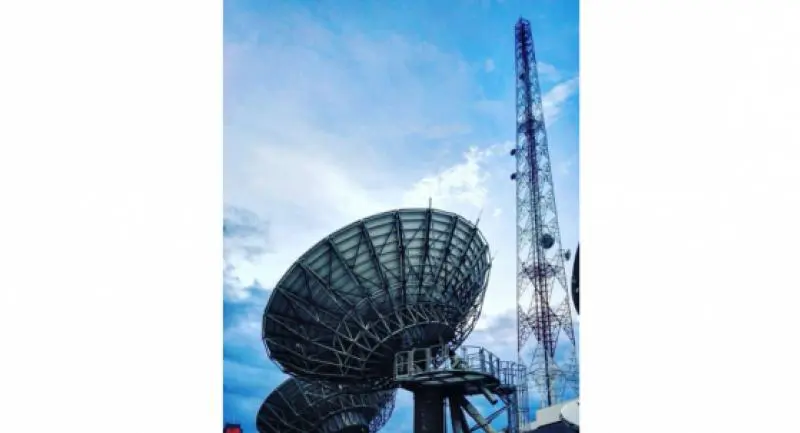


SATELLITE OPERATOR Thaicom is hopeful that its recent partnerships with satellite manufacturer China Great Wall Industry Corp and another foreign company it has declined to identify will lead to further business collaboration in the future.
Thaicom’s senior vice president for corporate affairs, Ekachai Phakdurong, said these partnerships could pave the way for other business collaborations in China or even in other foreign markets.
Thaicom, which has been recognised as one of the global top 10 satellite operators, continues to explore new business models to boost revenue, he said.
Last month Thaicom announced that its subsidiary International Satellite Company (ISC) had entered a partnership with a foreign business to develop a new broadband satellite project worth around US$208 million (more than Bt7.3 billion). Thaicom has declined to reveal the name of this partner.
The planned satellite will operate under the licence and orbital slot held by the partner. The partner will also provide Thaicom with advanced service fees that will serve as the source of funding for the construction of the satellite.
As part of the project, ISC also entered a satellite-procurement contract with China Great Wall Industry Corp, which is China’s leader in satellite construction and commercial launch services. The satellite, with a 15-year life span, is expected to be completed around the end of 2019. It will provide broadband and mobility services in the Asia-Pacific region.
Ekachai said the project would be a new revenue source for Thaicom from its procurement of the satellite for the partner and its provision of maintenance service for the project.
He said Thaicom was still considering developing its own Thaicom 9 satellite and was waiting for the satellite-service regulations in Thailand to become clearer.
Working panel
Late last week, acting Digital Economy and Society Minister Prajin Juntong said he had appointed a working panel, chaired by deputy permanent secretary Somsak Khaosuwan, to work out details regarding the ministry’s plan to reform the satellite-service industry.
The panel was ordered to finish its work within 45 days. Prajin added that he had not instructed the panel to focus on any specific ways to reform the industry.
Earlier the ministry focused on the goal of bringing Thaicom’s two licensed satellites, Thaicom 7 and 8, into the ministry’s concession regime as part of the reform.
Thaicom currently has five satellites in operation: the Thaicom 4 (IPSTAR) broadband satellite and the Thaicom 5, 6, 7 and 8 broadcasting satellites.
Thaicom 4, 5 and 6 operate under the ministry’s concession regime, while the other two fall under the National Broadcasting and Telecom Commission’s licensing regime.
A telecom industry source said that if the panel did not go for the option of asking Thaicom to bring its licensed satellites into the concession regime, it might instead propose that these satellites pay the ministry a fee for the right to use Thailand’s orbital slots.
The fee would also be imposed on the future Thaicom satellites under the NBTC licensing regime and those of any other satellite operators that will come to Thailand in the future.
