
Tesco Lotus airs omnichannel goals
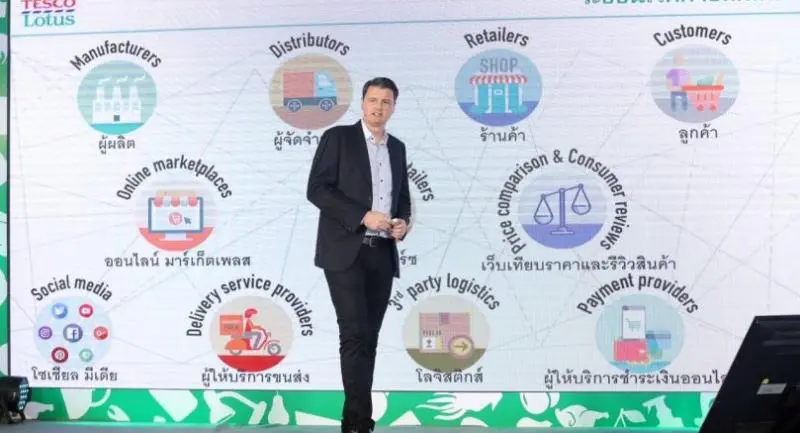


RETAIL GIANT Tesco Lotus has outlined its omnichannel sales strategies as the boundaries between the offline and online worlds become increasingly blurred for Thai consumers.
Mark Roughley, customer director for Tesco Lotus, said the new retail environment is much more sophisticated than the old one, when there were only a handful of key players: product manufacturers, distributors, retailers and customers.
The company is responding to a transition that has given rise to omnichannel customers who receive information, communicate directly with brands, do research and, finally, shop interchangeably in bricks-and-mortar stores and online.
Internet penetration in Thailand this year has grown to 67 per cent of the population from 56 per cent in January 2016.
Nearly 45 million Thais access the Internet on their mobile phones.
Due to these trends, Tesco Lotus says “the new retail ecosystem now involves several parties and providers to facilitate the new customer journey” and offer more choice.
Better service
Armed with these insights, Tesco Lotus has structured its retail business to facilitate omnichannel retailing and better serve customers within the new retail ecosystem.
This involves three key strategies, which are trust and loyalty, efficient fulfilment of shopping trips for omni customers, and engaging with customers seamlessly across platforms and using innovation to serve them better.
He said omnichannel customers expect a seamless shopping experience, choice and convenience.
“We have adjusted our business to allow for seamless shopping through our loyalty programme Clubcard, so that customers can now collect and redeem points wherever they shop with Tesco Lotus, whether online or in-store,” Roughley said.
“For choice and convenience, we offer customers flexibility and modes of delivery, so customers can expect to receive products within just an hour, or they can pick up their shopping from our stores if that’s more convenient for them.”
He said that Tesco Lotus serves 15 million customers in its stores every week.
The size of the online business is still relatively small against the whole customer base.
