
Satellite slots at risk in deadlock
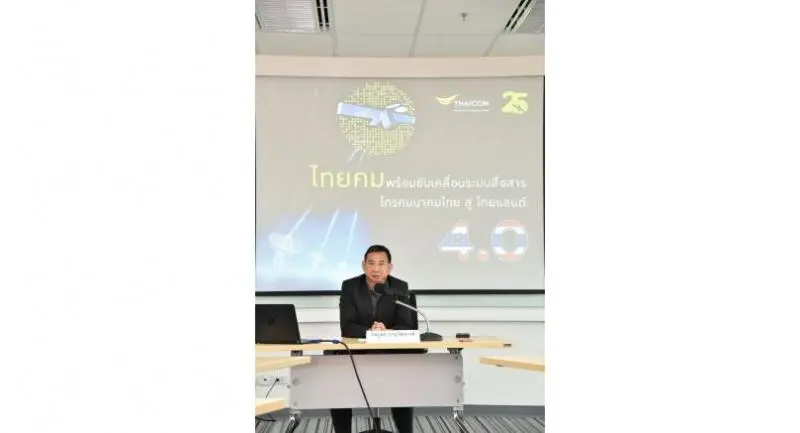


THAILAND may lose at least two of its satellite orbital slots if the government fails to resolve longstanding differences with Thaicom on proposed reforms for the satellite sector, the satellite operator’s chief executive, Paiboon Panuwattanawong warned yesterday.
The company and the Ministry of Digital Economy and Society have yet to reach a final agreement on the ministry's proposal that the Thaicom 7 and 8 satellites be returned to the ministry’s concession regime as part of reforms of the satellite service industry. Talks aimed at breaking the impasse have been bogged down for the past two years.
The ministry oversees the Thaicom 4 satellite, also known as IPSTAR, along with the Thaicom 5 and 6 satellites; the National Broadcasting and Telecommunications Commission licenses and oversees the Thaicom 7 and 8 satellites, and is pegged for this role on future Thaicom satellites. The concessions for the IPSTAR and Thaicom 5 satellites end in 2021; in theory, their life spans could extend some years beyond that.
The regulatory haze has prompted Thaicom to delay the planned launch of the Thaicom 9 broadband satellite, which was due to be positioned at the 119.5 east orbital slot after the expiration of the IPSTAR broadband satellite’s concession in 2021 – retaining the latter’s orbital slot. The Thaicom 9 launch would ensure the company holds on to the slot.
If Thaicom is left unable to start developing Thaicom 9 before the end of next year, it would be difficult for the company to launch the new satellite for positioning at the IPSTAR slot before that concession ends in 2021. It is understood that it takes about two years to build a satellite.
Thaicom wants the government to bring clarity to the issue to enable to it to start on the project next year.
With the uncertainty swirling around the Thaicom 9 project amid the delays, Japanese telecommunications giant Softbank, one of IPSTAR’s main customers, in April cancelled its plan to use the Thaicom 9 service, Paiboon said.
Softbank, which uses 1.5 gigabytes capacity on the IPSTAR satellite, had wanted to switch over to Thaicom 9 after the former’s concession ended.
The Japanese company had been keen to see Thaicom launch Thaicom 9 two years in advance of IPSTAR’s expiry It had even committed to use Thaicom 9 capacity of 30 per cent throughout the satellite’s lifespan.
The Ministry of Digital Economy and Society had filed an application with the International Telecom Union to reserve an orbital slot for Thaicom 9 in late 2015, but it withdrew the filing early last year. Among the union’s duties are the allocation of slots orbital satellite slots.
Paiboon said the company had at one time wanted the government to consider invoking its special powers of Article 44 of the interim charter to resolve the deadlock with the government agencies. He added he was not confident of a breakthrough coming this year.
Thaicom may consider pursuing legal avenues to protect its interest if its Thaicom 7 and 8 satellites are forced back in the fold of the concession regime and with the same concession conditions.
Thaicom has proposed that CAT Telecom use 30 per cent of Thaicom 9’s capacity for promoting the government's Pracha Rat projects.
The ministry had hired Chula Unisearch to advise on reform of the satellite service industry. Its study recommended that Thaicom’s two licensed satellites – Thaicom 7 and 8 – be brought back under the ministry’s concession regime and be subject to these terms until their expiry in 2021.
Paiboon, looking ahead, said Thaicom was seeking new business opportunities, including joining with foreign satellite operators that have their own licences and orbital slots, to build satellites and lease their capacity to prospect customers.
