
Serving wasted food creates profits without an environmental price
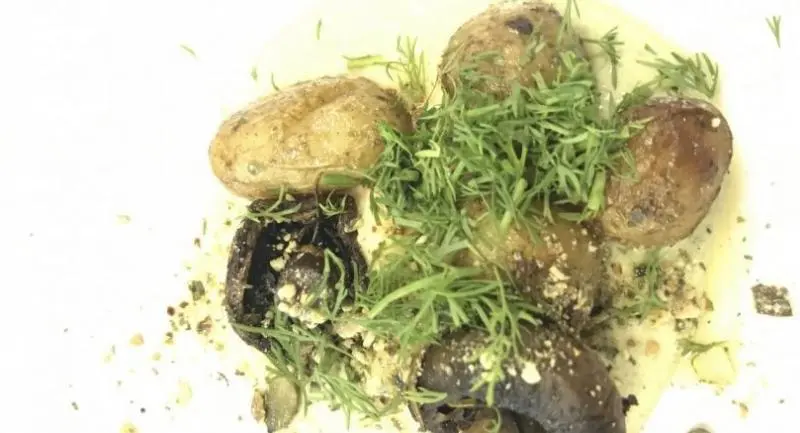


IT IS AMAZING how the Loop restaurant has turned food waste from supermarkets into a business by convincing its customers that ingredients that would otherwise be thrown out at the end of the day can still taste good.
Pauli Hakala, chef and founder of the Loop in Helsinki, Finland, gets vegetables, mushrooms and other raw food materials from supermarkets for free. He only has to pay for the logistics.
The challenge is that he doesn’t know what ingredients he will get and he has to prepare dishes accordingly, he said.
Our group had lunch at the Loop for an average cost of 10 euros (Bt388). I had vegetable soup followed by salad and a grilled mushroom dish for my main course. The restaurant also serves dessert, coffee or tea. The cost is 5 or 10 euros less than a typical restaurant meal in Helsinki.
I thought the food tasted all right, though I could not say it was delicious. We saw a mother having lunch with her small children at the restaurant, so that convinced us that the food was safe and nutritious.
“To make it safe we are very careful. If our food makes people sick, it is not a good business any more,” said Hakala. “We usually don’t take fish or meat waste, so 90 per cent of our food is vegetarian.”
The Loop restaurant has been successful in combating food waste since it started a year ago. It serves lunch on working days, brunch on weekends and dinner on Friday evenings. It also has a catering service that served dinner for about 1,500 people who participated in the World Circular Economy Forum in Helsinki in early June.
The idea behind the food-waste restaurant is that many raw food items are still edible and should not be dumped at the end of the day, even though supermarkets cannot sell them any more. It is estimated that 460 million kilograms of food is dumped each year in Finland – a figure Hakala describes as huge.
Dumping food in garbage bins is also a factor in climate change, because a lot of energy has been wasted producing farm products.
Consumer awareness of climate change, coupled with the cheaper prices, is expected to contribute to the success of the Loop restaurant.
Start-up company ResQ Club, at resq-club.com, also runs a food-waste business through a smartphone app that connects consumers and restaurant operators. The restaurants offer food-waste dishes and charge customers less than for normal dishes.
“At the moment we are working in European markets and here the average cost is 50 per cent less than the normal price, which is about 4-5 euros per portion meals,” said Mikko Evinen, country manager. “We have multiple different users for our service: bakeries, cafes, restaurants, delis and grocery stores. So there is a wide spread on the offering, from buns to sandwiches and meals.”
ResQ Club claims that about 200,000 meals have been sold since January last year. This means a big saving on gas emissions that contribute to global warming.
