
VN Facebook traders face taxation anxieties
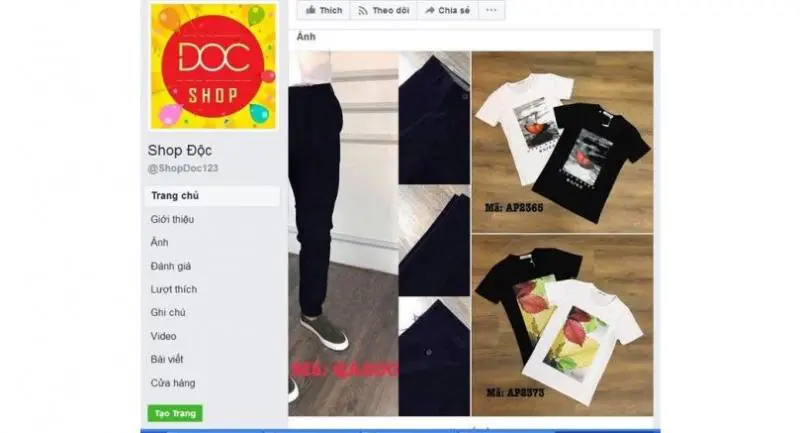


Vietnamese tax officials say there are more than 13,400 Facebook users in Hanoi earning income as online traders – and none of them are paying taxes.
Le Ha has been selling clothes on Facebook “for years”, but is under stress right now after receiving a summons from the Hanoi Taxation Department.
“I get about 10 orders a day, with maximum daily sales of around 5 million dong [Bt7,400],” she said, admitting that she doesn’t have to register her business or pay taxes.
The promise of attractive profits has prompted thousands of people to jump on the bandwagon, catching the attention of authorities trying to reduce tax losses to the state.
The Facebook representative office in Vietnam has not responded to questions about this issue.
A tax administration project for e-commerce business has been drawn up and the taxation departments in Hanoi and Ho Chi Minh City are now seeking to bring business owners selling merchandise on social media, especially Facebook, into the tax bracket.
Vien Viet Hung of the Hanoi office said his department had the identity and telephone numbers of 13,422 Facebook traders.
Since late June it has been sending them SMS messages instructing them to voluntarily register their operations, declare income and pay taxes.
However, after sending messages twice, only 1,000 of them have replied, and only around 500 have approached the department on their own to register to pay taxes, Hung said.
Nguyen Thi Cuc, chairwoman of the Vietnam Tax Consultant Association, said the law requires all institutions and individuals doing businesses, whether through traditional channels or via e-commerce, to declare income and pay taxes.
However, she conceded that in the current situation, tax collection depended on the willingness of traders, their authenticity, honesty and integrity.
According to the law, only online sellers with revenue above 100 million dong a year will be subject to taxation.
However, many Facebook merchants are afraid that the taxation process will be unfair.
“If paying tax is an obligation, we are ready to fulfil it as long as it’s fair to everyone,” Le Ha said. “What if I tell the truth while other Facebook sellers lie about their revenue? They will pay less or no tax, which is unfair.”
Regarding income declaration, many argue that it’s difficult to determine the exact revenue of those who do business online, so it’s not possible to ensure fair treatment for honest sellers.
But Ta Thi Phuong Lan, deputy head of the division in charge of personal income tax under the General Department of Taxation, said authorities can assess Facebook sellers’ revenue by checking their sources of goods, post offices, delivery companies and bank payments.
One of the main difficulties in determining Facebook traders’ income is the low rate of non-cash transactions in Vietnam, said Truong Thanh Duc, chairman of the law firm Basico.
In other countries, buyers make payments via banks, so it’s not difficult to identify the revenue from online business. Therefore, it’s necessary to apply measures to encourage Vietnamese to use non-cash payment methods for online transactions, Duc said.
Recently, the General Department of Taxation issued Document 2623/TCT-CS, asking local taxation departments to coordinate with network operators to gather information on online sellers, including identity and bank account numbers, so that they can monitor all online transactions.
However, CMC Telecommunication Infrastructure Joint Stock Co said had received no such communication from tax authorities.
The company said that if needed, it can explain and persuade customers to provide the necessary information, but it can’t ensure that all the customers will agree to do so.
Transactions on the Internet are difficult to control and tax collection procedures can’t be comprehensively introduced in a short time, it should be done step by step, said Nguyen Huu Tuan, head of the E-commerce Management Division of the E-commerce and Information Technology Department under the Ministry of Industry and Trade.
To collect taxes, authorities should understand each business as they all have their own specific characteristics, Tuan said.
With millions of Facebook accounts, tax authorities should classify them based on the nature of their operations and key products, he said.
In the first phase, the tax authority should target large and professional businesses. It’s easy to identify these account holders because they have popular Facebook pages with many followers, he said.
The rest are likely to be individuals selling things online as a side job or even seasonal business. They don’t sell goods regularly, so tax departments should carefully review the list before summoning them to their offices, Tuan said.
“There are petty traders with modest monthly incomes. If we try to control all Facebook sellers, we’ll use up significant resources and end up being inefficient.”
Sharing the same idea, Vien Viet Hung said that, to obtain necessary information on online businesses, tax departments nationwide should have enough staff who are well versed with social networks.
The Hanoi Taxation Department will seek cooperation and support from many concerned agencies like commercial banks, post offices and especially social networks like Facebook to provide information about account holders, Hung said.
