
Apple joins foldable phone race with $1,999 passport-shaped iPhone Duo
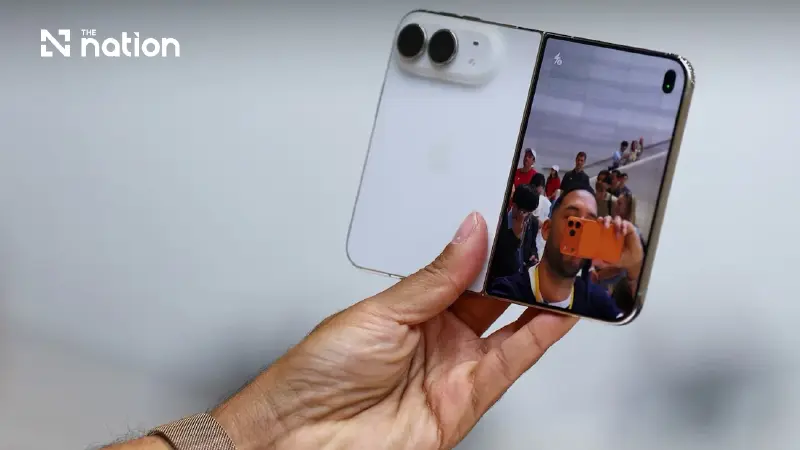


Apple’s passport-shaped iPhone Duo opens to a 7.6-inch screen, with an October 23 release, as the company raises Pro prices and expands AI features
- Apple has entered the foldable market with its first device, the iPhone Duo, which is priced at US$1,999 and will be available from October 23.
- The passport-shaped handset opens horizontally into a 7.6-inch display, featuring a titanium body and the ability to run multiple app windows simultaneously.
- The device is powered by Apple's new A20 Pro processor and a custom C2 modem, continuing the company's move away from Qualcomm chips.
- Analysts expect Apple's entry to broaden the appeal of foldable phones, forecasting the company could capture 40% of the market segment by the end of 2027.
Apple unveiled its first foldable iPhone on September 9, introducing a US$1,999 passport-shaped handset as new chief executive John Ternus bets on design, productivity and privacy to win customers in a market established by Samsung and Chinese rivals.
The iPhone Duo opens into a 7.6-inch display and will be available from October 23. Its launch marks the most substantial redesign of Apple’s flagship product since the iPhone X in 2017.
Foldable phones have remained a niche despite years of development by manufacturers including Samsung and Huawei. Analysts believe Apple’s arrival could broaden their appeal, following the company’s role in popularising smartwatches and wireless earbuds.
The stakes are substantial for Ternus, previously Apple’s relatively low-profile hardware chief. The iPhone generated US$209.6 billion in the company’s latest fiscal year, accounting for just over half of total sales.

Passport shape and multiple app windows
With rounded edges and a smaller outer screen for use when folded, the Duo opens to a horizontal display measuring 7.6 inches, or 19 centimetres, diagonally. Users can also turn it vertically.
Apple described the unfolded Duo as its thinnest phone, although it remains thicker than foldable models from Chinese competitors.

Ternus criticised existing foldables as awkward for everyday activities such as scrolling and watching videos. He said Apple had combined a custom hinge, two displays with a consistent aspect ratio and a new titanium body to create an iPad-like experience in a pocket-sized device.
“It’s entirely new and at the same time remarkably familiar. A similar size to your passport, it feels familiar to hold and comfortable to use with one hand,” he said.
Apple demonstrated the larger screen handling Zoom calls with several participants and displaying a broader view of Slack conversations. The Duo supports multiple app windows simultaneously, extending a productivity feature available on some iPads.
The handset uses Apple’s A20 Pro processor and a new Apple-designed C2 modem, continuing the company’s shift away from Qualcomm wireless data chips. Apple said the battery supports 24 hours of mixed use across both displays and can reach 50% charge in about 20 minutes.

Analysts expect a strong debut
Ternus must persuade customers to spend nearly US$2,000 on a foldable handset, taking Apple’s premium pricing to a new level. International Data Corporation (IDC) expects the company to sell every foldable iPhone it can manufacture and secure 40% of the segment by the end of 2027.
Francisco Jeronimo, IDC’s vice president for data and analytics, devices, in Europe, the Middle East and Africa, argued that Apple’s entry would establish a benchmark for competitors despite its late arrival.
“Apple entered the foldable market and, in one keynote, set the price and the standard every rival will now be measured against,” he said.
Jeronimo identified China as the key competitive test, saying Huawei holds nearly 80% of the country’s foldable market.
“Huawei owns China’s foldable market today. Apple has just handed Chinese buyers their first genuinely compelling reason to reconsider.”
Competitors and other technology companies responded with jokes. Language-learning app Duolingo, whose green owl mascot is named Duo, posted “We infringed upon” on X alongside laughing-crying emojis. Samsung Mobile US expressed “solidarity” and added: “They copied us, too.”
Apple shares closed 0.3% lower at US$315.34 on September 9 after the presentation.
Ternus stresses privacy and raises Pro prices
Former chief executive Tim Cook introduced the leadership handover through a video featuring a light-hearted debate with Ternus about how to open the event. It ended with Cook pointing towards his successor and saying: “Not me. That’s your guy.”
Ternus presented the iPhone as a personal artificial intelligence hub and contrasted Apple’s approach with companies seeking to collect and store users’ information.
“Honestly, trust only goes so far when your data is no longer yours to control,” he said. “That’s why Apple Intelligence runs on device whenever it can.”
Lilian Rincon, who oversees Apple’s AI products and joined from Google earlier this year, presented an updated Siri assistant.
Apple also introduced the non-folding iPhone 18 Pro and iPhone 18 Pro Max, starting at US$1,199 and US$1,299 respectively. Both cost US$100 more than the starting prices of their iPhone 17 equivalents.
The iPhone 18 Pro includes the A20 Pro chip, with improvements intended to help advanced AI models run directly on the handset.
To address concerns about AI-generated and manipulated pictures, Apple announced a standard called Apple Reference Image, designed to authenticate photographs taken with the new iPhone 18 Pro cameras. The feature will not be available in the European Union or China.
The company also said it would support SynthID, an emerging standard for identifying images created or edited with AI.
Cheaper noise-cancelling AirPods and health features
New AirPods will start at US$129 and include noise cancellation, bringing the feature to Apple’s budget earbud range for the first time.
Apple also unveiled the Watch Series 12 and Watch Ultra 4, presenting them as substantial health-focused upgrades. New features assess recovery and fitness, alongside improvements to heart-rate tracking.
Micron chief executive Sanjay Mehrotra attended the launch, an unusual level of visibility for a supplier at an Apple event. The expansion of AI features across Apple’s products has increased demand for high-performance memory, strengthening the strategic importance of suppliers such as Micron amid a global memory-chip shortage.
