Energy executives in Bangkok warn reopening Hormuz will not immediately restore gas flows, urging diverse supplies and long-term contracts.
Energy leaders warned that gas supply recovery will be slow even after regional conflicts end, citing significant damage to facilities like Shell's Qatar plant which may not resume operations until early 2027.
To bolster global supply security, executives stressed the urgent need for structural changes, including the diversification of energy supplies across different geographical sources and energy types.
Panelists from major firms like Chevron and ADNOC advocated for more long-term LNG contracts to provide price stability for buyers and the certainty needed to fund new production investments.
The Middle East disruption has left a 36 million tonne shortfall of LNG from Qatar and the UAE, partially offset by increased supply from the United States and Canada.
Gastech 2026 panellists in Bangkok warned on Monday (September 14) that reopening the Strait of Hormuz would not immediately restore normal gas supplies, with damaged facilities and disrupted shipping requiring time to recover. Shell’s president of integrated gas, Cederic Cremers, said nearly seven months of Middle East disruption had left 36 million tonnes of liquefied natural gas (LNG) from Qatar and the United Arab Emirates absent from the global market compared with 2025.
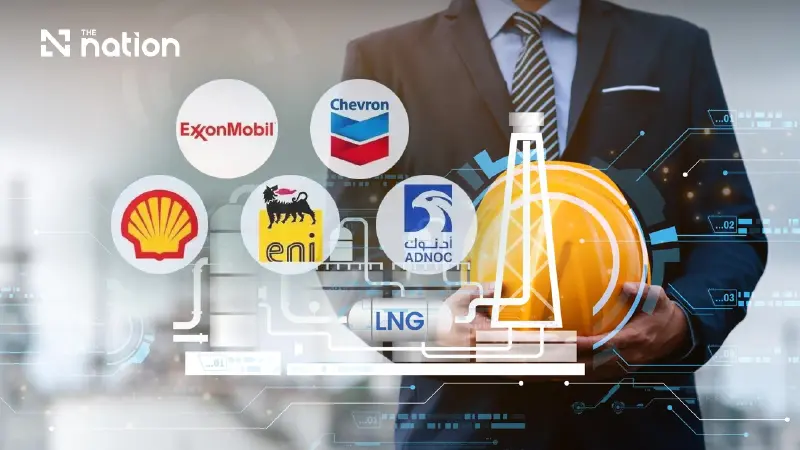
The Gastech discussion brought together executives from Shell, Abu Dhabi National Oil Company (ADNOC), ExxonMobil, Italy’s Eni and Chevron. Their remarks focused on the structural changes, diversified supplies and long-term contracts needed to strengthen energy security, particularly in Asia, which relies heavily on imported gas..
The panel, “Keeping gas competitive: Navigating fragility at the heart of global gas markets”, took place during Gastech 2026 in Bangkok, hosted by Thailand from September 14–17 at the Bangkok International Trade & Exhibition Centre.
Shell expects Qatar plant restart in early 2027
Cremers said restoring Shell’s Pearl gas-to-liquids (GTL) plant in Qatar would take about a year after missile damage sustained early in the conflict. Operations were expected to resume towards the end of the first quarter of 2027.
Cremers cited the repairs to Shell’s Pearl GTL plant in Qatar as evidence that restoring production and international shipping would take time even if the Strait of Hormuz reopened.
Countries would also need to replenish gas reserves, particularly in Europe, where stocks were described as being at record lows ahead of winter.
Cremers said major producers Qatar and the United Arab Emirates had been unable to operate normally during nearly seven months of disruption. An additional 20 million tonnes of LNG from the United States and Canada had partly offset the missing supplies, while withdrawals from storage, especially in China, had also helped.
Gas prices had risen less sharply than prices for refined fuels such as diesel and jet fuel, but Cremers said energy prices remained “too high” for a balanced market and were already affecting some industries.
The LNG industry’s response has included keeping offshore platforms and processing plants running and maintaining deliveries through longer shipping routes. Crews have had to spend longer at sea to bring gas to customers and sustain energy security.
Eni urges broader energy sourcing after Russia and Middle East crises
Guido Brusco, chief operating officer for global natural resources at Eni, identified two lessons from the Russia–Ukraine and Middle East crises:
Brusco said energy supplies needed urgent diversification across both geographical sources and types of energy commodity, while reducing greenhouse gas emissions.
Brusco said the world was becoming less globalised and more dependent on regional groupings, particularly to keep supply chains under greater control.
Brusco viewed the current crisis as a near-term disruption within the energy industry’s longer cycle. The central question, in his view, was how quickly stability could return, and experience suggested the industry often recovered faster than forecasts anticipated.
Gas prices remained particularly difficult to predict, Brusco said. Even the substantial research and forecasting budgets of global energy companies could not remove the uncertainty surrounding one of the energy market’s most volatile commodities.
ADNOC and ExxonMobil expand LNG portfolios
ADNOC is expanding towards a target of 47 million tonnes of marketable LNG a year by 2035, Rashid Al Mazrouei, its chief marketing and origination officer for LNG, said. ExxonMobil is also continuing major project investment, according to Peter Clarke, senior vice-president for LNG at ExxonMobil Upstream.
Al Mazrouei contrasted ADNOC’s 2035 ambition with the six million tonnes that marked the start of its LNG business around 50 years earlier. Expansion includes a larger trading business and investment through ADNOC and XRG in several parts of the world.
Al Mazrouei described the recent LNG market in terms of “resilience”: the ability to reroute supplies and manage a portfolio so customers still receive gas when supply chains come under severe pressure.
Buyers should secure LNG from a diversified portfolio rather than depend on a single source, Al Mazrouei said. Long-term contracts could give customers greater supply security while providing the certainty producers need to approve new investment.
Clarke said ExxonMobil had prepared for disruption even though it had not anticipated events of the severity experienced in recent months. Diversification across locations and the value chain, together with investment in logistics and backup systems, had enabled the company to redirect LNG to markets that needed it.
ExxonMobil expects the United States to supply around 30% of the world’s LNG by 2030, Clarke said.
Clarke said ExxonMobil’s long-term LNG outlook remained intact, with demand expected to grow. Investment was continuing in Golden Pass, whose capacity he put at 18 million tonnes a year, projects in Mozambique and expansion in Papua New Guinea.
Chevron backs long-term LNG contracts to underpin investment
Freeman Shaheen, president of Chevron Global Gas, said lasting partnerships between producers and buyers were essential to the LNG business. Long-term contracts were particularly important in enabling large projects to proceed.
Chevron has diversified its portfolio across Australia, Angola, Equatorial Guinea and the United States, Shaheen said. The company also designs flexible contracts around customers’ requirements, recognising that supply risks include natural disasters such as cyclones as well as geopolitical conflict.
Shaheen argued that sustained investment was necessary to avoid supply gaps, pointing to a slowdown in LNG capacity investment before Covid-19 that was followed by shortages and rising prices.
Asian buyers have been particularly important in supporting US LNG development through long-term commitments, Shaheen said. With LNG spot trading still less developed than markets for some other commodities, long-term agreements remained important for price stability and reliable supply.
Cremers agreed with Chevron that long-term contracts helped many buyers plan and manage price volatility. Access to those agreements, however, remained uneven.
Many smaller buyers and consumers, including in Asia, cannot secure long-term contracts and must depend on the spot market, Cremers said. When supply shortages drive spot prices higher, customers with the least ability to pay face the heaviest burden.