
Occupancy to Hit 98% as One Bangkok Retail Eyes Next Phase
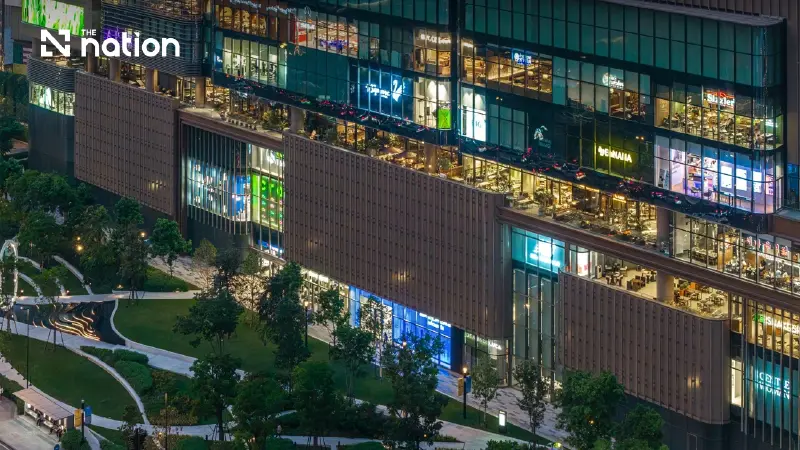


Chief retail officer Palinee Kongchansiri says 40 million visits and 96% occupancy validate the district model, with towers, hotels and homes still to come
- One Bangkok Retail's occupancy is currently at 96% and is projected to reach 98% by the end of 2026, having welcomed over 40 million visitors since opening.
- The "next phase" involves shifting from a shopping center model to an "urban lifestyle ecosystem," leveraging a balanced footfall split between its on-site population and destination shoppers.
- Future growth is expected to be driven by the expansion of the district, with a new office tower, a residential building, and two more hotels set to open by 2027.
- Success is attributed to a leasing strategy focused on flagship stores and first-to-market brands, complemented by a year-round calendar of events to attract visitors.
Chief retail officer Palinee Kongchansiri says 40 million visits and 96% occupancy validate the district model, with towers, hotels and homes still to come.
One Bangkok Retail has reported a more than 50% year-on-year increase in total retail sales as it enters its third year of trading, with management pointing to an expanding on-site population of office workers, residents, and hotel guests as the principal engine of growth into 2027.
Speaking at a media briefing on Tuesday, Palinee Kongchansiri, chief retail officer at One Bangkok, said the two-zone retail component—comprising Parade and The Storeys—had welcomed more than 40 million visitors since opening, with occupancy running at approximately 96% and projected to reach 98% by the end of 2026. The membership base has passed 300,000.
The figures land at an awkward moment for Thai retail. Consumer spending has been subdued through a prolonged period of weak economic growth, high household debt, and uneven tourist arrivals, and landlords across the Bangkok market have been competing for a shrinking pool of discretionary baht.

Palinee acknowledged the backdrop directly, saying the sector had been tracking economic conditions closely for the past two to three years. Consumers are still spending, she argued, but have become markedly more selective about where that money goes—which places the onus on operators to give shoppers a specific reason to choose one destination over another.
That framing underpins what the company is calling "The Next Chapter of One Bangkok Retail", a positioning shift away from the shopping-centre label towards what management describes as an urban lifestyle ecosystem.

Captive audience, weekend upside
The most commercially significant datapoint disclosed on Tuesday was the composition of footfall. Palinee said the split between internal and external visitors now sits at precisely 50/50: half the traffic comes from the district's own population of office workers and residents, and half from destination shoppers and tourists drawn by the tenant mix.
For a development of this scale, that balance matters more than headline visitor numbers. A captive weekday audience insulates tenants from the volatility of tourist arrivals and seasonal promotions, while the external half provides the weekend and holiday peaks that drive sales density.
Weekend footfall has now grown to match weekday levels, Palinee said — an unusual outcome for an office-led district and one that has forced an operational response. Parking capacity reserved for office tenants from Monday to Friday is released to retail customers on Saturdays and Sundays, keeping infrastructure productive across the full week rather than idling it for two days in seven.

Asked whether the first two years had met corporate targets, Palinee said operational performance had aligned fully with initial expectations. Establishing footfall and customer momentum from a standing start as a newcomer to the sector represented a significant result, she said, while adding that the team did not regard the milestone as a finish line.
The biggest continuing challenge, she said, is the need to keep innovating — designing fresh marketing campaigns and new retail concepts and events compelling enough to convert first-time visitors into repeat ones.

Flagship strategy and the tenant pipeline
The leasing approach has leaned heavily on flagship and first-to-market formats rather than volume. The portfolio now runs to more than 500 fashion and lifestyle brands and over 400 food and beverage outlets, anchored by standalone boutiques including Rolex, Patek Philippe, On Store, Cova Bangkok, BOSS and BOSS Café, and Carnival.
Experiential formats — TECHHOUSE by Dotlife, One Ultra Screens, The Decorum Park House, Jim Thompson, The Wireless Club and HarborLand, among them — sit alongside dining anchors including MITSUKOSHI DEPACHIKA, Wolfgang's Steakhouse, Bardo and Chang Canvas.

A further cohort arrives in the final quarter. Tsutaya Bookstore opens its first Thailand branch in October, alongside Edikted, the US-founded contemporary streetwear label making its Asian debut, and HarborLand Island, an indoor water park and family entertainment concept.
In November, the Tic Tac Toe group opens a nightlife venue of close to 1,000 square metres comprising Yoru, Checkmate and Hotline. New dining additions include Ruay Mitr Boiled Rice, Yamashita Honki Udon, Haku Sushi Bar and a concept from the Shabu Baru group.
The company is also programming POST 1928, a further retail component being developed to house new brands and concepts.


Events as a traffic instrument
Alongside leasing, One Bangkok is running what amounts to a year-round events calendar as a footfall tool, spanning the Lunar New Year Festival, Maha Songkran Festival, Pride Month, Children's Day and Mother's Day, plus running clubs, outdoor concerts, creative markets and art workshops.

The fourth quarter carries the heaviest programming. A second-anniversary campaign, "Better Twogether, Double the Joy", runs from 1 October to 13 November with double-tier rewards; One Oktoberfest follows from 28 October to 1 November; and the calendar closes with Onederous Christmas 2026, themed "A Onederous Voyage", and the One Bangkok Countdown Celebration 2027.

The 2027 case
Palinee's growth thesis rests less on retail leasing than on the rest of the district coming online. A second office tower, one residential building and two further hotels are due to open, each adding permanent or high-frequency population to the catchment.
The luxury hospitality circuit, including The Ritz-Carlton and Andaz, forms part of that build-out, as does fuller integration with the mass transit network.

The 2027 objectives she set out are consistent year-on-year growth across key metrics, higher average spending per head through premium service and loyalty layers, and full maturation of the ecosystem—with an enlarged on-site office population the principal lever.
On competition along the Rama IV and Silom corridor, where several major schemes are in play, Palinee took the view that additional projects strengthen rather than dilute the district, turning the wider area into a primary lifestyle and shopping destination and expanding the total pool operators are competing for.
