
Anutin cites one extra US tariff condition ahead of UN trip
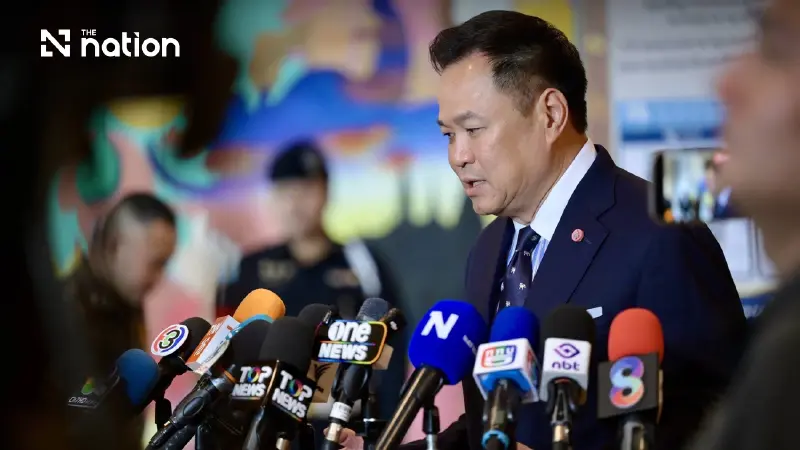


Anutin says no Trump meeting is scheduled in New York, while Thailand pursues lower tariffs and prepares for Cambodia issues at the UN assembly.
Thailand must resolve an additional condition raised by the United States before concluding its tariff agreement, Prime Minister and Interior Minister Anutin Charnvirakul said on Sunday (September 20, 2026), although Deputy Prime Minister and Commerce Minister Suphajee Suthumpun had assured him a deal remained achievable. Anutin said no meeting with US President Donald Trump had been scheduled during his trip to the 81st session of the United Nations General Assembly (UNGA81) in New York.
Anutin leaves additional US condition unspecified
Anutin said he had not asked for details of the additional US condition, but Suphajee had told him the agreement could be concluded without difficulty or substantive revisions. He described Suphajee as confident and said he would speak to her again.
The negotiating teams and trade representatives from both sides had reported that discussions were proceeding as expected, Anutin said. He stressed that he was not the person setting the negotiating agenda, while the Thai team had not reported any issue that could not be resolved.
Thailand had already obtained the tariff rate it wanted within the existing negotiating framework, Anutin said. Asked whether the government would keep the rate at 19%, however, he said Thailand would try to bring it down as far as possible.
Anutin described negotiations as a two-way process in which each side began with its strongest demands before working towards a mutually acceptable outcome. Neither side could expect to obtain everything it wanted, he said.
No Trump meeting scheduled for New York

Despite having no scheduled meeting, Anutin did not rule out an encounter with Trump during the New York visit. Asked whether the two leaders might have an opportunity to talk, he replied: “Play it by ear.”
During the New York trip, Anutin said he would have an opportunity to speak with Suphajee’s representatives and officials from the Office of the United States Trade Representative (USTR). The discussions would remain within the established framework, he added.
A draft tariff agreement would be sent to the leaders of both countries when the negotiations reached the appropriate stage, according to Anutin. Talks between the leaders would normally be arranged in person or by telephone, with the scope of any discussion becoming clearer at that point.
Thailand prepares to address Cambodia issues at UNGA81
Anutin said he would discuss commitments contained in the Thailand–Cambodia Joint Statement with Trump if they had an opportunity to speak. He emphasised that the trip was to attend UNGA81, rather than a bilateral visit to a particular country.
Thailand was prepared to respond if Cambodia raised the border dispute at UNGA81, Anutin said. “We have a full team,” he said, adding that the Foreign Ministry was confident in the steps Thailand had taken in response to developments.
Anutin also said Thailand was engaged in negotiations under the United Nations Convention on the Law of the Sea (UNCLOS).
Deputy Prime Minister and Foreign Minister Sihasak Phuangketkeow had held an initial meeting with Cambodian representatives the previous week, Anutin said. Thailand had clearly set out its position at that meeting, Anutin added.
