
Thailand accelerates bid to become regional semiconductor hub
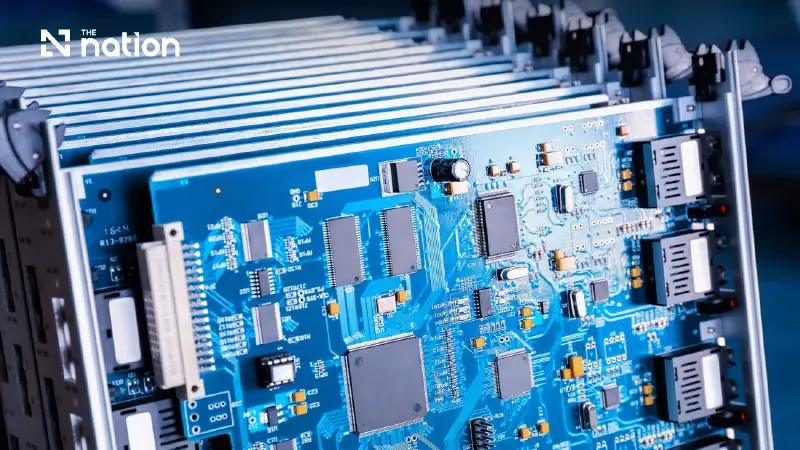


Thailand is stepping up its semiconductor ambitions with a 2050 roadmap focused on investment, talent, technology and stronger local supply chains.
- Thailand is accelerating its plan to become a regional semiconductor hub, attracting significant foreign investment such as a new US$1.4 billion complex from Infineon Technologies.
- The government has launched a long-term National Semiconductor Strategy, which includes a "Made-in-Thailand Chip" initiative, to build a competitive and resilient domestic industry.
- A key part of the strategy is developing a skilled local workforce through training, university collaborations, and creating thousands of jobs to support global supply chains for AI and electric vehicles.
- The initiative aims to strengthen Thailand's role in the global supply chain and is linked to a broader economic shift towards an AI-driven economy.
Thailand is stepping up its bid to become a regional semiconductor hub, combining major foreign investment with a long-term strategy to develop domestic technology, skilled workers and a more integrated chip supply chain.
Prime Minister Anutin Charnvirakul outlined the ambition while speaking during the inauguration ceremony of Infineon Technologies AG’s US$1.4 billion (48 billion baht) power semiconductor manufacturing complex in Samut Prakan province on Thursday (October 1).

“The semiconductor ecosystem is deeply interconnected, and Thailand is stepping up to play an increasingly important role in the global supply chain. Thailand’s National Semiconductor Strategy sets a clear direction for building a competitive and resilient chip industry,” Anutin said.
The recently approved National Semiconductor and Advanced Electronics Strategy sets out a roadmap through 2050 under the “Made-in-Thailand Chip” initiative. Priority segments include power semiconductors, sensors and photonics, supported by five pillars covering investment, talent, technology, infrastructure and the business environment.

FastPass supports strategic investment
The government is also using the Thailand FastPass framework to coordinate agencies responsible for energy, customs, industrial estates and environmental approvals, with the aim of shortening the process from investment decisions to implementation.
Deputy Prime Minister and Finance Minister Ekniti Nitithanprapas linked the semiconductor push to Thailand’s broader shift towards an AI-driven economy.
“Thailand must advance on two fronts simultaneously: ‘AI in All’, applying AI to raise productivity across every sector of the economy, and ‘All in AI’, building the infrastructure and ecosystem that the AI economy requires,” Ekniti said.
He added that Infineon’s investment would help anchor semiconductor capabilities needed for AI, electric vehicles, clean energy, data centres and industrial automation.
“Our goal is to turn investments of this scale into technology transfer, high-skilled jobs and stronger local supply chains, building an ecosystem that creates lasting opportunities for Thai people, businesses and industries,” he said.

Building talent and technological capability
Anutin stressed that Thailand’s semiconductor ambitions would depend not only on attracting factories and investment but also on developing the workforce required to support a more advanced industry.
“Building a semiconductor industry is not only about facilities; it is about people. I therefore commend Infineon for investing in our country’s human capital, recruiting and training Thai skilled engineers, including through international training opportunities,” he said.
Narit Therdsteerasukdi, secretary-general of the Thailand Board of Investment (BOI), similarly framed Thailand’s strategy as an effort to build domestic technological capability rather than simply increase production capacity.
“Our strategy goes far beyond attracting capital or adding production capacity; it is about building technological capability in Thailand,” Narit said.
“Attracting the world’s leading power semiconductor company demonstrates Thailand’s readiness to supply critical components for global trends such as digitalisation and the energy transition, and advances our long-term vision of chips engineered and made in Thailand,” he added.

Infineon’s Samut Prakan complex is planned across five modules and is expected to become the company’s largest back-end assembly and testing centre worldwide when fully developed.
The BOI-promoted project is expected to create more than 5,000 skilled local jobs. Infineon is also working with the Thai Semiconductor Industry Association and local universities to develop at least 60 specialised semiconductor courses, train 1,100 undergraduate students and support 18 joint research and development projects.
Anutin also encouraged Infineon to explore further opportunities in Thailand, including higher-value and upstream activities, as the government seeks to make the country a more important part of global semiconductor supply chains.
“Together, we can build a semiconductor supply chain that is competitive, resilient, secure, and sustainable, and make Thailand an increasingly important part of Infineon’s global success,” Anutin concluded.
