
Thai Airways Ground Crisis Exposes Severe Structural Vulnerabilities in Subcontracting Model
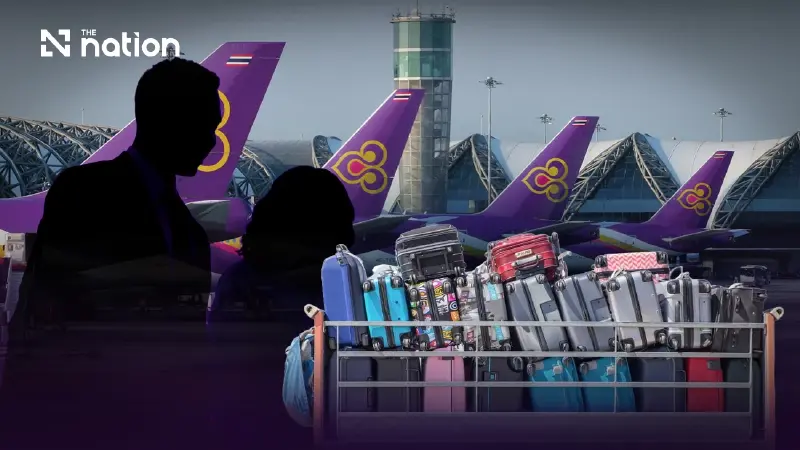


Over-reliance on subcontracted staff leaves flag carrier vulnerable as CAAT pushes to dismantle Suvarnabhumi Airport’s dual-operator monopoly
- The crisis stemmed from Thai Airways' heavy reliance on a subcontracting model for ground staff, which created severe labor shortages and operational failures when daily contract workers were absent.
- This vulnerability is compounded by a structural duopoly at Suvarnabhumi Airport, where ground handling services are restricted to just two providers, magnifying the impact of disruptions.
- The staff shortages, exacerbated by heavy rain, resulted in widespread flight cancellations and severe baggage delays, forcing the airline to reduce its schedule to clear the backlog.
- In response, Thailand's Civil Aviation Authority is pushing to dismantle the airport's duopoly and allow qualified airlines to manage their own ground services to prevent future collapses.
Over-reliance on subcontracted staff leaves the flag carrier vulnerable as CAAT pushes to dismantle Suvarnabhumi Airport’s dual-operator monopoly.
A severe ground handling crisis at Thai Airways International Public Company Limited (THAI) has exposed the fragility of the national carrier’s cost-cutting reliance on subcontracted labour, following widespread flight cancellations and severe baggage delays at Suvarnabhumi Airport.
According to a detailed report by Krungthep Turakij, heavy rainfall and localised flooding across Bangkok late last week compounded pre-existing ground staff shortages, forcing THAI to temporarily scale down operations to resolve an escalating backlog of stranded passenger luggage.
A source within the Ministry of Transport disclosed to Krungthep Turakij that the root cause lies in THAI’s operational workforce model.
Ground services—which cover aircraft support equipment, baggage and cargo handling, passenger transfers, flight dispatch, and crew catering—are managed through its subsidiary, WingSpan Services Company Limited.
WingSpan further subcontracts workers on daily and monthly contracts without standard long-term employment contracts or employee welfare benefits. While subcontracting reduces overheads, it introduces high operational risks due to worker absenteeism.
Ongoing job postings by WingSpan for baggage tractor drivers and cabin crew support personnel underscore an acute, unresolved labour deficit. When daily subcontracted staff fail to report for duty, the lack of redundancy causes ground handling systems to stall instantly.

Suvarnabhumi Duopoly Under Scrutiny
The crisis has also drawn attention to structural bottlenecks at Suvarnabhumi Airport, where ground services and apron equipment operations are restricted to just two providers: THAI and Bangkok Flight Services (BFS).
With THAI handling its own fleet of roughly 300 daily flights alongside numerous customer airlines, minor operational disruptions rapidly snowball into major system failures.
To address these systemic vulnerabilities, the Civil Aviation Authority of Thailand (CAAT) is pushing to lift Cabinet-imposed concession limits. CAAT advocates adopting the model used at Don Mueang Airport, which allows airlines with sufficient capacity to conduct self-handling operations.
Although the Cabinet approved a resolution on 12 September 2026 allowing AOT Ground Aviation Services Company Limited (AOTGA) to enter as a third operator at Suvarnabhumi, CAAT maintains that permitting qualified airlines to manage their own ground services is essential to prevent future operational collapses.

Operational Recovery and Passenger Relief
THAI Chief Executive Officer Chai Eamsiri confirmed that 90% of passenger ground service staff and 80% of apron personnel have returned to duty.
However, due to the volume of pending tasks and accumulated baggage, THAI implemented targeted flight reductions to clear stranded luggage quickly.
Normally operating 115 daily flights, THAI cancelled 28 flights at the onset of the crisis, followed by an additional 15 cuts on 1 October. Daily schedules are projected to rise back to 105 flights on 2 October, with full operational capacity expected to resume within seven days.
Chai emphasised that THAI is prioritising assistance for passengers affected between 26 and 28 September, expediting baggage deliveries in coordination with Airports of Thailand Public Company Limited (AOT).
He expressed willingness to implement regulatory recommendations and offered a formal apology to affected travellers and the Thai public.
