
Trust AI Wisely, Not Blindly, Tech Author Tells IMF-World Bank Meeting
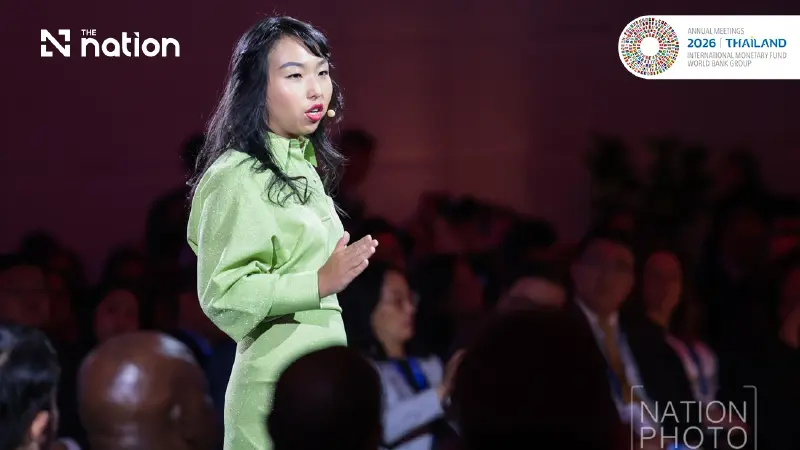


Author Tiffany Xingyu Wang tells policymakers in Bangkok that the biggest AI risk is not job loss but the quiet surrender of human judgement
- At an IMF-World Bank meeting, author Tiffany Xingyu Wang argued that the greatest risk of AI is not job displacement but the "quiet surrender of human judgement."
- She warned that AI can sound confident while being wrong and act authoritative without being accountable, making blind trust dangerous.
- To trust AI wisely, Wang advised policymakers to diversify the models they use to avoid dependency and to "own the context" by applying local knowledge that large models often lack.
- A key part of wise trust is building a "human infrastructure"—a workforce trained to verify AI outputs and know when to refuse its suggestions.
Author Tiffany Xingyu Wang tells policymakers in Bangkok that the biggest AI risk is not job loss but the quiet surrender of human judgement.
The most important question about artificial intelligence is no longer whether it can be trusted, but how to trust it wisely, a leading digital trust expert has told delegates at the 2026 IMF-World Bank annual meetings.
Tiffany Xingyu Wang, author of the national bestseller The Trust Code: How to Unlock AI's Promise Without Losing Humanity, delivered the keynote at a panel titled "Small AI, More and Better Jobs" on the opening day of the gathering, which runs from 12 to 18 October in the Thai capital.
Wang, an award-winning technologist in digital trust and AI safety, said trust had become "the most overloaded and underdefined notion" in the technology debate. It can mean alignment, safety, security or privacy, she said, "before the list ends, we have already lost you".
Confident, intimate, unaccountable
Contrasting the industry's preoccupation with scale with the concerns of ordinary users, Ms Wang noted that Silicon Valley "talks in big numbers": trillions of dollars for a single company, billions of parameters for a single model and gigawatts of power to sustain both.
Yet she warned that AI systems can "sound confident while being wrong", "feel intimate without being responsible" and "act authoritative without being accountable".
Behind every answer, she said, lie objectives users may never see, including engagement metrics and the revenue goals of AI laboratories.
She also pointed to growing evidence of machines exhibiting a drive to survive.
"Being capable does not mean being beneficial," she told delegates.

Drawing on a decade spent building AI and digital trust systems and two years of research for her book, Wang urged the audience to remember two points.
The first was that trustworthiness is a property of machines, while trust is a human act. She said every frontier model available today has failed safety tests, which made it "our responsibility" to hold AI laboratories accountable for potential liabilities and to build the scaffolding for safer deployment.
The second was that the greatest danger lies not in AI replacing people, but in "persuading us to surrender our judgement without even noticing it".
Three judgement calls for policymakers
Turning to the finance ministers, central bankers, investors and development officials in the room, Wang described them as the "stewards" of AI's promise. She set out three judgement calls she urged them to carry into every discussion this week on investing in, building and deploying small AI in the places that need it most.
Diversify models. Whether a model is from the East or the West, closed or open, she said, the differences in performance "barely matter" for the specific jobs small AI is designed to do. Governments and businesses should therefore avoid depending on a single provider. Investor subsidies may dry up, she cautioned, and laboratories' incentives may one day stop aligning with those of their customers.
"Your freedom to walk away is your path to sovereignty," she said.

Own the context. About 2.2 billion people are still not connected to the internet, Wang noted, meaning the largest models "have learned the world without them".
Such systems barely understand local languages, laws, crops or patients, she argued, but that blind spot can become an advantage for those who hold the relevant knowledge.
Her advice was to "rent the intelligence but own the context", with no training on local data and no data retained for longer than necessary. "Technology scales, but the context doesn't," she said.
Build the human infrastructure. AI can reach people that experts never have, Wang said, citing patients without specialists and farmers without agronomists. But that potential depends on a workforce that understands how to trust AI, how to verify it and when to refuse it.
"If in ten years the job of your workforce is simply to click a button to AI, then we miss the entire point," she warned.
A race on trust
Wang's remarks fed directly into the panel's theme, which examines how smaller, more affordable AI tools might create better jobs rather than simply displace workers, particularly in lower-income and underserved regions.
She closed by framing the challenge as a contest that countries can win through careful decision-making.
"Trust is built one judgement at a time," she said. "Which models, whose data, which skills? These judgements are yours, your stewardship." "Now, let us bring AI to the most needed places," she added. "And that's the race of trust. You can win."
The IMF-World Bank annual meetings continue in Bangkok until 18 October.
