
Chinese and Japanese carmakers adjust strategies as Thailand targets new excise rules in September
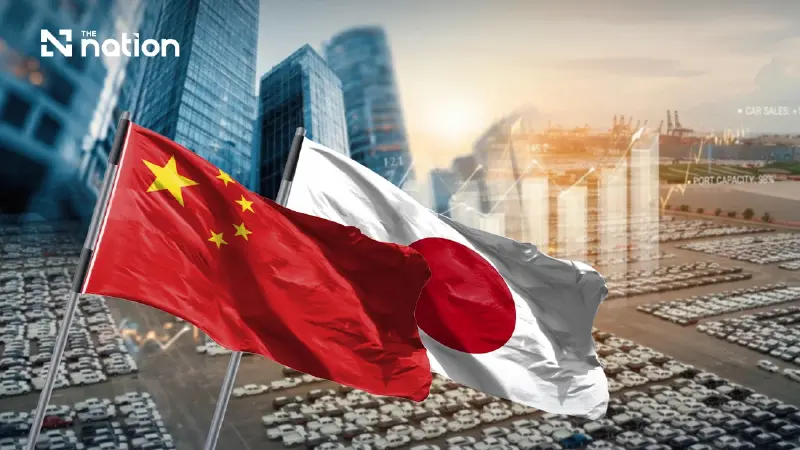


The Finance Ministry aims to finish September tax rules offering lower excise rates to carmakers with Thai factories that use locally made parts
- Thailand's Finance Ministry is planning to overhaul vehicle excise taxes, offering lower rates to carmakers that establish local production facilities and use domestically made parts.
- Fully imported vehicles from companies that do not invest in Thai production will be subject to higher tax rates to protect the domestic industry.
- The new policy is a response to a surge in imported electric vehicles which industry groups claim are disadvantaging local manufacturers and the country's extensive automotive supply chain.
- The proposed tax structure is expected to be finalized by September 2026 and aims to attract genuine long-term manufacturing investment for all vehicle types.
Finance Ministry is preparing another overhaul of vehicle excise taxes, with lower rates planned for carmakers that establish genuine production operations in the country and use locally manufactured materials or components.
Fully built-up (CBU) vehicles imported for sale without an accompanying investment in Thai production would remain subject to higher excise rates.
The ministry has instructed Permanent Secretary Lavaron Sangsnit and Excise Department Director-General Pornchai Thiraveja to complete the proposed structure by September 2026.
It would be issued as a ministerial regulation under the Excise Tax Act and could take effect later this year after the details are considered by the Cabinet.

EV growth shifts focus towards domestic production
Thailand introduced its latest vehicle excise-tax structure on January 1, 2026, primarily to maintain support for electric vehicles.
The new review has a different emphasis, seeking to balance EV expansion with the interests of domestic manufacturers, parts suppliers and workers.
EVs remained a small segment of the Thai market until MG introduced the ZS EV in 2019 at a more accessible price, although it remained more expensive than comparable internal-combustion engine (ICE) vehicles.
EV sales subsequently reached several thousand units for the first time.
Additional brands entered the market as government investment and consumer incentives, including the EV 3.0 programme, accelerated adoption.
EV sales reached about 120,000 units in 2025 and could approach 200,000 in 2026.
Sales in the first half of this year rose by 93% to approximately 105,000 vehicles.
Thailand’s overall car market had contracted for several consecutive years before recording a modest increase in 2025. First-half sales in 2026 rose by 14% to 346,000 vehicles.
Automotive industry representatives argue that this recovery has not extended across the entire market.
EVs accounted for 30% of first-half sales, with imported vehicles representing more than half of that volume and providing limited benefits to domestic manufacturing.
EV expansion has also been supported by volatile and rising oil prices and an intensifying price war involving more than 20 brands.

Chinese imports retain 30–40% cost advantage
The EV 3.0 programme, which provided subsidies of up to 150,000 baht, has ended. Its successor, EV 3.5, offers support of up to 50,000 baht.
Industry representatives say the longer-term imbalance arises from the 0% customs duty available to Chinese vehicles under the ASEAN-China free-trade agreement.
This has allowed some brands to rely entirely on imported vehicles without planning completely knocked-down (CKD) production in Thailand.
Imported EVs are subject to a 10% excise tax, compared with 2% for vehicles assembled locally.
Industry representatives argue that this eight-percentage-point difference is insufficient to encourage investment because large-scale Chinese production and access to raw materials make manufacturing there 30–40% cheaper than in Thailand.
Japanese manufacturers press for tax changes
Automotive groups warn that continued dependence on imported EVs could damage Thailand’s market, production industry and established parts supply chain.
More than 800,000 people work across the country’s automotive sector.
Ten automotive associations, the Thai Automotive Industry Association and the Federation of Thai Industries’ Automotive Industry Club are among the groups seeking government action.
Suphakorn Rattanawaraha, executive vice-president of Toyota Motor Thailand, also drew attention to the industry’s difficulties through a personal Facebook post containing the line: “We lost Suzuki, but gained Neta.”
Suphakorn later argued that some imported EVs or locally assembled vehicles qualify for the 2% excise rate despite undergoing little more than basic assembly involving screws and adhesive.
He estimated that the existing arrangements cost the country tens of billions of baht annually. Toyota, by comparison, pays at least 20 billion baht in excise tax each year, he added.
Suphakorn called for an immediate increase in excise tax on imported EVs, arguing that the present structure distorts the market.
A higher rate would help distinguish manufacturers committed to investing in Thailand from those relying mainly on imports, he said.
Sarote Maartlert, vice-president of Mitsubishi Motors Thailand, said carmakers, industry associations and parts manufacturers had discussed the issue with the government.
He described the government’s response as positive, saying officials understood the need to balance market development with the long-term interests of Thailand’s automotive industry.
“The government has reviewed the details, and this also concerns state revenue. Ultimately, I believe this change will directly benefit consumers,” Sarote said.
Koji Iwanami, president and CEO of Honda Automobile (Thailand), urged the government to consider lowering duties on vehicles imported from Japan or bringing them closer to those applied to EVs imported from other countries.
Honda is interested in bringing several Japanese models to Thailand, but existing import duties make it difficult to offer competitive prices.
EVs and range-extended electric vehicles (REEVs) from some countries, by contrast, enter Thailand with no import duty.
XPeng studies Thai production base
James Wu, vice-president of Chinese EV manufacturer XPeng, said the company had been aware of discussions about Thailand’s excise-tax restructuring and was preparing for a possible increase in taxes on imported EVs.
XPeng began studying the possibility of establishing production in Thailand about six months ago.
A firm decision will depend on the final tax rates and investment incentives announced by the government.
“XPeng remains clear that Thailand is one of its core business plans, whatever changes are made,” Wu said.
“We are ready to adapt to the rules. If we open a factory in Thailand, we will also need to consider opportunities across the wider region, including ASEAN.”
Wu said XPeng understood that the government had initially promoted EVs to establish Thailand as a regional production hub but now also needed to protect domestic parts manufacturers.
XPeng currently assembles its G6 and X9 models in Indonesia. The company has recorded sales of about 4,000 vehicles there, compared with cumulative sales of more than 10,000 in Thailand.
Its newly introduced L03, priced from 899,000 to 1.2 million baht, is intended to broaden its customer base, particularly among younger buyers.
Lower rates tied to factories and Thai parts
Deputy Prime Minister and Finance Minister Ekniti Nitithanprapas said lower excise rates would be available only to businesses establishing production bases and complying with requirements to use locally manufactured materials or components.
The proposed benefits would be open to existing and new manufacturers producing ICE vehicles, plug-in hybrid electric vehicles (PHEVs) or EVs.
Eligible manufacturers would need to invest in an operating factory, use domestic materials or parts and begin producing vehicles for export.
Companies importing CBU vehicles without investing in Thai production would face higher excise rates.
The distinction is intended to prevent domestic investors from being placed at a disadvantage and to attract genuine manufacturing investment.
The ministry expects to complete its consideration by September, before the end of the fiscal year, and then submit the proposal to the Cabinet.
Ekniti said the overhaul could stimulate domestic production, protect Thai employment and increase government revenue from consumers who continue to choose imported vehicles.
“Concerns over revenue collection may be misplaced because this restructuring could actually increase revenue,” he said.
“Anyone who wants an imported car will face higher tax, while tax on domestically produced vehicles is already very low. I believe this will kill several birds with one stone by supporting domestic production and employment.”
Thailand retains deep Japanese supply chain
Danucha Pichayanan, secretary-general of the National Economic and Social Development Council, said efforts by Indonesia to persuade major manufacturers such as Toyota to relocate production would face substantial obstacles.
Thailand and Japan have developed a closely connected automotive supply chain over more than 30 years.
The production ecosystem covers basic components through to advanced technology, creating a significant barrier for competing locations.
Relocating production would also require manufacturers to consider supply-chain readiness, costs and production stability.
Danucha expressed confidence that Thailand would remain a strategic and efficient ASEAN production base for Japanese carmakers.
Thailand’s automotive industry nevertheless faces continuing pressure. In the second quarter of 2026, the value of passenger-car exports using conventional combustion technology fell by 42.4%.
Source: Bangkokbiznews
