
Thai auto groups seek 32% tax on imported EVs to protect local industry
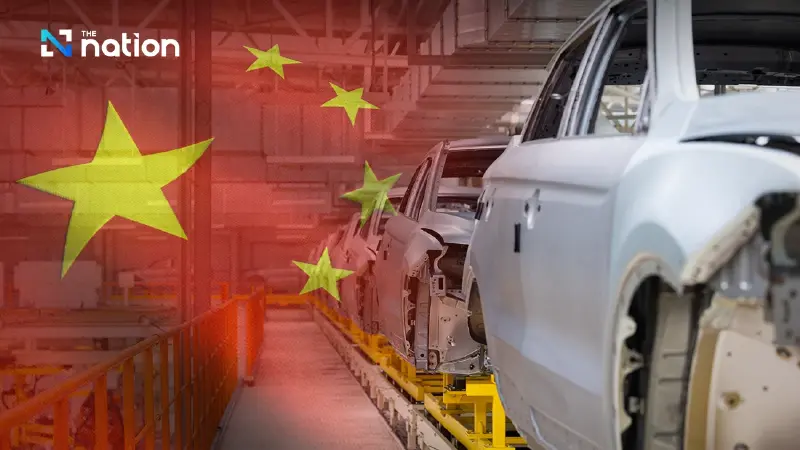


A coalition of 10 automotive associations wants Thailand to raise excise tax on fully imported EVs to at least 32%, warning that cheaper Chinese imports could damage local production and auto-parts suppliers.
A coalition of 10 automotive associations representing more than 1,500 operators will urge the government to raise the excise tax on fully imported electric vehicles to at least 32%, in a bid to protect Thai vehicle production and auto-parts suppliers from cheaper Chinese imports.
The Electric Vehicle Association of Thailand (EVAT), the Thai Auto-Parts Manufacturers Association (TAPMA) and allied industry groups are preparing to submit emergency proposals to the government on May 14, calling for measures to stabilise Thailand’s automotive and auto-parts industries.
The proposals focus mainly on Chinese carmakers, covering both imported EVs and vehicles assembled in Thailand.
Industry warns of risk of collapse
The coalition warned that Thailand’s automotive industry is facing its most serious crisis as the country shifts towards electric vehicles.
It said the rapid EV transition, combined with the cost advantage of imported vehicles from China, could severely weaken local production and threaten the survival of Thai auto-parts manufacturers.
The group said producing vehicles in Thailand costs around 30-40% more than importing them from China, putting local manufacturers and parts suppliers at a disadvantage.
32% tax proposed for fully imported EVs
The key proposal is to reform the excise tax structure for electric vehicles.
The associations want the excise tax on fully built-up imported EVs, or CBU EVs, to be raised to at least 32%. This would create a 30-percentage-point gap with domestically produced EVs, which are currently subject to a 2% excise tax.
The group said the higher tax would help offset the cost gap between local manufacturing and imports, while encouraging carmakers to continue investing in production in Thailand.
Fear Chinese automakers may return to full imports
The associations also expressed concern that once the EV 3.5 support scheme ends, carmakers with production bases in China may revert to importing fully built-up vehicles instead of manufacturing in Thailand.
They warned that if the government does not introduce stronger replacement measures, some automakers could stop local production altogether.
Such a move would hit Thailand’s automotive supply chain hard, especially local parts makers that rely on orders from vehicle manufacturers.
Import quota tied to Thai production
The coalition is also proposing an import quota system linked directly to local production.
Under the proposal, companies that make genuine investments in vehicle production in Thailand would be allowed to import CBU EVs at the existing lower excise tax rate of 10%.
However, the quota would be capped at no more than 10% of each company’s production volume.
The aim is to prevent companies from relying mainly on imports while still benefiting from tax privileges intended to support Thailand’s EV industry.
Local content rule of 80% sought
The industry groups are also calling for tougher local content requirements.
They want locally sourced parts to account for at least 80% of a vehicle’s value, along with a revised calculation method to close loopholes.
The group said the current system should be tightened to prevent profits or labour costs from being counted in ways that weaken the intended support for Thai parts manufacturers.
Emergency package to be submitted May 14
EVAT, TAPMA and their partner associations are scheduled to hold a press conference and submit their proposals to the government on May 14.
The move is expected to increase pressure on policymakers to balance Thailand’s EV promotion strategy with the need to protect domestic manufacturing, jobs and the country’s long-established auto-parts supply chain.
