
Vietnam proposes five-year car tax break extension to 2032
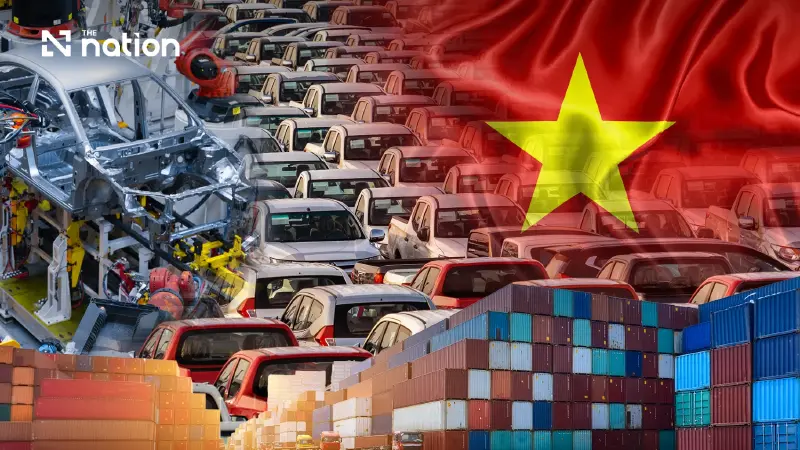


Vietnam’s proposed car tax incentives could open opportunities for Thai parts and technology suppliers, subject to final rules and export conditions.
- Vietnam's Ministry of Finance has proposed extending its automotive manufacturing and assembly tax incentive program by five years, from its scheduled end in 2027 to the end of 2032.
- The extension aims to provide businesses with policy certainty to attract investment, expand capacity, and strengthen Vietnam's role in regional automotive production and exports.
- Key reforms in the draft proposal include a 0% import duty on components for vehicles destined for export, increased minimum production thresholds, and updated Euro emissions standards.
Vietnam’s Ministry of Finance has proposed extending automotive tax incentives by five years to the end of 2032, potentially opening new business for Thai suppliers. The Thai Trade Center in Ho Chi Minh City outlined the proposal and opportunities in a report published on 16 October 2026.
The proposed extension would prolong Vietnam’s vehicle manufacturing and assembly incentive programme beyond its scheduled expiry at the end of 2027. The draft remains under consideration by Vietnam’s Ministry of Justice.
Vietnam’s Finance Ministry intends the extension to give businesses greater policy certainty when planning investment, capacity expansion, technology development and supply chains. The broader aim is to attract investment and strengthen Vietnam’s role in regional automotive production and exports.
The draft would amend Decree No. 26/2023/NĐ-CP on export tariffs and preferential import tariffs. Its seven areas of reform cover programme duration, the scope of tax benefits, Euro emissions criteria, eligibility assessment periods, minimum vehicle output, rules for environmentally friendly vehicles and simpler government procedures.
Thai suppliers could gain from Vietnam’s production plans
The Thai Trade Center sees opportunities for Thai producers of automotive parts, raw materials, machinery, production equipment and technology to supply vehicle manufacturers and assembly plants in Vietnam.
Thailand’s established vehicle and parts manufacturing base could help businesses supply Vietnamese factories and tier-one suppliers that need quality materials and components meeting the specifications of individual vehicle models, according to the trade office.
The trade office identified potential demand for products requiring advanced manufacturing, including precision components, electronics, control systems and other parts for modern vehicles, alongside production machinery and equipment. Demand could increase as investment and manufacturing capacity expand in Vietnam.
Vietnam’s moves towards stronger environmental standards and environmentally friendly vehicles could also create openings for Thai suppliers of electric-vehicle technology, electronic components, energy-saving systems and emissions-reduction technology, the trade office said.
Zero-duty imports would carry a one-year export deadline
Vietnam’s draft would allow qualifying manufacturers to apply a 0% import duty to components used to manufacture, process or assemble vehicles for export. Vehicles made from those components would have to be exported within one year of registration of the import customs declaration.
To qualify for the 0% rate at importation, a manufacturer would need an existing vehicle export contract or a contract to sell vehicles to a company that already held an export contract when the customs declaration was registered.
Manufacturers unable to meet the conditions at importation could pay the normal duty and seek a refund after the vehicles were exported. Alternatively, they could participate in the vehicle manufacturing and assembly incentive programme if they met its eligibility requirements.
The Thai Trade Center said the proposed mechanism could lower input costs, reduce the working capital tied up in imported components and improve liquidity and cash-flow management. Those benefits would be particularly relevant to exporters competing on price and delivery times.
Manufacturers using the proposed tax concession would need records and traceability systems linking imported components to production and subsequent exports. Failure to export within the prescribed period could trigger import duty and additional charges under the applicable rules.
Trade office cites higher output thresholds from 2027
The Thai Trade Center’s 16 October report outlines proposed increases in minimum production thresholds over three phases: 2027, 2028–2029 and 2030–2032.
For petrol or diesel passenger vehicles with no more than nine seats and engine capacity not exceeding 2,500cc, the initial proposals cited in the report set minimum total output at 23,000 vehicles in 2027, 25,000 in 2028–2029 and 29,200 in 2030–2032. These are draft figures, not final requirements.
Vietnam’s draft also envisages phased adjustments for trucks, minibuses, scheduled-service buses and other passenger buses.
The Thai Trade Center said higher thresholds could encourage capacity expansion, economies of scale and more efficient production, while placing additional pressure on smaller manufacturers or businesses with limited capital and technology.
Changes to Euro emissions criteria and rules for environmentally friendly vehicles would also require manufacturers to prepare their production technology, quality controls and environmental compliance systems, according to the trade office.
Thai businesses advised to check final eligibility rules
The Thai Trade Center advised Thai businesses to examine the final conditions for 0% import duty, export deadlines, refunds, customs requirements and technical standards before using the scheme to support investment or trading decisions.
The trade office recommended building relationships with vehicle manufacturers, assembly plants and suppliers at tiers one to three, while adapting products to individual manufacturers’ standards and specifications.
Thai suppliers should also improve production standards and traceability to meet quality, environmental and export requirements, the trade office said. Technology cooperation with Vietnamese partners could help businesses progress from exporting goods to investing and establishing longer-term partnerships within Vietnam’s automotive supply chains.
