
Thai Excise seeks THB6bn for THB40,000 pickup trade-in grants
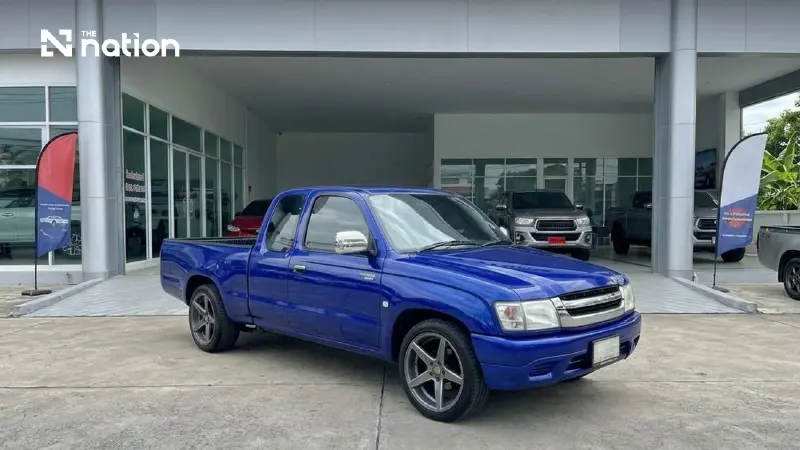


Thailand’s Excise Department seeks THB6 billion in loan funding to offer THB40,000 towards 150,000 new locally made pickups, aiming to cut PM2.5 and revive sales.
- Thailand's Excise Department has requested a THB6 billion budget to fund a vehicle replacement scheme, offering a THB40,000 grant per vehicle.
- The programme aims to tackle PM2.5 air pollution from ageing vehicles and to support the domestic pickup truck market, which has been weakened by tighter lending conditions.
- Scheduled for the 2027 fiscal year, the scheme targets the replacement of 150,000 vehicles that were registered before 2012.
- The grant is exclusively for the purchase of new, locally manufactured pickups or pickup-based passenger vehicles that meet modern emissions standards.
The Excise Department has proposed a THB6 billion vehicle replacement scheme that would provide subsidies of THB40,000 per vehicle to encourage motorists to exchange ageing cars for new, locally manufactured pickups.
The proposed nationwide programme, targeting 150,000 vehicles, aims to reduce PM2.5 pollution from older engines while supporting Thailand’s struggling domestic pickup market, where tighter lending conditions have constrained sales.
A Finance Ministry source disclosed that the department had submitted a request to use THB6 billion from the government’s borrowing programme under the 2026 Emergency Decree authorising the Ministry of Finance to borrow funds to address the energy crisis and support the country’s energy transition.
The scheme would operate in fiscal year 2027 through a co-payment arrangement involving vehicle manufacturers, dealers and financial institutions.
Under the proposal, eligible buyers would receive THB40,000 towards the purchase of a new pickup or pickup-based passenger vehicle, either as a deposit contribution or an immediate reduction in the purchase price.
The financial support is intended to reduce monthly instalments, lower the amount customers need to borrow and reduce lenders’ exposure to vehicle-financing risks.
Ageing vehicles and pollution drive the proposal
According to 2026 Department of Land Transport figures cited in the proposal, Thailand has 8.18 million passenger cars, pickups and vans that are at least 10 years old. Of these, 3.09 million vehicles are between 20 and 30 years old, while another 1.77 million have been in use for more than three decades.
Older diesel pickups meeting only Euro 1, Euro 2 or Euro 3 emissions standards are identified as significant sources of nitrogen oxides (NOx) and fine particulate matter.
The proposal cites Pollution Control Department estimates indicating that vehicle-related emissions contribute substantially to urban PM2.5 pollution, with a share approaching 60% in some assessments.
Research by Chulalongkorn University estimated the economic damage associated with PM2.5 pollution to Thai households at THB2.17 trillion in 2019. When other air pollutants were included, the estimated damage rose to THB4.62 trillion.
The proposal separately cites estimated medical costs and economic losses associated with premature deaths in Bangkok of THB3.78 billion, equivalent to approximately 0.065% of the capital’s gross provincial product.
Tight lending conditions weigh on pickup sales
The proposal is also intended to support Thailand’s pickup industry, a longstanding flagship of the country’s automotive manufacturing sector.
The domestic market has weakened considerably as financial institutions have tightened hire-purchase lending requirements amid concerns over household debt and borrowers’ repayment capacity.
The department referred to the Bank of Thailand’s second-quarter 2026 assessment, which highlighted tighter lending conditions and the continued contraction of vehicle hire-purchase loans since the first quarter of 2024.
The proposal linked these restrictions to the concentration of Stage 2 loans, involving borrowers with significantly increased credit risk, and non-performing loans (NPLs) within the vehicle financing segment.
Lessons from earlier vehicle subsidy schemes
The Excise Department has incorporated safeguards based on lessons from earlier automotive stimulus programmes, including Thailand’s first-car buyer scheme. The proposal acknowledges that poorly designed incentives can create artificial demand, encourage excessive borrowing and contribute to bad debt.
Thailand’s limited capacity to dismantle end-of-life vehicles is another constraint. According to the department, certified vehicle dismantling facilities can process a maximum of approximately 50,000 vehicles annually.
Extending the purchase subsidy to every category of new vehicle could therefore create bottlenecks. The proposal restricts eligible new purchases to pickups and pickup-based passenger vehicles.
Eligibility for the THB40,000 subsidy
Participation would be limited to Thai nationals aged 20 or above who own an eligible vehicle registered in their name. Each person would be entitled to exchange one old vehicle and receive a subsidy for one new vehicle.
The vehicle being surrendered must have been registered before 2012 and fall into one of three categories:
- Private passenger cars carrying no more than seven people.
- Private passenger vehicles carrying more than seven people.
- Privately registered goods vehicles.
The old vehicle must have identifiable engine and chassis numbers, with its current annual vehicle tax fully paid. It must also be free from outstanding finance agreements with financial institutions and must not be subject to seizure or attachment.

Requirements for new vehicles
Only domestically manufactured pickups and pickup-based passenger vehicles (PPVs) would qualify.
Eligible vehicles must meet Euro 5 or Euro 6 emissions standards, have carbon dioxide emissions of no more than 185 grammes per kilometre and support B20 biodiesel, or use electrified-vehicle (xEV) technology.
Participating manufacturers must operate pickup production facilities in Thailand and be registered excise taxpayers.
How the trade-in and scrappage process would work
Dealers would notify the Department of Land Transport that the old vehicle had been withdrawn from use and arrange for its chassis identification number to be cancelled.
The vehicle would then be transferred to a dismantling facility certified by the Ministry of Industry, which would issue an official certificate confirming its destruction.
Manufacturers would then submit sales documents, confirmation of the chassis-number cancellation and registration documents for the new vehicle through an information system.
The Government Savings Bank would act as the payment agent, transferring the government subsidy to participating manufacturers for onward distribution through dealers. Buyers would receive the benefit as a deposit contribution or an immediate price reduction.
Additional discounts and low-interest loans
Under the co-payment arrangement, participating manufacturers would be expected to offer additional discounts alongside the government’s THB40,000 contribution, reflecting their responsibility for supporting cleaner vehicles.
Buyers choosing eligible xEV pickups could also apply for financing under the Government Savings Bank’s GSB Thai Business Revival soft-loan programme, with interest capped at 5% a year.
Combined with the subsidy and manufacturer discounts, the financing arrangements are intended to reduce borrowing requirements, ease repayment burdens and limit the risk of future non-performing loans.
THB6 billion spending timetable
The Excise Department has prepared a proposed disbursement schedule beginning in January 2027, with initial expenditure projected at THB136 million.
The proposed allocation for August 2027 reaches THB751 million. A further THB2.014 billion is listed under September, representing anticipated payments covering September through December 2027.
The projected payments for those four months are:
- September: THB760 million
- October: THB658 million
- November: THB521 million
- December: THB75 million
Environmental and economic targets
The scheme aims to reduce annual greenhouse gas emissions by at least 310,000 tonnes of carbon dioxide. PM2.5 and nitrogen oxide emissions from the vehicles being replaced are expected to fall by at least 30%.
The department also projects economic activity worth no less than THB82.5 billion from sales of domestically manufactured pickups under the programme.
Monthly monitoring and performance reviews
The Excise Department would report implementation progress to the Finance Ministry and the committee responsible for overseeing expenditure under the government’s borrowing programme at the end of every month.
If actual disbursements fall more than 15% below the planned level, the department would immediately investigate the reasons for the shortfall.
A mid-programme evaluation would take place in the eighth month, followed by a final assessment in the 15th month.
Source: Thansettakij
