
Thai Baht Buckles Under the Weight of Oil Shock and a Hawkish Fed
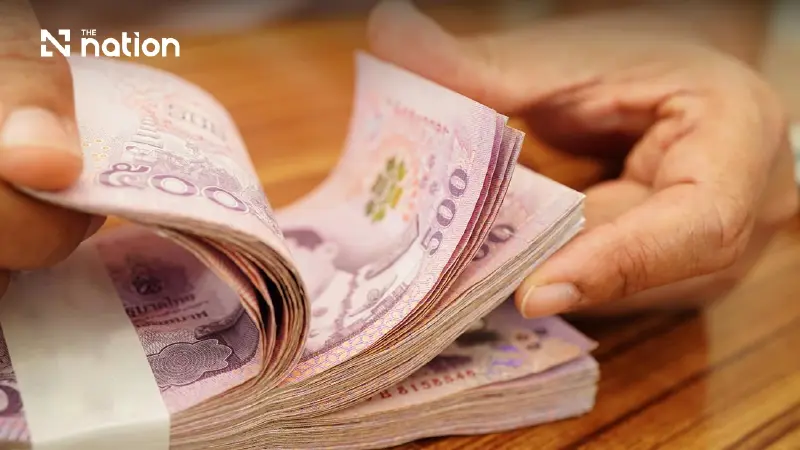


As Middle East tensions rekindle and the dollar strengthens, the Thai baht is testing critical support levels near 33 per dollar — but analysts warn the road to recovery is longer than markets expect
- The baht is weakening due to an oil price shock caused by Middle East tensions, as Thailand's high dependency on imported energy increases costs and threatens its trade surplus.
- A hawkish U.S. Federal Reserve is strengthening the dollar with high interest rates and signals of further tightening, putting downward pressure on the baht.
- The Bank of Thailand's contrasting dovish policy, with a benchmark rate of just 1.00%, has created a wide interest rate gap with the U.S., encouraging capital outflows and exacerbating the baht's weakness.
As Middle East tensions rekindle and the dollar strengthens, the Thai baht is testing critical support levels near 33 per dollar — but analysts warn the road to recovery is longer than markets expect.
The Thai baht opened the week at 32.94 per US dollar on Monday, drifting toward the psychologically significant 33 threshold as a confluence of external headwinds and domestic vulnerabilities battered sentiment.
Traders say the currency's near-term fate hinges on four pivotal variables: the Bank of Thailand's Monetary Policy Committee (MPC) meeting on 24 June, May export data, the trajectory of Middle East peace negotiations, and the direction of foreign fund flows.
After gaining ground in the early part of last week on hopes that Washington and Tehran were edging toward a ceasefire — with both sides reportedly signing a digital memorandum of understanding — the baht reversed sharply as those hopes evaporated.
Reports that Israel had struck targets in southern Lebanon and that the US Vice President had postponed peace talks in Switzerland sent risk appetite into retreat, propelling the dollar higher and dragging Asian currencies lower across the board.
An Energy Trap With No Easy Exit
Thailand's structural vulnerability to oil price shocks lies at the heart of the baht's weakness. The country imports approximately 57% of its crude oil from the Middle East, with much of that cargo transiting the Strait of Hormuz.
The closure of that waterway from late February 2026, amid the outbreak of the US–Iran war, reduced Thailand's oil supply by an estimated 50%, according to the Bloomsbury Intelligence and Security Institute. Dubai crude surged roughly 61% from pre-conflict levels to around USD 115 per barrel by mid-March.
The energy shock has transmitted rapidly into the baht's external account. The Institute for Energy Economics and Financial Analysis (IEEFA) estimates that the cost of purchasing a spot LNG cargo for Thailand rose by as much as 125% in local currency terms — a product of both soaring LNG prices and the baht's 5.3% depreciation recorded in March.
Oil and gas imports account for roughly 5–6% of Thailand's GDP, making it disproportionately exposed compared with many ASEAN neighbours.
Kasikorn Research Centre (KResearch) has warned that should oil prices consistently exceed USD 100 per barrel, the baht is highly likely to depreciate toward the 33 mark, which would erode Thailand's trade surplus and potentially push it into deficit. Year-to-date baht volatility has climbed to 7.7%, surpassing the median for regional currencies.
The Fed Factor
Compounding the energy shock is the persistent strength of the US dollar. The Federal Reserve held its policy rate at 3.50–3.75% at its most recent meeting, but its updated dot-plot projections signalled the possibility of further tightening in 2026, while its Core PCE inflation forecast was revised up to 3.3% — from an earlier 2.7% — signalling that price pressures are likely to remain above the Fed's 2% target for some time.
Investors are now pricing approximately a 56% probability of two further Fed rate hikes before year-end, according to Krungthai Global Markets, underpinning a dollar index that has risen more than 1.5% in the past fortnight.
Poon Panichpibool, market strategist at Krungthai Global Markets, says the baht could test the 33.00–33.20 resistance band in the short term. If the Middle East situation de-escalates or US data soften rate-hike expectations, the baht could recover toward a key support at 32.50.
Krungthai sets its weekly trading range at 32.50–33.20, with a 24-hour band of 32.85–33.05. Bank of America had revised its baht forecast earlier this year, projecting weakness toward 33 baht per dollar by mid-2026 before a recovery to 31 by year-end, citing the combined drag of elevated oil prices and a narrowing current account buffer — particularly during the seasonally weak second quarter.
A Dovish Central Bank Adds Pressure
The Bank of Thailand's own policy stance is adding to the baht's woes. The MPC has cut its benchmark rate three times since October 2025, lowering it to 1.00%—its — its lowest since September 2022—as policymakers prioritise economic recovery.
Thailand's GDP growth is projected at just 1.5% in 2026, well below potential, amid the dual drag of US tariff measures and the energy shock. With core inflation expected to remain contained, the MPC is widely expected to hold rates steady at Wednesday's meeting rather than risk further currency weakness by easing again.
The yawning interest rate differential with the United States—where the Fed funds rate sits at 3.50–3.75%—underscores the baht's weak yield appeal, leaving it exposed to capital outflows.
Between 15 and 19 June, overseas investors were net sellers of Thai equities to the tune of 494 million baht and recorded net outflows from the Thai bond market of 1,172 million baht after accounting for matured paper, according to KResearch. The SET Index fell 1.25% on the week to close at 1,572.50 points on Friday.
A Divided Region
Thailand sits firmly in the more vulnerable half of Asian currency markets. A fortnightly Reuters poll of 11 market participants showed that bearish positions on Indonesia's rupiah climbed to their highest level since October 2022, while short positions on the Indian rupee, Philippine peso and Thai baht also remained elevated – reflecting investor caution toward Asia's net oil importers.
The rupiah has borne the heaviest burden individually: Bank Indonesia deployed an emergency 50-basis-point rate hike in May followed by a further 25-basis-point rise on 9 June, taking its policy rate to 5.5%, alongside direct dollar sales and tightened controls on the offshore non-deliverable forward market.
Despite this, rupiah short positions have not been significantly shaken out. Poon noted that Bank Indonesia's outsized hike "has not shaken out rupiah shorts."
The contrast with net energy exporters is marked. The Malaysian ringgit and Singapore dollar — both carrying long positions in the Reuters survey — have held up comparatively well, supported by Malaysia's energy-exporter status and Singapore's exchange-rate-based monetary policy framework, respectively.
Matthew Reuter, a senior economic correspondent for The Economy, argues that even a resolution to the conflict would not immediately translate into a baht recovery.
Accumulated inflationary pressures, the lingering effects of the oil price shock, and offshore derivatives positioning are all likely to continue unsettling Asian FX for some time.
The Asian Development Bank estimates the Iran war could reduce Asia's growth rate to 4.2% this year while pushing inflation as high as 7.4% – a stagflationary backdrop that limits the room for Asian central banks to cut rates and support their currencies simultaneously.
The Outlook
For Thailand, the path back to a stronger baht requires at least one of three developments: a durable Middle East ceasefire that allows oil prices to recede meaningfully; a dovish pivot in Fed signalling that caps the dollar's advance; or a marked improvement in Thailand's trade balance driven by semiconductor and AI-related export demand.
Until one of those conditions materialises, Krungthai Global Markets strategists advise corporates and investors to use options and other hedging instruments to manage exchange-rate risk. In technical terms, the baht remains in a downtrend unless and until it can sustain a move back through the 32.00 level — a prospect that, for now, seems a distant one.
Sources: Krungthai Global Markets, Kasikorn Research Centre, Bank of America, IEEFA, KResearch, Reuters Asian FX positioning poll, Bank of Thailand, ADB, Bloomsbury Intelligence and Security Institute, The Economy (Matthew Reuter).
