
Central Bank Issues Severe Warning to Payment Gateways over Illicit FOREX Laundering and Unlicensed Digital Wallets
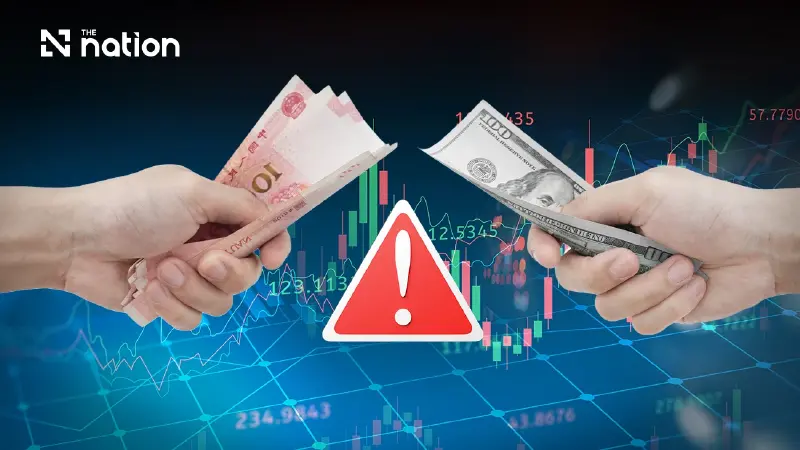


The Bank of Thailand targets illicit retail currency speculation and tightens compliance checks on major platforms like Alipay and WeChat Pay
- The Bank of Thailand (BOT) has issued a severe warning to payment gateways, stating it does not license retail FOREX trading and is cracking down on the facilitation of such illicit transactions.
- Payment gateway operators are now held strictly responsible for vetting merchants and monitoring for suspicious activity, facing penalties up to license revocation for non-compliance.
- Regulators are targeting the misuse of digital wallets, particularly foreign P2P payment systems, which are being exploited to launder money and bypass official currency exchange protocols.
- Operating, facilitating, or promoting unlicensed FOREX businesses carries severe criminal penalties, including multi-year prison sentences and substantial fines under Thai law.
The Bank of Thailand targets illicit retail currency speculation and tightens compliance checks on major platforms like Alipay and WeChat Pay.
The Bank of Thailand (BOT) has issued an uncompromising warning to payment gateway providers and financial intermediaries, reiterating that the central bank has no policy to license retail foreign exchange (FOREX) trading platforms.
Regulators are intensifying their scrutiny of digital payment infrastructure to choke off capital pipelines funding illicit currency speculation.
The move marks an aggressive regulatory stance against unauthorised retail platforms that mask high-risk trading activities under the guise of legitimate merchant transactions.
The central bank’s stern intervention comes in response to a surge in public complaints regarding underground digital brokerage applications and aggressive social media promotions promising high returns from retail currency manipulation.
This enforcement push is further complicated by compliance friction arising after the official launch of the Thailand-China cross-border QR payment linkage in October 2025.
Intended to simplify tourism retail spending, the unified framework has instead been increasingly exploited by shadow operators who use peer-to-peer digital wallets to move grey-market capital and bypass mandatory central bank exchange protocols.
Chayawadee Chai-anant, assistant governor of the BOT’s Corporate Relations Group, confirmed on Wednesday that operating an unlicensed FOREX business—or facilitating domestic or cross-border payment remittances for such transactions—violates the Exchange Control Act (1942).
Operators face a three-year prison sentence, financial penalties up to 20,000 baht, or both.
Furthermore, individuals or corporate entities advertising, promoting, or soliciting retail investments for currency speculation face severe criminal prosecution under anti-fraud legislation.
Violations of the Emergency Decree on Loans Amounting to Cheating and Fraud (1984) carry prison terms ranging from five to ten years, alongside immediate statutory fines of up to 1,000,000 baht and compounding daily penalties of 10,000 baht.
Tightening the Screws on Payment Gateways
The regulatory clampdown places the operational burden of compliance squarely on payment gateway operators. Under the strictures of the Payment Systems Act (2017), digital payment platforms must adhere to rigid "Know Your Merchant" (KYM) mandates. Gateways are required to rigorously vet merchant legitimacy during onboarding and execute continuous transaction monitoring.
"Should a gateway operator fail to act on suspicious patterns or neglect their compliance duties, the central bank will enforce severe statutory penalties. These range from service suspensions and administrative fines to a direct recommendation to the Minister of Finance to revoke the operator's commercial licence under Section 32 of the Act," Chayawadee stated.
The BOT is actively collaborating with the Department of Special Investigation (DSI) and law enforcement agencies—including the Royal Thai Police—to cross-reference payment metadata. Platforms found masking illicit operations will face immediate web-domain blocks alongside criminal prosecution.
Shadow Remittances and Chinese Fintech Controls
The central bank's regulatory net has also expanded to curb unauthorised capital flight and foreign currency commercial settlement via popular Chinese digital wallets. The BoT dictates that all domestic transactions processed through foreign e-wallet giants must be denominated exclusively in Thai Baht.
A persistent structural challenge involves peer-to-peer (P2P) QR code networks on systems like Alipay and WeChat Pay, which allow individuals to execute direct Renminbi (RMB) transfers that bypass the domestic banking system entirely.
Because these transactions sit inside foreign cloud networks, the BOT has established an information-sharing pipeline with Chinese tech providers to intercept commercial merchants using personal, unmonitored P2P codes.
This targeted enforcement has already yielded significant results. Data compiled between February 2025 and May 2026 reveals that at least 5,000 accounts engaged in direct RMB transfers via personal P2P QR codes have been frozen and terminated for unauthorised commercial monetisation.
The BOT is urging members of the public and institutional actors to report any unlicensed financial intermediaries or merchants illegally accepting foreign currencies through its Financial Consumer Protection Center hotline (1213).
The central bank intends to maintain a zero-tolerance policy to protect the structural integrity of the nation's financial system from capital flight and retail investment scams.
