
Tim Cook ends 15-year Apple CEO tenure as Ternus takes over
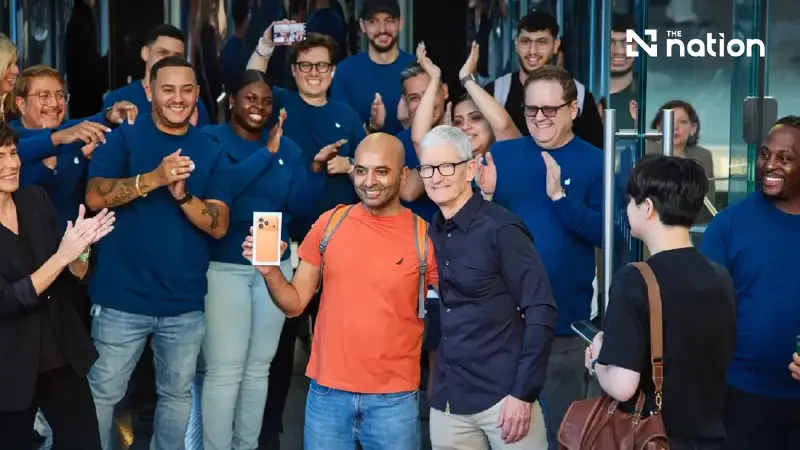


Tim Cook ends his 15-year run as Apple CEO, handing control to John Ternus after expanding the company into a nearly US$5-trillion technology giant
- Tim Cook has officially announced that he is stepping down as Apple CEO, bringing his 15-year tenure to a close.
- Under Cook’s leadership, Apple grew beyond the era of Steve Jobs to become a company with a market value approaching US$5 trillion.
- John Ternus will take over as Apple’s new CEO, continuing the company’s mission and leading it into its next era.
Tim Cook ends his 15-year tenure as Apple chief executive on Monday (August 31, 2026), closing a period in which the company grew from the uncertain aftermath of Steve Jobs’ departure into a technology group worth nearly US$5 trillion.
John Ternus will take over as chief executive on Tuesday (September 1), while Cook will remain at Apple as executive chairman and provide strategic support.
Apple announced the succession plan in April following unanimous approval from its board.
The transition marks Apple’s first change of chief executive since Cook succeeded Jobs in August 2011.

From Jobs’ successor to an operational powerhouse
Jobs resigned on August 24, 2011, because of health problems, leaving doubts over whether Apple could maintain its momentum without the vision of its co-founder.
Cook did not attempt to imitate his predecessor. Instead, he drew on his expertise in global supply-chain and operational management to expand Apple’s production capabilities and turn its devices, software and services into an increasingly integrated ecosystem.
One of the first major shifts came in 2014 with the launch of the larger-screen iPhone 6 and iPhone 6 Plus. The devices responded to changing consumer preferences and generated record sales.
Cook also recognised that hardware alone would not be enough to sustain Apple’s long-term growth. The company expanded into services including Apple Music, Apple TV+, Apple Pay and cloud-based products, creating recurring revenue streams tied to its global base of device users.
Apple’s market capitalisation stood at about US$4.67 trillion on August 28, putting the company close to the US$5-trillion threshold. The figure represents market value rather than annual revenue.

New products reshape Apple’s ecosystem
Cook’s tenure was also marked by Apple’s expansion into wearable technology.
The Apple Watch, introduced in 2015, developed from a connected watch into a personal health and safety device. Its features have included electrocardiogram readings, blood-oxygen measurements and fall detection.
Apple followed with AirPods in 2016, alongside its controversial decision to remove the traditional headphone socket from the iPhone. The move attracted criticism at the time but helped accelerate the shift towards wireless earphones.
A more consequential technological change came in 2020, when Apple began replacing Intel processors in Mac computers with its internally designed Apple Silicon chips.
The M-series processors gave Apple greater control over the relationship between hardware and software while improving performance and energy efficiency across its Mac range.
Cook’s longer-term product vision also included Apple Vision Pro, the company’s spatial-computing headset designed to blend digital content with a user’s physical surroundings.
Together, these products broadened Apple’s business beyond the iPhone while strengthening the connections among its devices and services.
John Ternus faces the AI test
Ternus takes over after leading Apple’s hardware-engineering operations and contributing to the development of products including the company’s M-series chips.
His immediate challenge will be to preserve Apple’s commercial strength while responding more quickly to the artificial-intelligence race, where competitors have been rapidly expanding their products and capabilities.
He will also have to manage component costs and supply-chain pressures during a period of global economic volatility.
Cook’s move to executive chairman provides continuity during the transition. He is expected to support selected areas of the business, including engagement with policymakers around the world, while Ternus assumes responsibility for Apple’s day-to-day leadership.
Cook inherited a company closely identified with the personality and product instincts of Jobs. Fifteen years later, he leaves the chief executive’s office having built Apple into a much larger and more diversified business.
His legacy rests not on replicating Jobs, but on transforming Apple’s operational strength into global scale and building a tightly connected ecosystem of hardware, software and services.
Ternus now inherits that foundation, along with the task of defining Apple’s place in an industry increasingly shaped by artificial intelligence.
Source: Bangkokbiznews
