
Banpu Bets on Gas and Carbon Capture to Power Thailand's Energy Future
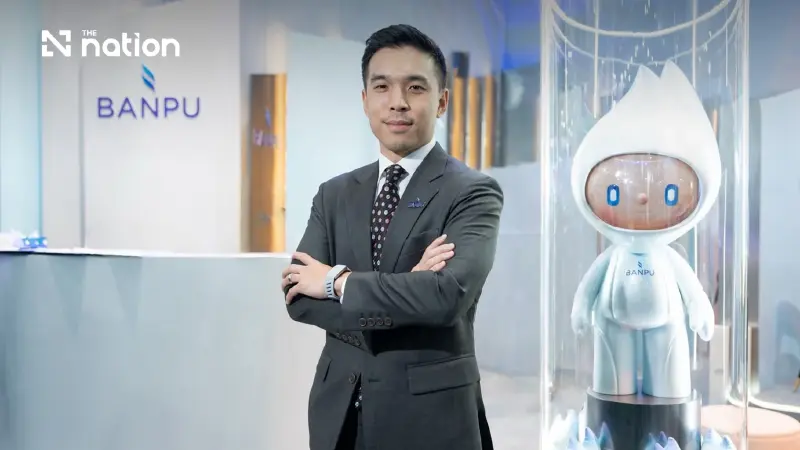


As AI and data centres reshape power demand, Banpu's chief executive explains why gas — not just renewables — will anchor the next energy era
- Banpu is championing an integrated strategy that pairs natural gas with carbon capture, utilization, and sequestration (CCUS) to provide reliable baseload power for Thailand's future, especially for the growing demand from AI and data centers.
- The company's "Closed-Loop Gas" platform integrates gas production, power generation, and CCUS to offer products like "Carbon Sequestered Gas" (CSG), which is marketed as a carbon-neutral energy solution.
- Central to its strategy, Banpu is significantly scaling up its carbon capture capabilities, with its flagship "Barnett Zero" project aiming to increase CO2 injection fivefold to 1.5 million tonnes annually by 2028.
As AI and data centres reshape power demand, Banpu's chief executive explains why gas — not just renewables — will anchor the next energy era.
Banpu Public Company Limited used Gastech 2025 in Bangkok to present itself as a long-term energy resilience partner for Thai industry, showcasing an integrated gas, power and carbon capture strategy that its chief executive says will underpin the kingdom's transition towards cleaner, more secure energy.
Speaking to The Nation in an exclusive interview on the sidelines of the four-day event at BITEC, which ran from 14 to 17 September and this year facilitated an estimated US$60 billion in deals globally, Sinon Vongkusolkit, chief executive officer of Banpu, said the gathering offered Thailand a rare platform to showcase its energy ambitions while giving the company direct access to global partners, technology providers and customers.
"Gastech is one of the largest events for energy in the world... and it's a very good opportunity for Thailand as a country," Sinon said, describing the event as having brought "lots of people to meet" from across the global energy sector.
Showcasing the Closed-Loop Gas Platform On the exhibition floor, Banpu's presentation centred on its Closed-Loop Gas platform, delivered through its US subsidiary BKV Corporation, which links natural gas production, gathering and processing, power generation, carbon capture, utilisation and sequestration (CCUS) into a single integrated value chain.
A key product highlighted was Carbon Sequestered Gas (CSG)—natural gas marketed as carbon-neutral because its associated emissions are captured and permanently stored underground rather than released.

"We started our gas business in the year 2015, and now we list our US gas in the US under BKV operations," Sinon said, noting that gas and power now generate close to half of the group's earnings. "Close to 50% of our EBITDA is coming from gas and power."
Gas as the New Base Load for AI
With artificial intelligence, semiconductors and data centres driving unprecedented demand for stable, round-the-clock electricity, Sinon argued that gas paired with carbon capture has become indispensable to meeting this new class of customer.
"Gas is becoming one of the key base loads... for industrial, whether it is for the data centres or the future industries," he said. "So for customers like the data centres, for customers like any industries who want to be greener, this is a very good solution for them."
This vision extends beyond Gastech itself. In a related strategy, which Banpu has described as "Gas-to-Compute", the group is positioning its integrated upstream gas and power assets in Texas to directly serve hyperscale data centre operators racing to secure power for AI workloads.
According to previous remarks by Sinon, the company holds more than 6,000 acres in Jack County, near Fort Worth, which offers substantial potential for integrated data centre development due to its proximity to both transmission infrastructure and gas pipelines.
In Texas, Banpu currently operates around 1.5 gigawatts (GW) of gas-fired power capacity in the Austin area, feeding directly into a market where demand for firm, dispatchable electricity is rising sharply.

Scaling Up Carbon Capture
Central to making this gas-led strategy credible on emissions is Banpu's carbon capture programme. Its flagship "Barnett Zero" CCUS project, launched in 2024, currently injects around 300,000 tonnes of carbon dioxide underground each year to supply cleaner gas to industrial users and data centres requiring uninterrupted power.
"Right now we're doing around 300,000 tonnes of CCUS," Sinon said. "Our goal in 2028 will be 1.5 million tonnes of injection into the ground" — a fivefold increase within three years. The company has continued to expand this capability through new partnerships.
In February, BKV announced a final investment decision on a separate carbon capture and sequestration project with a leading midstream energy operator at an operating natural gas plant in South Texas, targeting roughly 90,000 metric tonnes of CO₂ sequestration annually.
Banpu has earmarked a US$3 billion budget to support such investments between 2025 and 2030. Renewables and Battery Storage Alongside its gas and carbon capture push, Banpu continues to expand its renewable energy footprint across the Asia-Pacific region, where it now manages approximately 5 GW of power generation capacity.
The company is also pursuing large-scale battery storage projects in Australia, Japan, China and the United States — technologies it views as essential to firming up intermittent renewable supply and supporting grid stability.
Taken together, Sinon said the strategy reflected a broader ambition to rebalance the group's portfolio away from traditional commodities such as coal and upstream gas towards cleaner alternatives.
"We want to enhance that [gas and power] in the future while also decarbonising our business at least by 20% in the next 5 years," he said, adding that alignment between Banpu's US and Asian operations remained central to the plan. "We have a view that gas and power will be key for the future... We want to ensure that there's linkage between the US and Asia in our strategy."

Investing in People
Executing such a strategy across nine countries, Sinon acknowledged, requires talent capable of working seamlessly across borders and technologies. To meet this need, Banpu has established an internal training institution known as Banpu Academy.
"Banpu Academy is sort of like an internal school to ensure that our people is developed towards their [strategy], straight towards our strategy for the future," he explained.

Backing Thailand's Net-Zero Roadmap
On the domestic front, Sinon reaffirmed Banpu's support for the Thai government's energy policy, including its commitment to achieving net-zero carbon emissions by 2050 and its ongoing Power Development Plan (PDP).
"We support the government fully... We're very, very supportive of this [PDP]," he said.
Beyond energy security, Sinon positioned Banpu as a partner in Thailand's broader economic transformation.
He noted that Thailand is "moving into a new economy in terms of wellness, semiconductors, AI, power, and renewable business," arguing that private companies have a critical role to play alongside government efforts.
"Banpu and a lot of the private companies can really help enhance this with the public sector to help the country grow," he said.

With Gastech having drawn global energy leaders and an estimated $60 billion in deals to Bangkok this year, Banpu's exhibition presence and Mr Sinon's remarks signalled a clear intent: to be more than a legacy fossil fuel producer.
By combining its closed-loop gas platform, expanding carbon capture capacity, renewables and battery storage, and a fresh push into powering AI data centres, Banpu is positioning itself as a bridge between Thailand's current energy needs and its longer-term ambitions for a cleaner, more resilient energy system.
