
Thailand's Net Zero Drive Leaves SMEs Struggling for Finance
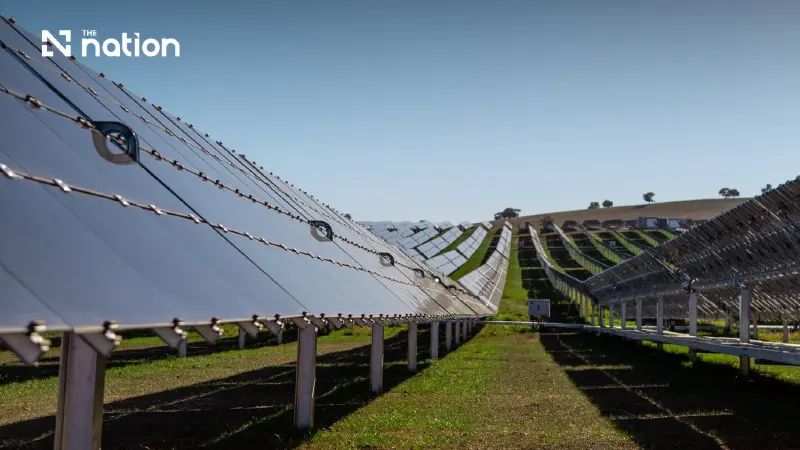


As Thailand eyes $219bn in climate investment, Banpu's CEO and independent researchers agree the next test is financing access for SMEs, not big pledges
- Small and Medium-sized Enterprises (SMEs) in Thailand are struggling to access the necessary financing to participate in the country's net-zero transition, despite a national need for $219 billion in climate investment.
- Key barriers for SMEs include constraints in capital, a lack of technical expertise, and the high cost of planning and implementing sustainability initiatives.
- Both corporate leaders, like the CEO of energy group Banpu, and independent researchers from the Thailand Development Research Institute (TDRI) agree that this financing gap is the biggest challenge to a successful green transition.
- While some government and private-sector programs exist to help, they are described as insufficient or poorly coordinated, leaving green finance "hard to reach" for most smaller businesses.
As Thailand eyes $219bn in climate investment, Banpu's CEO and independent researchers agree the next test is financing access for SMEs, not big pledges.
Thailand needs an estimated US$219 billion in climate-related investment over the next 25 years to meet its adaptation and emissions targets, according to the World Bank's most recent Country Climate and Development Report.
Without it, floods, heat stress, water shortages and coastal erosion could shave 7–14% off GDP by 2050. With it, the Bank argues, the country could lower power and transport costs, strengthen energy security and boost export competitiveness.
The bigger question, as Thailand prepares to host the IMF–World Bank Group Annual Meetings in Bangkok this October, is not whether the country wants to decarbonise, but who can afford to.
Where the barrier bites
That gap is where Sinon Vongkusolkij, chief executive of energy group Banpu, says the transition is most exposed.
"The biggest challenge is making the transition to sustainability economically viable and accessible for businesses of all sizes," he said in an exclusive interview with The Nation. "Many companies, particularly SMEs, face constraints in capital, technical expertise, and access to reliable data, while the returns on sustainability investments may not always be immediately visible."
Independent researchers are making a similar point, with less commercial stake in the answer.
The Thailand Development Research Institute (TDRI) has warned that while the country's green finance market is growing, it "remains hard to reach and even harder to use" for smaller businesses, which often lack the in-house capacity to plan a green transition and must pay for external expertise they can ill afford.

The Bank of Thailand's "Financing the Transition" programme, now offered through eight commercial banks, and the Office of SME Promotion's Green Productivity scheme are early attempts to close that gap, but TDRI argues government agencies still need to coordinate better so tools such as the Green SME Index do not remain scattered and underused.
A private-sector fix — with limits
Banpu's answer, delivered through its subsidiary Banpu NEXT, is to package carbon-footprint calculation, third-party verification and decarbonisation planning alongside "flexible investment models" aimed at businesses with limited capital – support Sinon says is increasingly relevant as exporters face carbon border levies such as the EU's CBAM.
It is a service offering as much as a philanthropic one, and Banpu is one of several private players now competing in that space; the value of the claim lies less in the company's own numbers than in whether such models can be scaled and replicated across an SME base that, by TDRI's account, remains largely locked out.

The grid needs fixing too
Financing is only one half of the barrier. The other is Thailand's power system itself.
A draft update to the Power Development Plan (PDP), now heading to public consultation, targets more than 50% clean energy in the country's generation mix, but TDRI research fellow Areeporn Asawinpongphan has cautioned that the plan needs to open the electricity market further, including through direct power purchase agreements between renewable producers and consumers, with clearer megawatt allocations.
Without that market reform, she and colleagues have argued, energy storage technology "cannot remain just a supporting technology" if Thailand is serious about the clean-power target.

Multilateral money moves in
Multilateral lenders are trying to de-risk the system from both ends. In July, the World Bank Group approved a US$200 million Low Carbon Cities and Carbon Market Development project, designed to let public agencies upgrade buildings and infrastructure without bearing the full upfront cost, with private energy-service companies financing the work and the Export-Import Bank of Thailand backstopping it.
The Asian Development Bank (ADB), meanwhile, has been active on the private side, including a reported US$350 million solar-and-battery deal with developer GRE announced earlier this year.
Banpu has its own financing partnership with the ADB, which Sinon said supports the expansion of the group's e-mobility and battery businesses — one of several bilateral arrangements multilateral banks are now striking directly with Thai corporates rather than only with the state.
The policy backdrop
The policy scaffolding for all this sits with the National Economic and Social Development Council (NESDC) and the Energy Ministry.
Thailand's Thirteenth National Economic and Social Development Plan anchors the country's "just energy transition" target of carbon neutrality by 2050 and net zero by 2065, according to a UNDP scoping report, but the same report flags continued reliance on natural gas, infrastructure constraints and the need for workforce reskilling as unresolved risks.

Pledges in regional context
Against that backdrop, corporate decarbonisation pledges look less like headline news and more like table stakes. Banpu points to a US carbon-capture project run by its subsidiary BKV, a battery storage portfolio spanning Australia, China, Japan and the United States, and a gas-to-energy scheme at its Mandalong mine in Australia that has cut flare emissions by up to 70%.
The company has set a target to cut Scope 1 and 2 emissions by at least 20% by 2030 and lift non-coal businesses to more than half of group EBITDA by the same year.
Such moves track a wider regional pattern: BloombergNEF data shows energy transition investment in Asia-Pacific, excluding mainland China, grew 23% in 2025, faster than the global average — though the region still channels only $1.30 into low-carbon energy for every dollar spent on fossil fuels, compared with $3.50 in Europe.

The missing input: people
Sinon also raised a less quantifiable input: people. Through Banpu Academy and partnerships with Sasin and international business schools, the company runs programmes such as the ASEAN Action Learning Lab and the Ivey Global Lab, pairing students with real sustainability problems.
"Developing people is essential to building a sustainable future," he said, framing the effort as preparation for a workforce that will need to manage a more decentralised, data-driven energy system — a skills gap the World Bank has separately flagged as a constraint on Thailand's broader low-carbon shift.

What's still unresolved
None of this resolves the core tension. Thailand's climate ambitions are now well documented, from the PDP's clean-energy targets to the NESDC's Thirteenth Plan to the World Bank's $219 billion price tag.
What remains unresolved, and what researchers and executives alike keep returning to, is whether the financing, market reforms and technical support reach past the largest companies and state-backed platforms to the SMEs that make up most of Thailand's economy.
That question — not the latest emissions target — is likely to dominate discussion when business leaders, policymakers and researchers gather for the upcoming sustainability roundtable.
This is the fifth article in a series exploring Thailand's sustainability transition ahead of a roundtable of business and policy leaders, convening in late September to discuss how the country can turn climate pressure into competitive advantage.
