
AirAsia parent posts THB3.85bn nine-month loss as Thai Airways profit falls



Thai Airways and Thai AirAsia posted third-quarter losses as fuel costs rose. Asia Aviation lost THB3.85bn over nine months, while Thai Airways remained profitable.
Thai Airways and Thai AirAsia faced mounting financial pressure in the third quarter of 2026 as higher aviation fuel costs, foreign-exchange losses and weaker passenger demand affected their earnings.
Thai Airways International reported a consolidated net loss of THB418 million for the quarter, reversing a profit of THB4.42 billion a year earlier. The loss attributable to shareholders of the parent company was approximately THB432 million.
Meanwhile, Asia Aviation (AAV), the parent company of Thai AirAsia, recorded a quarterly net loss of THB2.37 billion, reflecting higher operating costs despite increases in average airfares.
The financial impact was particularly pronounced at Asia Aviation, which reported a net loss of THB3.85 billion for the first nine months of 2026, compared with a profit of THB727 million in the corresponding period last year.
Thai Airways, however, remained profitable over the nine-month period, although its net profit fell substantially from the previous year.
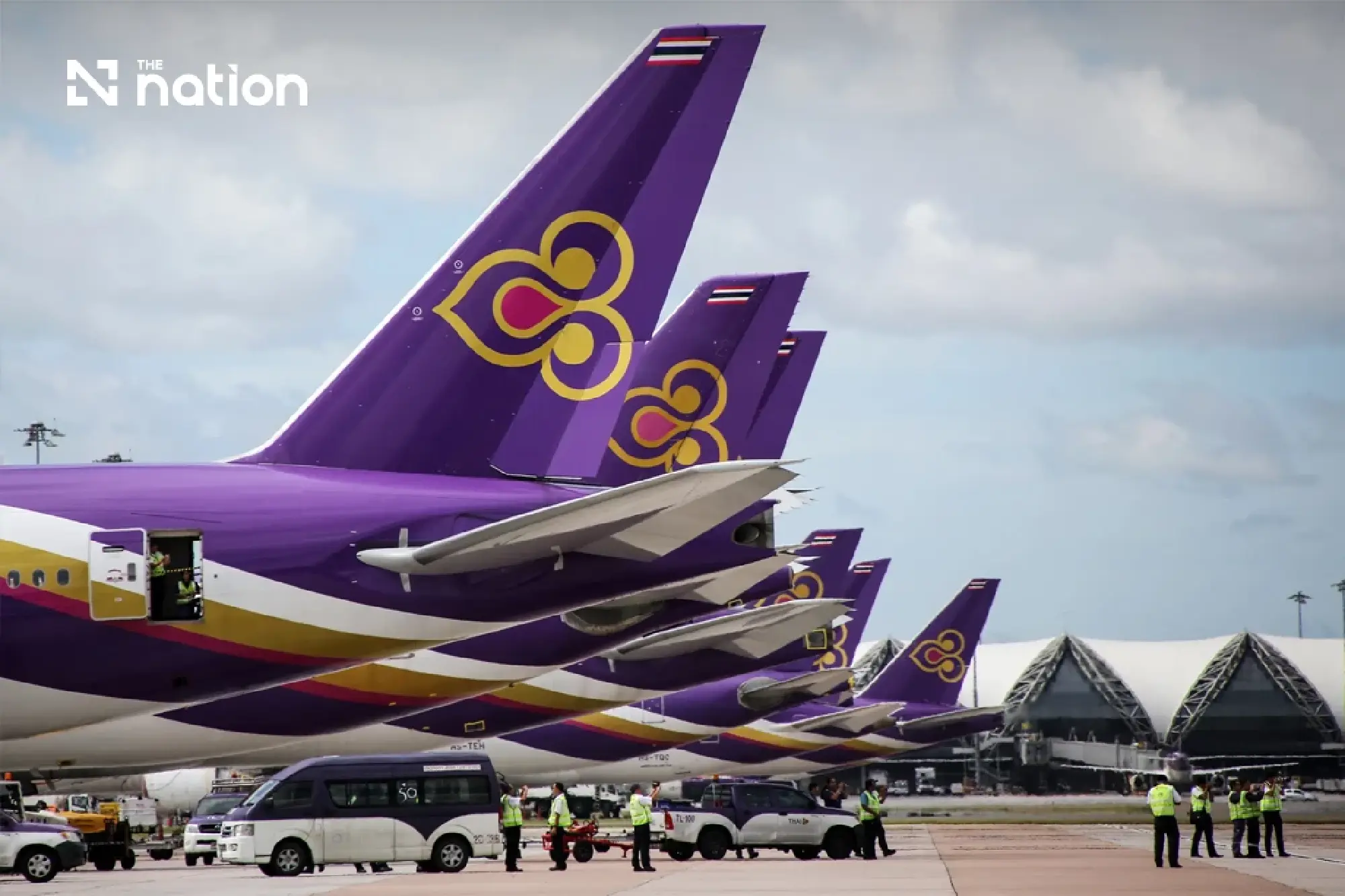

Thai Airways hit by higher fuel costs and flooding
Thai Airways generated revenue of THB50.13 billion in the third quarter, excluding one-off items, an increase of THB5.73 billion, or 12.9%, from THB44.40 billion a year earlier.
The increase was mainly driven by stronger transport revenue. The airline carried 3.97 million passengers, with a cabin factor, or percentage of available seats occupied, of 76.5%, compared with 76.8% in the same quarter of 2025.
However, operating expenses excluding one-off items rose 29.1% to THB46.29 billion, largely because average aviation fuel prices increased 59.8% year on year.
As a result, operating profit before finance costs and excluding one-off items fell 55.1% to THB3.84 billion, with an operating profit margin of 7.7%.
Finance costs reached THB3.36 billion, up THB225 million from the previous year.
The airline also recorded THB1.13 billion in net one-off expenses, mainly associated with flooding, net foreign-exchange losses and gains from the valuation of derivative financial instruments.
These factors contributed to the quarterly net loss, while earnings before interest, tax, depreciation and amortisation (EBITDA) stood at THB7.48 billion.
Despite the quarterly setback, Thai Airways reported a net profit of THB11.23 billion for the first nine months of 2026, down from THB26.39 billion in the corresponding period of 2025.
Nine-month revenue, excluding one-off items, increased 6.3% to THB149.78 billion, while expenses rose 19.3% to THB128.50 billion.
Operating profit before finance costs, excluding one-off items, declined 35.8% to THB21.28 billion.
The airline recorded finance costs of THB9.51 billion and net one-off income of THB296 million, while EBITDA reached THB33.20 billion.
Passenger numbers decline at Thai Airways
Thai Airways operated 91 aircraft as of 30 September 2026.
During the first nine months, average aircraft utilisation reached 13.2 hours per aircraft per day.
Available seat kilometres, which measure passenger capacity, declined 1.8% to 52.00 billion, while revenue passenger kilometres, which measure passenger traffic, fell 4.2% to 40.10 billion.
Consequently, the airline's cabin factor decreased to 77.1% from 79.1% a year earlier.
Thai Airways carried 11.81 million passengers over the nine months, a reduction of 380,000 passengers, or 3.1%, from the corresponding period of 2025.
The airline's total assets stood at THB355.17 billion at the end of September, up THB51.11 billion, or 16.8%, from the end of 2025.
Total liabilities increased 19.5% to THB272.59 billion, while shareholders' equity rose by THB6.66 billion to THB82.58 billion.
Cash, cash equivalents and other current financial assets totalled THB135.49 billion, an increase of THB11.93 billion from the end of last year.
Thai Airways maintained that its liquidity remained strong enough to withstand external uncertainties.
The airline also reported satisfactory advance bookings, indicating continued travel demand ahead of the year-end tourism season.

Thai AirAsia faces rising costs despite higher fares
Asia Aviation reported third-quarter revenue from sales and services of THB8.07 billion, down 13% from a year earlier, as passenger numbers declined 29%.
The reduction reflected Thai AirAsia's decision to cut seat capacity in response to weaker demand during the low tourism season.
Despite carrying fewer passengers, the airline increased its average fare by 24% to THB2,023 per passenger.
Revenue per available seat kilometre rose 29% to THB1.96, reflecting the company's efforts to adjust ticket prices in response to higher operating costs.
Thai AirAsia offered 4.41 million seats during the quarter, a year-on-year reduction of 26%.
However, average jet fuel prices reached US$137 per barrel. Combined with aircraft maintenance expenses and fixed depreciation costs spread across fewer available seats, this pushed operating costs higher on a per-seat basis.
Cost per available seat kilometre increased 40% to THB2.50, while the equivalent measure excluding fuel rose 36% to THB1.68.
The company maintained selling and administrative expenses at 8% of revenue from sales and services.
Nevertheless, the cost pressures resulted in negative EBITDA of THB410 million and a core operating loss of THB2.26 billion.
After accounting for a foreign-exchange loss of THB141 million, Asia Aviation reported a quarterly net loss of THB2.37 billion.
Thai AirAsia ended September with a fleet of 62 aircraft, of which 42 were in active operation.
Domestic and international passenger numbers fall
Thai AirAsia carried 2.38 million passengers on domestic routes during the quarter, a decline of 25% from the previous year.
The airline reduced domestic seat capacity by 22% to 3.04 million seats following the temporary suspension of operations at its Suvarnabhumi Airport base.
Despite the reduction, its domestic passenger load factor remained at 78%.
International passenger numbers fell 37% to 987,000 as the airline reduced international capacity by 33% to 1.37 million seats.
The international load factor stood at 72%.
Thai AirAsia resumed some services to Singapore and Indonesia during the quarter after suspending certain flights in the preceding three months.
Asia Aviation records THB3.85bn nine-month loss
For the first nine months of 2026, Asia Aviation generated revenue from sales and services of THB31.65 billion, down 2% from the same period last year.
Thai AirAsia offered 16.57 million seats, a reduction of 9%, while its passenger load factor slipped to 82% from 83%.
The average fare for the nine-month period was THB1,969 per passenger.
Fuel expenses increased 14% to THB12.42 billion, placing additional pressure on the airline's financial performance despite efforts to manage capacity and ticket prices.
Nine-month EBITDA declined to THB3.35 billion from THB4.35 billion in the corresponding period of 2025.
Asia Aviation consequently reported a net loss of THB3.85 billion, reversing a net profit of THB727 million a year earlier.
Excluding foreign-exchange losses of THB1.45 billion, the company recorded a core operating loss of THB2.70 billion, compared with a core operating loss of THB785 million in the first nine months of 2025.
The results highlight the financial challenges facing both airline groups as higher fuel costs continue to affect profitability, although their nine-month performances differed significantly.
