
Vietnam FTA push raises pressure on Thai exporters in Gulf markets
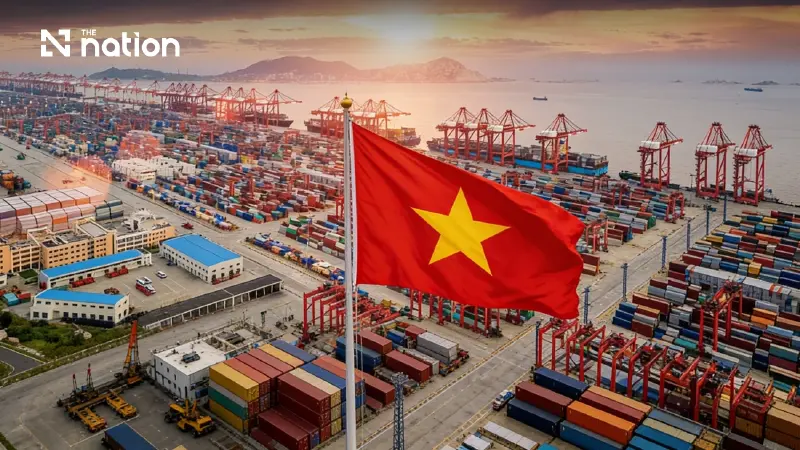


Vietnam is accelerating a new generation of FTAs to expand into the Middle East and South Asia, a strategy that could increase competitive pressure on Thai exporters.
- Vietnam is aggressively pursuing new Free Trade Agreements (FTAs) with countries in the Middle East, including the UAE and Israel, and is planning one with the Gulf Cooperation Council (GCC).
- These agreements are expected to increase competitive pressure on Thai exporters by giving Vietnamese businesses tariff advantages and better market access in Gulf markets.
- The competition will be most intense for products that both countries export, such as agricultural goods, rice, seafood, processed food, and spices.
- Thai commerce officials are urging their businesses to monitor Vietnam's trade policies and upgrade standards, particularly for halal certification, to maintain their competitiveness.
Vietnam is moving aggressively to expand its global trade reach through a new generation of free trade agreements (FTAs) targeting the Middle East and South Asia, a strategy that could increase competitive pressure on Thai exporters in markets where both countries sell similar goods.
Thailand’s Office of Commercial Affairs in Ho Chi Minh City, under the Ministry of Commerce, has urged Thai businesses to closely monitor developments in Vietnam’s trade policy and new regulatory requirements under its latest FTAs.
According to the office’s analysis, many countries, including Vietnam, are seeking new markets to strengthen economic security and improve trade resilience amid global economic volatility, geopolitical tensions and the growing use of protectionist trade measures.
Against this backdrop, the Middle East and South Asia have emerged as high-potential target markets due to their large populations, growing purchasing power and rising demand for imported goods, particularly agricultural products, food and consumer goods.
These conditions provide Vietnam with an opportunity to diversify its markets and trading partners while strengthening its role in the global trading system.
Vietnam’s new trade framework
The Office of Commercial Affairs in Ho Chi Minh City noted that a key driver of Vietnam’s trade expansion is the progress it has made in international economic cooperation frameworks and new-generation FTAs.
These include the Vietnam-Israel Free Trade Agreement (VIFTA), which came fully into force in 2026, and the Comprehensive Economic Partnership Agreement (CEPA) between Vietnam and the United Arab Emirates, which took effect on February 3, 2026.
The CEPA is Vietnam’s first free trade agreement with a country in the Gulf region and marks an important institutional step in linking the Vietnamese economy more directly with the Middle East.
Its importance goes beyond tariff reductions or exemptions. The UAE is a major global trade and logistics hub connecting the Middle East, Africa and South Asia, giving Vietnamese businesses access to markets with a combined population of more than 400 million and combined GDP of over US$4 trillion.
At the same time, Vietnam’s planned negotiations for an FTA with the Gulf Cooperation Council (GCC), together with the review of the ASEAN-India Trade in Goods Agreement (AITIGA), are expected to further expand market access, reduce trade barriers and increase Vietnam’s long-term economic reach.
The potential of the Middle East and South Asia is particularly clear from the structure of their economies. GCC members still rely on imports for around 80–90% of their domestic food and agricultural demand due to natural resource and climate constraints.
The office said this creates strong opportunities for Vietnamese agricultural and food products, including rice, seafood, coffee, cashew nuts, fruit, vegetables and processed food.
South Asia, especially India, is also seeing continued growth in its middle class and domestic purchasing power, supporting demand for imported goods and creating new opportunities for Vietnamese exporters.

What will determine success
However, the Office of Commercial Affairs in Ho Chi Minh City pointed out that past experience with FTAs shows that tariff privileges are only an initial condition for entering a market.
Turning those benefits into long-term orders and market share depends on whether businesses can meet technical standards, quality requirements, food safety rules, traceability standards and the specific needs of consumers in each country.
Compliance with rules of origin and halal certification requirements is becoming especially important for access to Muslim markets in the region.
As a result, new-generation FTAs are not merely tools for reducing tax burdens. They are also pushing businesses to upgrade production processes, management systems and integration into global value chains.
Vietnam’s advantages across key industries
The Office of Commercial Affairs in Ho Chi Minh City said Vietnam already holds advantages in several sectors, particularly spices. It currently accounts for about 60% of pepper imports in the Middle East and 40% in South Asia, while cinnamon holds a market share of up to 90% in South Asia.
These figures reflect Vietnam’s strength as a major global producer and exporter of spices. However, the office noted that its production advantage has not yet been fully converted into added value, as many businesses still depend on raw material exports and sales through intermediary importers.
Geopolitical tensions in the Middle East have also pushed up logistics costs, freight rates and transport insurance premiums.
The opportunities created by new-generation FTAs will therefore lead to sustainable growth only if Vietnamese businesses shift from short-term, volume-based exports to long-term market development, the office said.
This will require investment in standards, quality, branding, supply chain management and logistics systems, helping Vietnam move up the global trade value chain and strengthen its competitiveness in the Middle East and South Asia.

Implications for Thai exporters
The Office of Commercial Affairs in Ho Chi Minh City warned that Vietnam’s rapid expansion of its FTA network into the Middle East and South Asia deserves close attention, particularly the CEPA with the UAE and the VIFTA with Israel.
These agreements could give Vietnamese businesses stronger market access and greater tariff advantages, especially in agricultural goods, food and spices.
The shift may increase competitive pressure on Thai businesses in the Middle East and South Asia, as well as in Vietnam itself, particularly for products with similar production structures and consumer bases. These include rice, seafood, processed food, spices and value-added agricultural products.
At the same time, the office noted that Vietnam’s trade expansion could also create opportunities for Thai businesses, especially those with production bases or business networks in Vietnam. They could use Vietnam as a gateway to the Middle East, Africa and South Asia through investment, joint ventures, supply chain development and distribution to markets covered by Vietnam’s FTA privileges.
Vietnam’s push to develop its halal ecosystem may also open opportunities for cooperation in halal certification, food processing and product development for Muslim consumer markets, where demand is expected to continue growing, it added.
The office urged Thai businesses, both in Thailand and in Vietnam, to monitor Vietnam’s new FTA policies and regulations closely. They should also accelerate upgrades in production standards, traceability systems, rules of origin management and international certification, especially halal and food safety standards.
