
WEF says next tech race is moving from AI screens to power grids, hospitals and factories


The World Economic Forum’s Top 10 Emerging Technologies of 2026 report highlights a shift from software-first AI to real-economy innovation in energy, medicine, food, materials and cybersecurity.
- The World Economic Forum (WEF) reports that the next wave of technological innovation is moving beyond digital screens to directly impact physical systems such as power grids, factories, and healthcare.
- Key emerging technologies supporting this shift include "everything-to-grid" energy for power systems, personalised mRNA cancer vaccines for hospitals, and precision fermentation for food and industrial production.
- This new frontier of technology aims to reshape critical sectors by making systems more decentralised, personalised, and capable of delivering more output with fewer resources.
- Advanced computing is also evolving to support this trend, with AI "world models" being developed to forecast real-world scenarios and new cryptography designed to secure critical infrastructure.
WEF report signals next phase of global tech race
The World Economic Forum has released its Top 10 Emerging Technologies of 2026 report, pointing to a major shift in global innovation from software-first artificial intelligence to technologies that act directly on the physical systems underpinning the world economy.
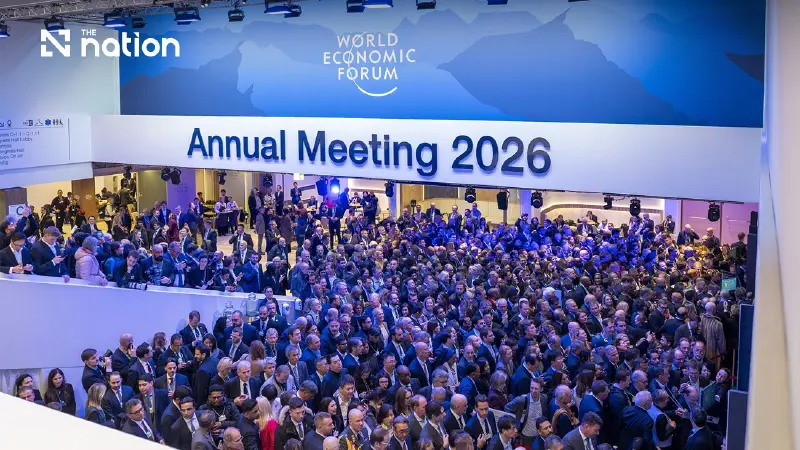
The report, co-published with research publisher Frontiers, was unveiled at the 2026 Summer Davos forum in Dalian, China, which opened on June 23. It identifies technologies expected to shape industry, policy and society over the next several years, spanning energy, medicine, food production, materials science, artificial intelligence and quantum-era cybersecurity.


Innovation moves off screens and into the real economy
After years in which AI and digital platforms dominated the technology agenda, the WEF says the next wave of breakthroughs is moving “off screens” and into power grids, hospitals, factories, food systems and critical infrastructure.
The report frames the new frontier around three economic themes: technologies are becoming more decentralised, more personalised, and able to deliver more output with fewer resources. That shift could reshape how countries secure energy, produce food and medicines, manage cooling demand, protect data and build supply-chain resilience.
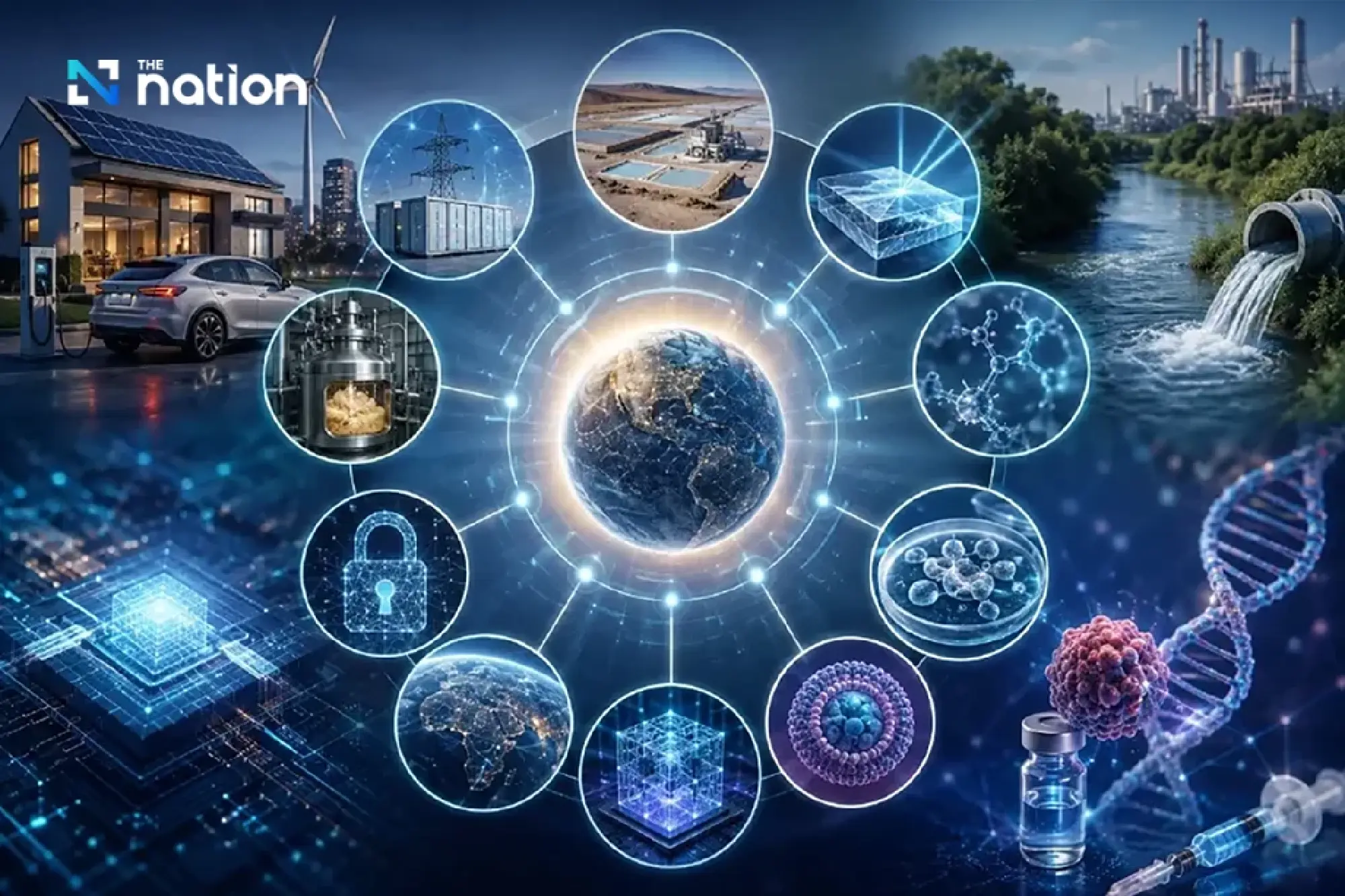

Top 10 emerging technologies of 2026
The WEF’s list includes:
Everything-to-grid energy — using electric vehicles, buildings, factories and data centres as distributed power-storage assets that can feed electricity back into the grid when demand peaks.
Direct lithium extraction — extracting battery-grade lithium from brine in hours rather than relying on evaporation ponds that can take months or years.
Passive radiative cooling materials — paints, films, coatings and building materials that reflect sunlight and release heat without using electricity.
PFAS destruction technologies — methods that break down so-called “forever chemicals” using approaches such as superheated water, electrical currents and UV-driven reactions.
Precision fermentation — programming microbes to produce proteins, food ingredients, chemicals and pharmaceutical compounds in fermentation tanks.
Exosome drug delivery — using the body’s natural cellular particles to carry therapies directly to diseased cells.
Personalised mRNA cancer vaccines — vaccines made from a patient’s own tumour profile to train the immune system to target specific cancer cells.
Quantum simulation for drug discovery — using quantum computing to model molecular behaviour and speed up the search for new medicines.
World models — advanced AI systems that learn how the physical world behaves and can forecast real-world scenarios.
Lattice-based cryptography — next-generation encryption designed to protect sensitive data against future quantum computers.
Energy technologies target grid stress and battery supply chains
The strongest economic signal from the report is in energy and infrastructure, where the technologies aim to solve two bottlenecks in the green transition: unstable electricity grids and concentrated battery-material supply chains.
Everything-to-grid energy could help power systems cope with the evening demand peak, when solar output falls just as households and businesses increase consumption. Instead of relying on fossil-fuel peaker plants, the system would draw stored electricity from parked EVs, home batteries, factories and data centres.
The WEF cited a California example in which more than 16,000 solar-equipped homes linked into a distributed electricity network sent 51 megawatts back to the grid during an evening demand peak in 2024, exceeding the capacity of several fossil-fuel peaker plants without producing emissions.
Direct lithium extraction is another key technology for the energy transition. Traditional lithium production from brine can take up to two years and requires large land and water resources. DLE uses engineered sorbents, membranes and solvents to extract lithium from brine within hours, with the remaining water returned underground. The WEF says plants are already operating in Argentina, the United States and Australia.
Cooling and pollution solutions move towards scale
Passive radiative cooling materials are being highlighted as a potentially important technology for hot economies, where air-conditioning demand is rising. These materials can reflect up to 95% of incoming sunlight and keep surfaces cooler than surrounding air without electric cooling. Suppliers have reported energy savings of up to 20% in retail and grocery settings, while cool-roof materials are already included in building standards in California and China.
PFAS destruction technologies could also create new markets in environmental services and water treatment. PFAS chemicals have long resisted conventional treatment, but emerging methods are now being developed to break their strong carbon-fluorine bonds through superheated water, electrical currents and UV-driven chemical reactions.
Biotech points to personalised medicine and new food systems
In healthcare and biotechnology, the WEF report highlights a move away from one-size-fits-all treatments and towards more targeted therapies.
Personalised mRNA cancer vaccines are designed from the genetic profile of a patient’s tumour, training the immune system to recognise cancer-specific mutations. The WEF says trials in pancreatic cancer and melanoma have produced results significant enough to move into Phase 3 studies, although cost, manufacturing capacity and access to sequencing infrastructure remain major challenges.
Exosome drug delivery could also open new routes for targeted treatment. Exosomes are natural particles produced by cells and can be engineered to carry therapies through biological barriers, including the blood-brain barrier. The report notes that more than 200 clinical trials involving exosomes have launched since 2022, but manufacturing scale, quality control and regulation remain key bottlenecks.
Precision fermentation, meanwhile, could affect both food security and industrial manufacturing by using microbes to produce proteins, fats and other molecules without relying on land, livestock or climate conditions. The technology is already being used to supply fermentation-derived dairy and egg proteins to global food brands, according to the WEF.
Quantum and AI reshape drug discovery and data security
The report also points to the growing economic role of advanced computing.
Quantum simulation for drug discovery could allow researchers to model molecular behaviour more accurately, helping identify promising drug candidates faster and reduce costly failures in drug development. The WEF says the quantum drug-discovery market has roughly doubled in value in five years, with major pharmaceutical partnerships beginning to generate early deployment data.
World models represent another step in AI development. Unlike systems that only recognise patterns, world models are trained on multimodal data to understand and predict how physical environments behave. The WEF cites early deployments such as Nvidia’s Cosmos platform and Stanford research using world-model approaches for climate simulation.
Lattice-based cryptography addresses a different economic risk: future quantum computers may be able to break today’s encryption. The technology encodes data in high-dimensional mathematical structures designed to resist both classical and quantum attacks. The WEF notes that the US National Institute of Standards and Technology finalised post-quantum encryption standards in 2024, while the EU, the US National Security Agency and SWIFT have all set transition deadlines.
Policy, investment and infrastructure will decide winners
The WEF said the impact of these technologies will depend not only on scientific progress, but also on infrastructure readiness, regulation, manufacturing capacity, public trust and long-term investment. The report, developed with the Dubai Future Foundation, also looks at the conditions needed for these technologies to scale responsibly through 2031.
For economies such as Thailand and other ASEAN countries, the report’s message is clear: the next technology race will not be won by software capability alone. Competitive advantage will increasingly depend on whether countries can deploy innovation into grids, hospitals, factories, food systems, environmental services and digital-security infrastructure.
Source: World Economic Forum
