
Thailand studies three-zone urban rail fares before Cabinet review
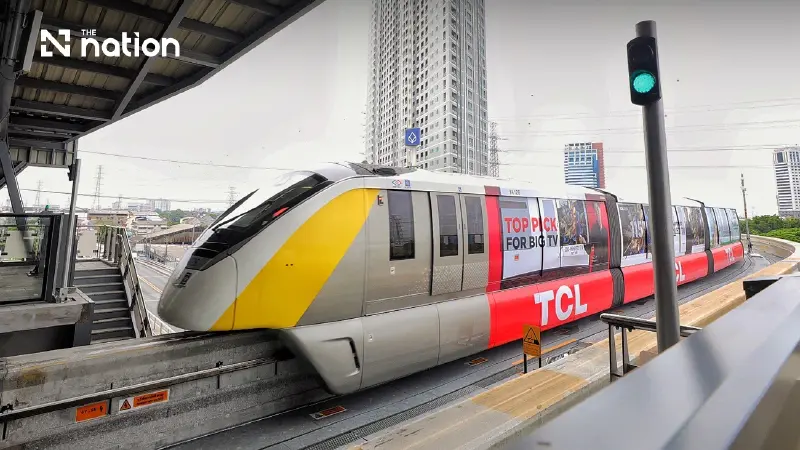


The Department of Rail Transport plans a second public consultation by the end of December 2026 before completing its zone-based urban rail fare study in January 2027.
- Thailand's Department of Rail Transport is studying a new three-zone fare system for its urban rail network to replace the current mix of distance-based and flat-rate structures.
- The proposed framework includes an inner-city zone with a flat fare, a middle zone with distance-based fares for connecting trips, and an outer zone that also has a flat rate for travel within it.
- Journeys crossing multiple zones would incur higher fares, with a trip spanning all three zones being the most expensive.
- Following further studies and public consultations, the final proposal is scheduled to be submitted for Cabinet approval by the end of 2027.
Athiphu Chitranukroh, deputy director-general of the Department of Rail Transport (DRT), said that, following the first public consultation seminar for a study on setting zone-based fares for rail mass transit, the department was examining urban rail fares in preparation for future needs.
Current fare structures vary, with both distance-based and flat-rate systems in use.
The next stages will include a workshop with rail operators and the drafting of related ministerial regulations before a second public consultation by the end of December 2026 to establish clear fare rates.
Three-zone fare proposal to be submitted to Cabinet
The department will then complete the final study by the end of January 2027 before submitting it to the Rail Transport Policy Committee and the Commission for the Management of Land Traffic (CMLT).
Cabinet approval will subsequently be sought by the end of 2027.
Under the proposed zoning framework, the area would be divided into three main zones:
- The inner-city zone would cover the city centre, where travel is concentrated, and comprise an average of 12 stations, based mainly on the Green Line. A single flat fare would apply to journeys made entirely within this zone.
- The middle urban zone would apply higher fares according to the specified distance when passengers make a connecting journey or cross over from the inner-city zone.
- The outer urban zone would cover outer-city and urban-fringe areas. A journey crossing all three zones, from the inner city through the middle zone to the outer zone, would incur the highest fare. However, journeys made entirely within the outer zone would also be charged at a single flat rate for that zone.
Meanwhile, travel behaviour survey data show that about 50% of passengers do not change lines, while another 30% change lines once. These figures form an important basis for determining the most appropriate radius for each zone.
Congestion charge study to proceed alongside fare project
Athiphu added that the project would need to proceed alongside studies by the Office of Transport and Traffic Policy and Planning (OTP) and the Bangkok Metropolitan Administration (BMA) on introducing a congestion charge.
The concept is to use revenue from congestion charges and environmental fees collected from private motorists to support public transport, including reducing urban rail fares and improving bus services, to encourage more people to switch to public transport.
He said he had been informed that OTP had held discussions with experts from England on adapting a successful model to Thailand’s context.
The work would also be integrated with BMA pavement improvements within an 800-metre radius of urban rail stations to expand the catchment area, make the rail system more accessible to the public and help reduce the government’s long-term subsidy burden.
