
EGAT plans 2027 grid upgrades to support eastern Thailand data centres


EGAT has formed a dedicated unit to study a proposed 300MW small modular reactor, while the project awaits technological maturity and a legal framework.
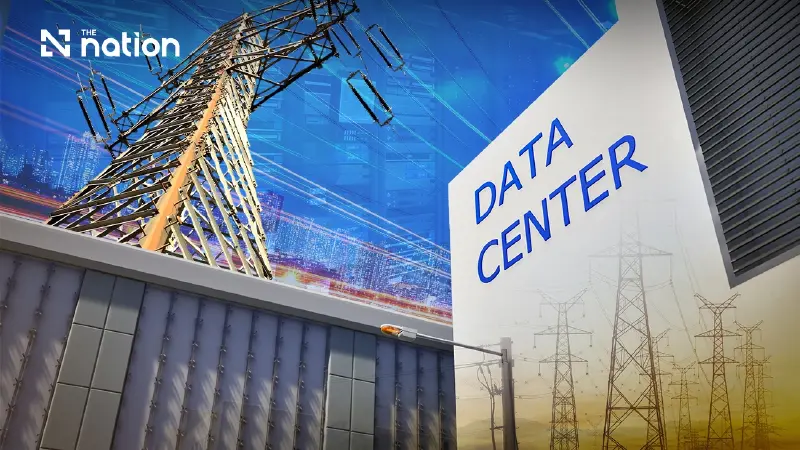
- The Electricity Generating Authority of Thailand (EGAT) will upgrade its transmission system in 2027 to support data centres in the country's eastern region.
- These upgrades follow a capacity increase of 550MW at the start of the year, with a target of 900MW by year-end before further expansion projects in 2027.
- The investment budget framework for the 2027 upgrades is estimated to be as high as THB450 billion.
Narint Phaowanich, governor of the Electricity Generating Authority of Thailand (EGAT), said the agency had established a dedicated unit to study and develop a nuclear power project based on small modular reactor (SMR) technology.
The project is included in the draft Thailand Power Development Plan 2026 (PDP 2026), covering 2026–2050.
EGAT is adapting data and findings from a nuclear project undertaken a decade ago and working with the Ministry of Energy, the Office of Atoms for Peace (OAP), the Thailand Institute of Nuclear Technology (TINT) and the Ministry of Natural Resources and Environment.

SMR development expected to take about 10 years
Under PDP 2026, development of the SMR power plant is expected to take approximately 10 years, allowing time for the technology to mature and the legal framework to be ready.
EGAT nevertheless wants to proceed more quickly. The preliminary generating capacity is expected to be about 300 megawatts (MW).
EGAT is trying to keep the required investment as low as possible. Although current estimates may appear high, prices are expected to fall by the time investment begins.
The final investment figure will be determined later.
For its smart-grid operations, EGAT is implementing government policy through five pillars.
The agency has established the Renewable Energy Forecast Center (REFC) and the Demand Response Control Center (DRCC), which operate together to manage variable renewable energy efficiently.
Battery energy storage systems with capacities of 16MW and 21MW have already been installed at two locations, including Chai Badan, giving a combined capacity of 37MW.
EGAT plans to add about 200MW by the end of 2027.
“2027 will see upgrades to the transmission system to support data centres in the eastern region. Capacity was increased by 550MW at the beginning of this year and is expected to reach 900MW by year-end. Further expansion projects will follow in 2027.”
2027 investment budget could reach THB450 billion
Narint added that the nationwide figure was expected to increase by more than 1,000MW, with the cumulative total exceeding 2,000MW.
This involves upgrading the main transmission network, described as the “main trunk/highway”, from the equivalent of four lanes to six so electricity can be fully distributed to sub-networks.
The investment budget for 2027 is expected to be higher than before, with the budget framework estimated at THB450 billion.
Details may be adjusted as appropriate.
