
Suphajee says EU FTA deal could lift Thai growth above 3% as Sept 28 talks near
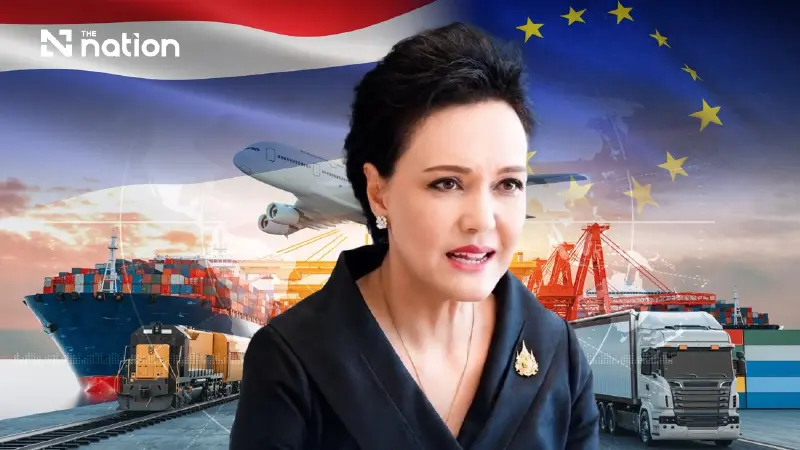


Thailand aims to settle the remaining third of its EU trade deal at talks starting in Phuket on September 28, with foreign investment also in focus
- The proposed free trade agreement with the European Union is projected to increase Thailand's GDP by 1.28%, potentially lifting annual economic growth from its current rate of just over 2% to above 3%.
- The next round of negotiations is scheduled to begin in Phuket on September 28, with the goal of concluding the remaining one-third of the agreement's chapters.
- Beyond boosting trade, the deal is expected to attract foreign investment from countries like the US, China, and Japan, which could establish manufacturing bases in Thailand to gain preferential access to the EU market.
Thailand’s proposed free trade agreement with the European Union could help lift annual economic growth above 3% and attract more foreign investment, Deputy Prime Minister and Commerce Minister Suphajee Suthumpun said on September 18, 2026.
Speaking at Government House, Suphajee said Thailand aimed to conclude the remaining negotiating chapters during the next round of talks in Phuket, beginning on September 28.
Suphajee cited a study by the Institute of Future Studies for Development estimating that the agreement could increase Thailand’s gross domestic product (GDP) by 1.28% and exports by 2.8%. Describing Thailand’s current annual economic growth as just over 2%, Suphajee argued that the agreement could help push growth above 3% a year.
Phuket talks target remaining third of agreement
Thailand and the EU have agreed on about two-thirds of the agreement’s chapters, leaving roughly one-third outstanding, Suphajee said.
The tenth negotiating round will take place in Phuket from September 28 and last about a week. Thailand’s objective is to conclude all remaining chapters during those discussions with EU representatives.
Under the sequence Suphajee outlined, negotiators would then conduct a legal review, known as a “legal scrub”, and align the wording in detail. Once the draft agreement was finalised and signed, it would be submitted to the Cabinet for approval and then to parliament for consideration. Suphajee estimated that the full process would take about a year.
Anutin sets negotiating priorities
Prime Minister and Interior Minister Anutin Charnvirakul chaired the second meeting of 2026 of the working group driving the Thailand–EU free trade negotiations, which preceded Suphajee’s remarks.
Suphajee said the meeting lasted more than two hours as Anutin sought briefings from relevant agencies and emphasised the need for a common negotiating framework.
Thailand’s preferred positions aim to secure the greatest possible benefits, while its fallback positions establish minimum requirements that negotiators must maintain if the preferred outcomes cannot be achieved.
On sensitive goods, Suphajee said Thailand would follow the principles discussed with the EU during the ninth negotiating round in Brussels, Belgium. Both sides would set aside sensitive product categories, while proceeding first with market opening for products where they could secure mutual benefits.
Deal could attract US, Chinese and Japanese investment
Suphajee said the agreement could encourage investors from the United States, China and Japan to establish manufacturing bases in Thailand, allowing them to benefit from preferential tariffs when exporting to the EU.
Greater access to the European market would also strengthen Thailand’s competitiveness, reduce its reliance on existing export markets and create a more balanced trading position, Suphajee said.
Beyond expanding bilateral trade, Suphajee described the agreement as an important means of attracting foreign direct investment and delivering wider economic benefits to Thailand.
