
LISA’s TV moment highlights proposed Thai alcohol advertising rules


Proposed Thai regulations would set limits on alcohol product images, packaging, brand marks, media space and the timing of broadcasts.
- A TV appearance by LISA on a US show, where a beer brand was clearly visible, has drawn attention to the stark contrast with Thailand's strict proposed alcohol advertising regulations.
- The draft Thai rules under review would ban using images of alcoholic drinks or their packaging and severely restrict the size and placement of brand logos in media.
- The proposed regulations would limit the display of brand names in TV and digital media to 5% of the screen area and running time, and restrict broadcasts to a 10 pm to 5 am window.
- A key issue for businesses is the vague definition of "direct or indirect inducement," creating uncertainty over what separates prohibited advertising from permissible information.
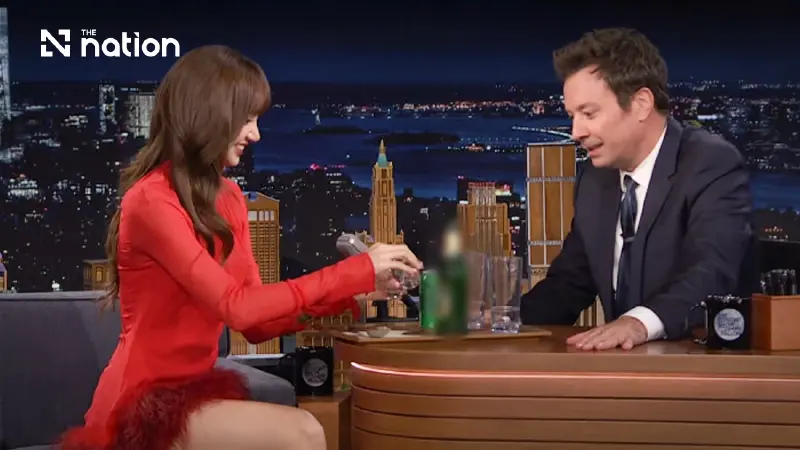
Footage of LISA appearing on The Tonight Show Starring Jimmy Fallon showed her with a drink while a beer bottle and its brand name were clearly visible.
The moment drew attention online, particularly when she invited host Jimmy Fallon to clink glasses and say the Thai phrase “mot kaeo” (“Bottoms up!”).
Although the appearance took place in the United States and did not fall directly under Thailand’s alcohol-control laws, it illustrated a difference in how alcohol brands may appear in media.
Thailand is still drawing up detailed rules governing information and public relations for alcoholic beverages under the amended law.


Global television beer image contrasts with strict Thai controls
Under Section 32/1 of the amended Alcoholic Beverage Control Act, advertising alcoholic beverages remains prohibited except for the provision of “information, knowledge or public relations” under prescribed rules, procedures and conditions.
The question is therefore not simply whether “beer can be mentioned”, but also the extent to which brand names, logos, product images and packaging may appear in media, according to the Centre for Alcohol Studies.
The legal subcommittee under the Office of the Alcoholic Beverage Control Committee, part of the Department of Disease Control at the Ministry of Public Health, has prepared draft secondary rules under Section 32/1. The draft was opened for public consultation on Wednesday (September 9, 2026).
The draft sets out a relatively detailed framework covering the types of information that may be presented, methods of publication and the permitted size of names or marks associated with alcoholic beverages.
Draft restrictions cover product images and logo space
The draft states that permissible “information” must be factual, including alcohol content, ingredients, origin, production processes, geographical indications and normal retail prices.
It must not amount to direct or indirect inducement.
Public relations materials may display the names of products, producers, importers or distributors, along with related images or symbols, but restrictions would apply to their presentation.
One issue being watched by businesses is a proposed ban on using images of alcoholic drinks, packaging, or any part of a drink or its packaging in communications covered by the draft.
This means an image of “a beer bottle with its name and label clearly visible”, as may appear on foreign television, cannot be directly compared with what Thailand’s proposed rules would allow because the legal contexts and jurisdictions differ.
Logos permitted within proposed limits
The draft would cap the combined area occupied by names or marks related to alcoholic beverages at 5% for television, films, videos, electronic media, websites and social media.
The limit would be 3% for other media and 5% for printed materials and food or drink menus.
Such names or marks would also be barred from front and back covers, centre pages and wraparound formats.
For moving-image media, the draft would also limit the combined display of names or marks to 5% of the total running time and allow them to appear only at the end.
For television, radio and digital audio media, including television programmes, the proposed broadcast window would be from 10pm to 5am.
Meaning of inducement remains a major issue
A further issue raised by the business sector is the phrase “direct or indirect inducement”.
Operators argue that it should be clearly defined because it could affect factual communications involving product images, packaging, prices, lists of sales outlets, participation in events and brand information.
This has made the boundary between “providing information” and “advertising or inducement” a key matter requiring clarification.
The Craft Beer Trade Association (Thailand) has called for several provisions to be reviewed, particularly the ban on images of products and packaging and the limits on media space.
It argues that the measures could affect communications by small operators, particularly for products that need to build brand awareness.
From “mot kaeo” to questions over brand visibility
LISA’s “mot kaeo” moment may therefore be viewed simply as a programme gimmick.
The more significant point is the clearly visible beer bottle and brand name in a global entertainment programme, illustrating how rules and laws governing alcohol communication differ between countries.
For Thailand, the key issue is not whether the scene should be judged lawful or unlawful under Thai law.
It is how the boundary between “information, public relations and advertising” will be drawn when the draft secondary regulations under Section 32/1 eventually take effect.
At a time when a piece of content can reach viewers around the world within seconds, Thai controls on alcohol-brand imagery are no longer concerned only with conventional liquor and beer advertising.
The issue also extends to brand communication across a borderless media landscape.
Source: Thansettakij
