
Bangkok Native trend offers lessons in customer loyalty
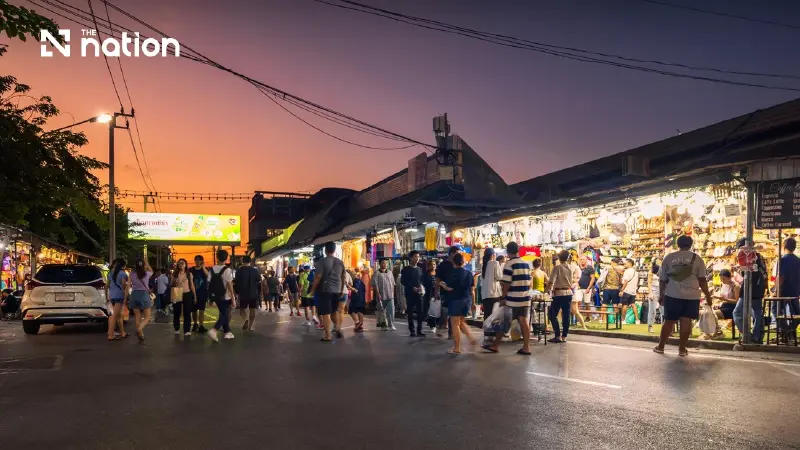


The Bangkok Native trend offers businesses a lesson in retaining customers through local knowledge, convenient services and consistent quality.
- The "Bangkok Native" trend teaches businesses to build customer loyalty by understanding the daily routines, habits, and expectations of long-standing city residents, rather than focusing on their place of birth.
- To retain customers, businesses must prioritize consistent quality and a reliable experience, as regulars value this familiarity more than temporary promotions or advertising and judge new visits against past ones.
- Businesses can foster loyalty by integrating into customers' daily lives, which includes offering convenience based on local knowledge (like travel time over distance) and adapting services to fit established patterns.
The “Bangkok Native” conversation offers businesses a question more useful than who qualifies as a true Bangkokian: what keeps long-standing city customers coming back? Beyond the online checklists, the business challenge is to understand customers’ everyday routines and deliver the convenience and consistent quality they expect.
“Bangkok Native” has circulated on social media through discussions of the habits that supposedly distinguish established residents from newcomers. For businesses, however, the useful distinction is not where customers were born, but how their experience of the capital shapes what they expect from the places where they spend their money.
In this discussion, the term extends beyond birthplace or household registration to people who have lived with Bangkok’s pace, social conventions, culture and daily routines long enough for that familiarity to become part of their identity. Understanding those routines offers businesses a more practical starting point than deciding who passes an online test of belonging.
Bangkok routines shape expectations of local businesses
Long-standing Bangkok residents often describe journeys in minutes rather than kilometres. Familiarity with neighbourhoods, side streets and shortcuts includes knowing when a particular road becomes a bottleneck. For a neighbourhood business, a short distance on a map may therefore say less about convenience than whether customers can reach the shop when they need it.
Local knowledge also extends to the businesses themselves. A regular diner may remember whether a restaurant’s food still tastes the same or whether ownership has changed. Those accumulated experiences give customers a basis for comparison whenever they return.

Shopping centres are another part of that everyday familiarity. For many residents, they combine restaurants, cafés, cinemas, supermarkets and places to work or meet friends, while providing shelter from heat, rain and pollution. A coffee before work or tea in the afternoon can be equally embedded in the working day.
The online checklist’s references to transport choices, meal prices, daily drinks and holiday plans belong to this wider conversation about city life. They are not evidence that all long-standing Bangkok residents share the same budget or habits. For businesses, their value lies in the questions they raise about customers’ routines, rather than their usefulness as a definition of a “true Bangkokian”.
Citywide figures do not measure a Bangkok Native market
Bangkok’s labour and spending figures provide broader economic context, but they do not measure a separately defined “Bangkok Native” consumer segment. The National Statistical Office puts the capital’s labour force at about 5.88 million people, a citywide figure rather than a count of residents who fit the social-media label.
Spending estimates for a normal working routine in Bangkok put food, drinks and transport at approximately 410–840 baht a day, or roughly 9,000–18,000 baht a month. Housing and other expenses are excluded from those estimates.
Separately, the National Statistical Office’s 2023 survey put average monthly household expenditure in Bangkok at 32,736 baht. That is a household measure, not an individual spending figure, and should not be treated as a budget shared by every customer.
For businesses, the distinction matters: the size of Bangkok’s workforce, the cost of a working day and average household expenditure describe different aspects of the market. None, by itself, establishes the purchasing power or preferences of consumers described as Bangkok Natives.
Consistent quality gives customers a reason to return
The Trade Policy and Strategy Office says urban consumers place greater importance on the quality and consistency of products and services than on temporary promotions or low prices alone. The office also reports that fresh markets and familiar shops remain popular with more than 58% of consumers because shoppers know them and can assess product quality themselves.

Research attributed to the College of Management Mahidol University finds that more than 90% of consumers give greater weight to genuine user reviews and direct experience than to brand advertising when making purchasing decisions.
These findings concern broader consumer groups, rather than a specifically measured Bangkok Native population. Their relevance to the business argument is the importance of the experience behind a purchase: a familiar name or persuasive advertisement cannot, on its own, ensure that the next visit meets expectations.
For a restaurant or retailer, familiarity can therefore be an advantage without being a guarantee. Regular customers already have experience of the business, but that also gives them expectations against which to judge changes in quality or service.
Retaining Bangkok customers means fitting into their routines
For Bangkok businesses, the focus on retention comes amid economic pressure and cautious consumer spending in 2026. Retail confidence readings below the 50-point threshold during the year have reflected weakness in the spending recovery.
Attracting new customers can require spending on both marketing and building trust. Existing customers already know the brand, but businesses cannot assume that this relationship will continue indefinitely when the experience no longer meets their needs.
The practical response may be less conspicuous than a new campaign. Restaurants and retailers could adjust opening hours to fit working patterns, develop ordering channels that suit customers’ routines and improve delivery arrangements for neighbourhoods with complicated side streets or access restrictions.
Product consistency is equally important. Customers returning to a familiar restaurant or shop need to be able to expect the quality that brought them back before. Changes that undermine that expectation can give even a long-standing customer a reason to try a competitor.
The habits behind the ‘Bangkok Native’ checklist
The social-media checklist frames these ten habits as signs that someone has not yet become a “Bangkok Native”.
- You still describe distance in kilometres. In Bangkok, a 10-kilometre journey can take much longer than expected, depending on the time of day and traffic conditions.
- You still walk slowly and cannot walk very far. From home to a motorcycle-taxi rank, then on to the train, over a pedestrian bridge and into a shopping centre, everyday life in Bangkok can involve more walking than expected.
- You still use shopping centres’ full names. Once places such as Siam Paragon and Mahboonkrong become part of everyday life, their full names may seem unnecessary. Familiar meeting arrangements include “meet at Siam”, “go to Paragon” or “meet at MBK”.
- You still rely mainly on public transport. The checklist points to a contradiction of city life: despite knowing the roads are congested, some residents prefer cars for convenience, journeys involving several stops or travelling with family. They accept time in traffic in exchange for that flexibility.
- You still get lost in shopping centres. When shopping centres serve as places to eat, meet friends, work, shop and escape the heat, regular visitors can become as familiar with their layouts as with their own neighbourhoods.
- You still eat 80-baht meals. Affordable food remains available in Bangkok, but ordinary meals priced in the hundreds of baht are common in business districts, cafés and shopping centres.
- You still do not have a daily drink. Coffee before work, afternoon tea or a drink during the commute can become an established part of the urban routine.
- You still leave Bangkok during long holidays. The checklist makes the sweeping claim that a “true Bangkokian” has nowhere else to go but Bangkok.
- You do not like spending time in shopping centres. Restaurants, cafés, cinemas, supermarkets and workspaces offer reasons to stay, while shelter from heat, rain and air pollution adds to the appeal. For many residents, shopping centres become something of a second home.
- You spend less than 20,000 baht a month. The checklist cites a National Statistical Office survey showing that Bangkok households spent an average of 32,736 baht a month in 2023. However, that is a household figure, not an individual spending measure, and does not establish the checklist’s 20,000-baht threshold.
