
World Bank Economist on How Thailand Can Stop its Graduate Exodus to the Capital
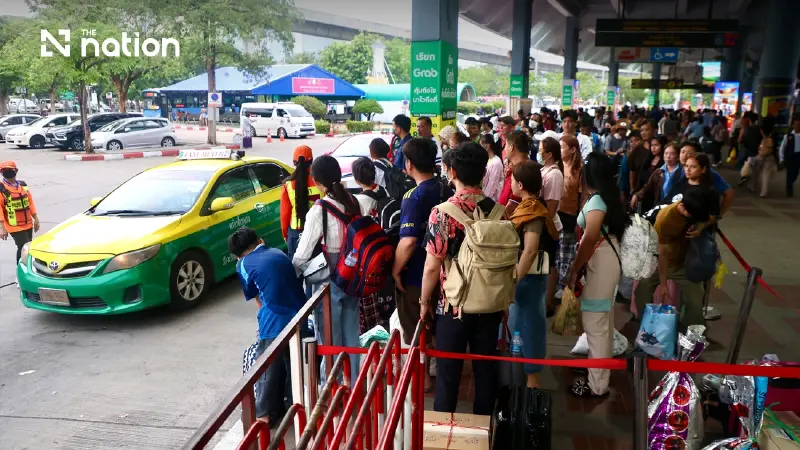


Higher pay vs longer commutes: World Bank economist Steven Rubinyi on why young Thais leave home for Bangkok — and what it takes to bring them back
- To retain graduates, secondary cities must create more high-skill, better-paying jobs to compete with the opportunities concentrated in Bangkok.
- Cities should invest in their unique comparative advantages, such as tourism or specific industries, to build distinct economic clusters rather than trying to replicate the capital.
- Improving infrastructure and granting local governments greater fiscal power and decision-making authority are crucial for secondary cities to develop effectively.
- A long-term investment strategy is needed that shifts focus from Bangkok to secondary cities, which the World Bank projects will yield higher returns and make them more attractive over time.
Higher pay vs longer commutes: World Bank economist Steven Rubinyi on why young Thais leave home for Bangkok — and what it takes to bring them back.
For many young Thais graduating from universities in cities such as Chiang Mai, the decision to move to Bangkok is barely a decision at all. Wages in secondary cities lag behind the capital, the best jobs are concentrated there, and so, as generation after generation has done, graduates pack their bags.
It is a pattern Dr Steven Rubinyi, lead author of the World Bank's Thailand Cities of the Future: Urban Foundations for a High-Income Economy report, knows well — and one he argues is quietly working against Thailand's ambition to become a high-income economy by 2037.
"Bangkok has a lot of benefits — high wages, good jobs, lots of entertainment, great food," Dr Rubinyi said in an exclusive interview following the report's launch this week. "But there are costs to this. You may spend an hour, two hours a day in traffic, cramped in a train trying to get to that higher-paying job. You may be further away from family and friends than you'd like."

The trouble, he said, is that secondary cities have not yet made themselves attractive enough to compete.
"You need to have cities that people want to live in — that have jobs that can support the lifestyle that they desire. And then I think it'll start to happen."
A growth model that runs through cities
The stakes are considerable. According to the report, close to 90 per cent of Thailand's economic growth over the past decade has come from urban areas, and the country needs to lift annual real GDP per capita growth from its recent average of 2.2 per cent to around 5.4 per cent to reach high-income status within the timeframe the government has set.

"Whether Thailand will reach its high-income goal of 2037 will depend on cities as a result," Dr Rubinyi said.
Bangkok, which generates roughly half of national output and is nearly 27 times larger than Chiang Mai, the country's second city, has carried much of that growth so far.
But the report finds the capital is now hitting diminishing returns: congestion alone costs its economy between 7 and 10 per cent of Gross Regional Product a year.
Secondary cities, meanwhile, have seen their population density roughly double over the past two decades without translating into comparable productivity gains — a density-wage elasticity of just 8.9 per cent, against 12 to 19 per cent typical of peer developing economies.
For Dr Rubinyi, that gap is precisely where the graduate exodus and the national growth challenge intersect.
Smaller cities are growing, he acknowledged, "but mostly in lower-paying local service jobs" — not the higher-skill, better-paying roles that would give ambitious graduates a reason to stay.

Building on what makes each city different
Asked what needs to change, Dr Rubinyi pointed to infrastructure and connectivity as prerequisites but said the deeper answer lies in each city finding — and investing in — its own comparative advantage rather than trying to replicate Bangkok.
"Phuket, for example — Bangkok doesn't have the beaches that Phuket does," he said. "There are comparative advantages that different cities in the country have that they need to think through and develop, whether that's industry-based or tourism or cultural.
He noted that Thailand already has a strong network of provincial universities, but that graduates gravitate to Bangkok because "the top jobs, top industries are in Bangkok."

Breaking that cycle, he argued, means building genuine economic clusters in secondary cities — creative industries in some, tourism and natural amenities in others — so that graduates have somewhere comparable to build a career without leaving.
Bangkok's own reckoning
None of this means abandoning the capital. Dr Rubinyi was emphatic that Bangkok's strengths should not be understated.
"Most countries would feel blessed to have an economy like Bangkok's," he said. "It's really a global hub, and it has a lot going for it."
But he described Bangkok's development as "decades of playing catch-up" — reactive rather than proactive — citing one statistic not in the report itself: Bangkok has one of the lowest ratios of green space of any developed city at its income level.
That reactive pattern, he said, now shows up as diminishing returns on new investment.
"Every baht that you invest in Bangkok, you get less in return, because there aren't really many quick wins left. There are huge structural issues that need to be addressed" — through both large infrastructure projects and neighbourhood-level fixes.

A $20 billion threshold and a 15-year wait
The report's modelling, covering Thailand's 75 urban centres through to 2050, identifies a tipping point: once national urban investment exceeds roughly $20 billion a year — about 2.1 per cent of urban GDP — the returns from prioritising secondary cities begin to outweigh a Bangkok-first approach.
Below that level, Dr Rubinyi said, it still "makes sense to focus a bit more on a Bangkok-heavy investment route," both to raise productivity in the capital and to ease the congestion dragging on its economy.
Crucially, the benefits of shifting towards secondary cities take time to materialise — the report's modelling suggests a lag of around 15 years before a secondary-city strategy overtakes a Bangkok-focused one.
That raises an uncomfortable question given Thailand's record of political turnover: can such a long-term plan survive? Dr Rubinyi pointed to the Eastern Economic Corridor (EEC) as a partial answer — an example of a policy framework built for longer-term, area-based planning, with lessons that could be adapted elsewhere.
"I think you can take some of the institutional frameworks from the EEC," he said, while cautioning against simply replicating special economic zones wholesale.
"One of the concerns in Thailand is whether you're leaving some of the local populations behind."

Letting cities grow up
A recurring theme was fiscal power. Asked how stalled local projects — he cited long-delayed transit schemes — might be unblocked, Dr Rubinyi argued for greater fiscal decentralisation, so that taxation and decision-making sit closer to the people who use the infrastructure they fund.
"You need to find a way to trust creditworthy local governments... and empower them to make decisions in their own right and suffer the consequences as well if they don't get it," he said.
He likened the relationship between Bangkok and secondary cities to that of "a child living in the home at a certain age" — one that needs to grow more independent, while the central government retains a role in strategic guidance and stepping in during a crisis.
"Local communities and cities would benefit from a bit more empowerment than they have right now and more fiscal space," he said.
Not every city starts equal
Dr Rubinyi acknowledged that not all secondary cities are equally placed to build the five ingredients the report identifies as essential to a functioning multi-nodal urban system — specialisation, density, connectivity, resilient infrastructure and strong institutions.
Some, he said, already have head starts. The task for government is to weigh efficiency against equity, ensuring growth-focused investment does not leave rural and elderly populations behind.
The report notes that while roughly three-quarters of working-age adults live in cities, a majority of elderly Thais remain in rural areas — a structural divide he said policymakers "need to address".
"Economic growth is key to the long-term success of the country," Dr Rubinyi said, "but it's also not the only thing that matters."
For a generation of Thai graduates still weighing Bangkok against home, that balance — between growth and the everyday liveability of the cities they might otherwise choose — may prove decisive.
