
EEC shifts focus to power, water and infrastructure for digital future
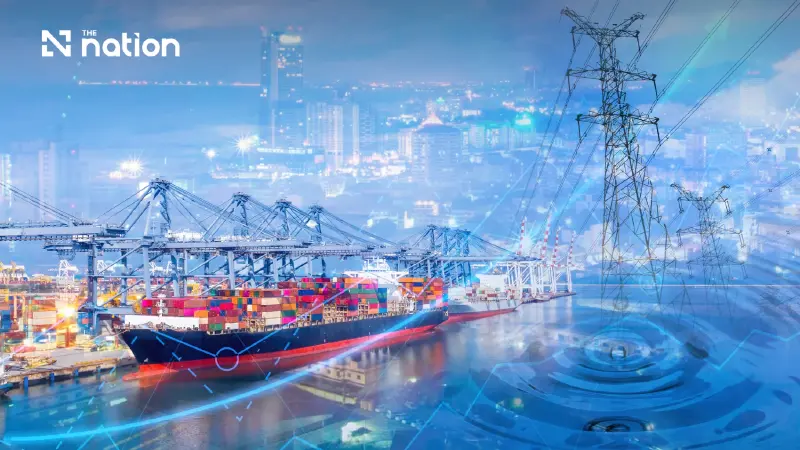


EECO is drafting a new 2028–2032 development plan focused on power, water and infrastructure to support data centres and other high-tech industries.
The Eastern Economic Corridor Office (EECO) is preparing a new development plan placing greater emphasis on electricity, water and other public utilities as the region seeks to accommodate data centres and other high-technology industries.
Chula Sukmanop, Secretary-General of EECO, said on October 12 that the next overall development plan would cover 2028–2032 in Chachoengsao, Chonburi and Rayong, succeeding the current plan, which runs through 2027.
Speaking at the Exclusive Roundtable EEC Never Stops: Infrastructure, organised by Nation Group, Chula said emerging industries increasingly depend on large volumes of electricity and water, requiring the EEC to shift more attention towards infrastructure and utilities.
EECO has also been tasked with preparing a 15-year development framework to guide the longer-term direction of the corridor.
“The development must be sustainable and deal with several issues at the same time,” Chula said. “One of the most important is infrastructure and public utilities.”

Four plans to guide EEC development
The overall framework consists of four main plans.
The first concerns land use, defining the roles of different areas and districts in a manner similar to urban planning.
The second covers infrastructure and public utilities, determining what types of infrastructure are appropriate for individual locations.
The remaining two cover EECO’s general operations and the government’s one-stop service system.
Chula said detailed spatial plans would also be prepared alongside the development strategy, covering both urban development and infrastructure and utility networks.
Progress under the existing plan has reached only about half the level originally targeted, he said, with some projects delayed and others yet to begin.
EECO is continuing to monitor implementation and is awaiting the latest 2026 progress assessment.

Four megaprojects form gateways to EEC
Chula said the EEC has been closely associated with four major infrastructure projects since its development began in 2018.
Laem Chabang Port serves as the main container gateway for imported production materials and exports, while Map Ta Phut Port acts as an energy gateway, including the import of natural gas for industry and electricity generation.
U-Tapao Airport is intended to provide direct passenger access to the three EEC provinces and nearby areas.
The fourth project, the high-speed railway linking three airports, is designed to connect U-Tapao with Suvarnabhumi and Don Mueang airports.
“These four projects were developed alongside the EEC to demonstrate its readiness for growth, and they are intended to drive further investment,” Chula said.

Rail link designed to reshape cities
Chula said the three-airport railway was not simply about travelling at high speed.
One objective is to improve mobility between Bangkok and the EEC, effectively bringing the two economic areas closer together.
Another is accessibility. With nine stations planned, the railway is also expected to encourage development around stations in areas including Chachoengsao, Chonburi, Si Racha and Pattaya.
Even if trains operated at 160 kilometres per hour rather than 250km/h, he said, rail travel could still provide advantages over road transport.
He added that the eastern rail network would ultimately need to extend beyond U-Tapao towards Rayong and Chanthaburi.
If the high-speed rail project could not proceed in the worst-case scenario, another solution would still be required to improve Bangkok-EEC connectivity, potentially through upgrades to the State Railway of Thailand’s existing network.

Freight growth could put pressure on rail and roads
The Bangkok-Chachoengsao-Si Racha rail corridor will also need to accommodate the expansion of Laem Chabang Port.
Chula said that if rail handled 30% of an eventual 18 million containers, the system could need to carry about 6 million containers annually alongside passenger services.
Separating high-speed passenger services from freight operations would therefore help prevent congestion on the rail network.
Road congestion is another concern.
If container volumes rise sharply over the next five years, rail freight activity could increase several times from current levels, while businesses close to ports in Chonburi and Rayong would still rely heavily on trucks because their journeys are too short to make rail practical.
Even movements of empty containers could add substantial pressure to roads.
Water and power move to centre of EEC planning
Chula said previous EEC infrastructure planning concentrated heavily on transport, while communities increasingly called for greater attention to social and environmental needs.
The new planning cycle is therefore giving greater weight to water and electricity.
New high-tech industries depend heavily on electricity, with data centres among the most demanding users.
EECO is estimating electricity and water requirements through 2037, incorporating expected investment in data centres and other new industries.
Water management rules are also being tightened.
Businesses operating in designated EEC investment and industrial areas are being required to treat wastewater and reuse at least 25% of the water they consume, reducing pressure on conventional water supplies.
Data centres drive electricity demand
Chula cautioned that applications for electricity from data-centre operators could overstate actual future demand.
A global customer requiring 400 megawatts, for example, might approach several data-centre providers, each of which could request enough electricity capacity to secure the same potential customer even though only two or three projects might ultimately proceed.
Even so, Chula said underlying demand for AI data centres was unlikely to fall because users increasingly require speed and computing capacity.
If Thailand could not provide sufficient electricity, investors could move to locations where power was readily available.
He said data centres could also provide an ecosystem for new technology businesses, including specialised AI, autonomous vehicles and medical technology.
Without that infrastructure, Thailand risked remaining primarily a user rather than becoming a developer of new technologies.
“Electricity is the foundation of everything and has become a basic utility,” Chula said, adding that both power and water required careful management because they were limited resources.
Private investment sought for infrastructure
EECO also plans to open more infrastructure development to private-sector participation.
Chula said networks for electricity, water and transport could not be planned solely within the three EEC provinces because they must connect with systems outside the corridor.
Infrastructure could be developed through three broad models: direct government investment, private investment under government regulations, or public-private partnerships.
The priority should be ensuring that infrastructure is delivered rather than insisting on a particular operator, he said.
Power infrastructure includes both generation and transmission, while water systems involve reservoirs, dams, canals and pipelines before water reaches utilities or industrial users. Private companies and industrial estates could therefore play a role in developing parts of these systems.
Chula said attracting investors would require the EEC to become more responsive and capable of delivering infrastructure quickly.
Private participation could help strengthen existing assets and accelerate the development needed to keep the EEC competitive as regional investment increasingly shifts towards digital and high-technology industries.
