
Floods deepen Thai shrimp crisis amid disease and export setbacks
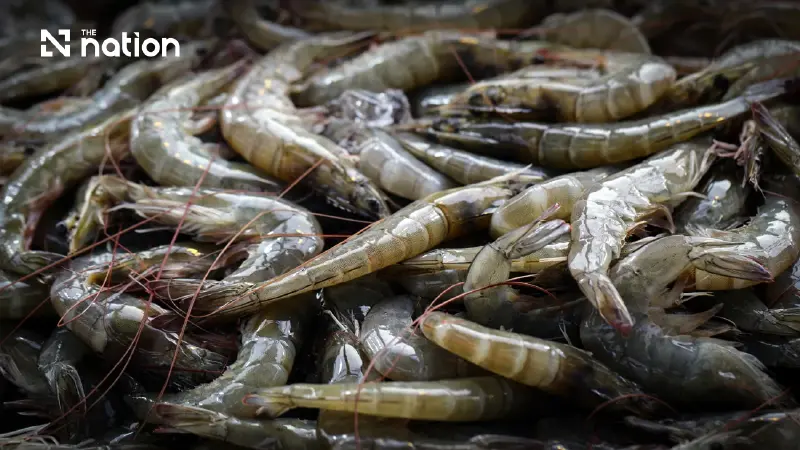


The private sector seeks faster aid and a higher compensation cap as floods compound disease, rising costs and export setbacks in Thailand’s shrimp industry.
- Severe floods have caused an estimated THB16.5–22 billion in damages to Thailand's major shrimp farming regions, affecting over 18,700 farmers and critical infrastructure.
- The flooding exacerbates a long-standing crisis from diseases like Early Mortality Syndrome (EMS), which have already caused national shrimp production to decline by 60% over the last decade.
- The industry is also suffering from export setbacks, including a recent import suspension by Malaysia that caused an 81% drop in export volume to that country in June.
Severe flooding in 2026 has compounded longstanding structural problems in Thailand’s shrimp industry, becoming a “catalyst” that exposes the sector’s vulnerability rather than simply a temporary natural disaster.
Conventional compensation payments may no longer be enough.
The challenge for the government and private sector is to work together to “overhaul Thailand’s shrimp production chain” and build long-term economic resilience.
Floods compound early mortality syndrome (EMS) crisis in east and centre amid long-term output decline of 60%
Thailand’s shrimp farming industry is facing its most severe systemic crisis in a decade, with persistent disease outbreaks, soaring feed and energy costs, and shrinking export markets.
The latest pressure comes from major floods hitting shrimp ponds in eastern Thailand, which accounts for 20% of national production, as well as farming areas in the South and Central region.
Somprasong Natetip, president of the Thai Eastern Shrimp Association, and Banjong Nissapawanich, chairman of the Thai Aquaculture Federation, jointly announced preliminary damage estimates of THB16.5–22 billion for Chachoengsao, Prachin Buri, Chon Buri, Rayong and Samut Prakan.
This was in line with Department of Fisheries figures as of Wednesday (October 14, 2026), which put losses at around THB17.503 billion, with more than 18,774 farmers affected and over 140,000 rai (1 rai = 0.16 hectares) of farming area damaged.
The flooding has compounded the impact of early mortality syndrome (EMS), white spot disease and white faeces syndrome, which have eroded Thailand’s shrimp industry since 2011.
Annual national production has fallen from 600,000 tonnes to around 250,000 tonnes, causing a worrying decline in Thailand’s competitiveness in the global market.
“Flooding damages electrical systems, water quality and farming equipment. Recovery is not simply a matter of pumping out the water: the entire biosecurity system must be thoroughly rechecked to prevent further disease outbreaks. This is a systemic crisis affecting the whole chain: farms, shrimp seed, processing plants and exporters,” Somprasong explained.

Malaysia suspends imports of five Thai shrimp species as export volume falls 81%
Beyond production problems, Thailand’s shrimp industry has suffered another blow overseas.
Malaysia suspended imports of five Thai shrimp species from June 1, 2026.
The suspension covered kuruma prawns, banana prawns, whiteleg shrimp, black tiger prawns and blue shrimp.
This caused Thai shrimp export volumes to Malaysia to fall by 81% in June, while supplies redirected to the domestic market placed heavy pressure on farm-gate prices.
Shrimp association seeks higher compensation cap as Fisheries Department cites limited funds
In response, the private sector has proposed changes to disaster assistance criteria, including raising the current compensation limit of 5 rai, easing farmer registration documentation requirements and accelerating approval of working capital support so that shrimp farmers receive funds within 15–30 days.
It has also proposed involving vocational institutions in establishing equipment repair centres to help restore farms.
Manop Nusorn, deputy director-general of the Department of Fisheries, said the department had only THB561.46 million remaining for assistance.
Under the 2026 relief rules, compensation for marine shrimp and giant freshwater prawn farming is set at THB12,350 per rai, covering no more than 5 rai per farmer.
Payments to properly registered farmers must be expedited and completed within 90 days.
Thailand’s shrimp industry crisis in 2026 is a stark warning that reactive flood relief can no longer provide a sustainable solution.
The government and private sector need to undertake structural reform together, including overhauling biosecurity systems to control disease, adjusting fiscal criteria to provide targeted support to farmers and accelerating trade negotiations to open new markets.
These measures are needed to restore Thailand’s position as a global leader in quality shrimp.
