
IMFC’s October 17 review finds global resilience but weaker policy buffers against 3 risks
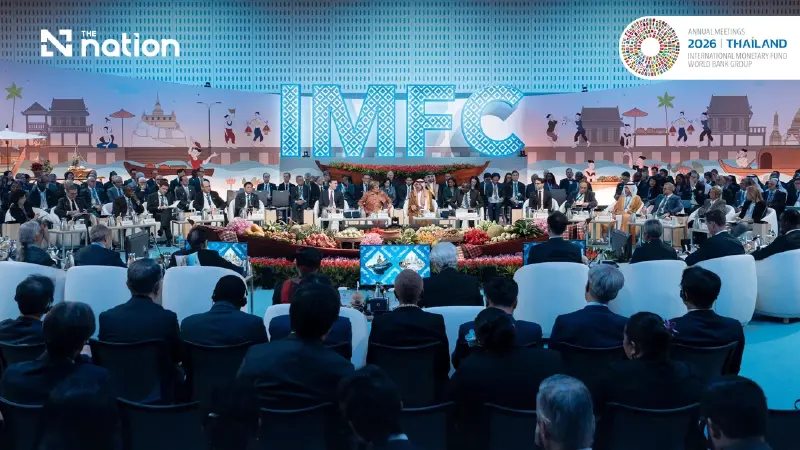


IMF committee members back Thailand’s Bangkok Blueprint as policymakers focus on stability, private sector-led growth and international cooperation.
- The International Monetary and Financial Committee (IMFC) concluded that the global economy has been resilient to shocks but is left with weaker policy buffers, reducing its capacity to respond to future crises.
- The committee identified three main areas of risk: geopolitical and trade tensions, fiscal and financial market vulnerabilities like high public debt, and the uncertain economic effects of AI and technological change.
- In response, the IMF has set priorities that include rebuilding fiscal buffers, ensuring price stability, promoting private sector-led growth through structural reforms, and enhancing international cooperation.
The global economy has weathered shocks better than expected, but shrinking policy buffers have left countries with less room to respond to further disruption, according to a Bank of Thailand source. The source was outlining the central bank’s summary of the International Monetary and Financial Committee (IMFC) meeting on Saturday (October 17, 2026).
Most IMFC members supported prioritising macroeconomic stability, rebuilding policy buffers and undertaking structural reforms to raise productivity and growth, according to the Bank of Thailand account. Members also supported harnessing artificial intelligence (AI) while managing the associated risks.
IMFC identifies trade, debt and technology risks
The Bank of Thailand’s summary grouped the risks discussed by IMFC members into three areas:
- Geopolitics and trade. IMFC members highlighted conflicts and trade tensions that could disrupt important trade routes, intensify pressure on commodity prices and worsen energy and food security, alongside deeper economic fragmentation.
- Fiscal and financial markets. The IMFC assessment identified high public debt and substantial refinancing needs as vulnerabilities. Sovereign bond yields in major economies could also rise, pushing up government borrowing costs.
- AI and technological change. IMFC members noted that the effects of AI and technological change on economies, labour markets and financial systems remained highly uncertain.
IMF sets three priorities for stability and growth
The International Monetary Fund (IMF) identified three priorities for economic policy in the period ahead, according to the Bank of Thailand source:
- Macroeconomic and financial stability. The IMF emphasised reducing fiscal vulnerabilities and pursuing fiscal consolidation to strengthen public finances, alongside monetary policy focused on price stability. The priorities also included protecting central bank independence, clear policy communication and exchange rate flexibility, with financial oversight covering non-bank financial institutions (NBFIs), digital finance, AI and cyber threats.
- Private sector-led growth. The IMF highlighted structural economic reforms, stronger competition and improved access to finance. Investment in human capital and workforce skills should reflect the demands of the digital economy, alongside the development of digital and energy infrastructure and greater business resilience to climate change.
- International cooperation. The IMF called for joint efforts to address global economic imbalances, ease trade tensions and manage cross-border risks, including those arising from highly concentrated AI investment.
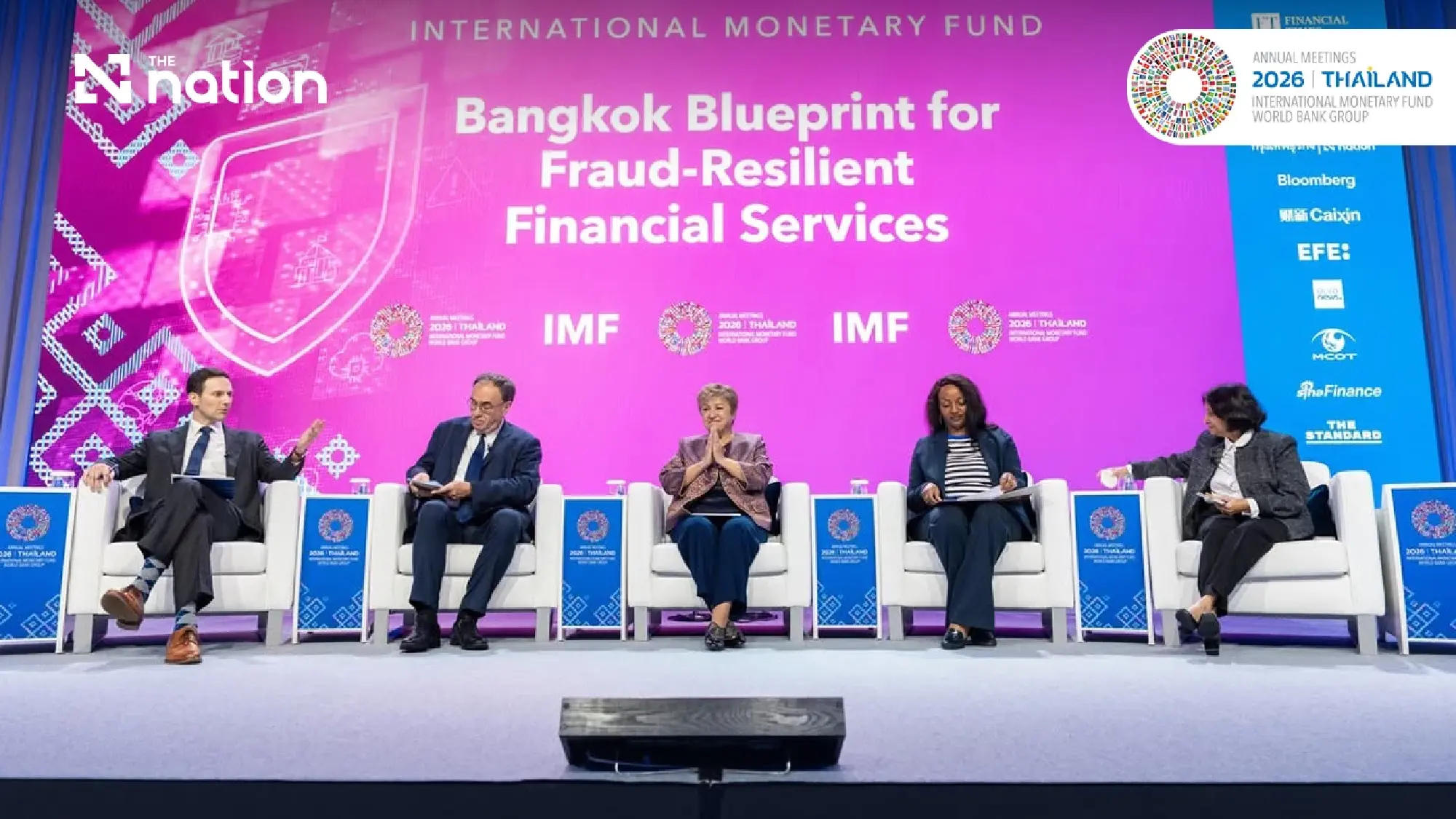

IMFC backs Bangkok Blueprint on digital financial security
IMFC members expressed support for the Bangkok Blueprint, which the Bank of Thailand promoted and developed with the IMF and World Bank Group, according to the central bank source.
The Bangkok Blueprint aims to strengthen digital financial security, improve resilience against cyber threats and make efforts to counter cross-border digital fraud more effective. The Bank of Thailand account identified the framework as an outcome of international cooperation.
IMF refines policy tools to strengthen long-term resilience
The IMF is continuing to adapt its operating frameworks and tools to make them more flexible, targeted and responsive to member countries’ risks and circumstances, according to the Bank of Thailand account.
The IMF’s work covers economic and financial surveillance, financial-sector assessments, analysis of external stability and debt sustainability, capacity development, and the design of policies and financial assistance programmes. The Bank of Thailand source described the aim as helping members manage uncertainty and build long-term resilience.
Most IMFC members supported implementing the IMF’s policy-review findings, strengthening analysis of global imbalances and cross-border spillovers, and advancing quota and governance reforms, according to the Bank of Thailand account.
Some IMFC member countries placed particular emphasis on energy security, risks involving non-bank financial institutions and highly leveraged activities, and closer links between regional and global financial assistance arrangements, the Bank of Thailand account noted.
Some IMFC members also highlighted the need to share AI’s benefits more widely to reduce inequality and development gaps, according to the Bank of Thailand account.
IMFC members reaffirmed their commitment to strengthening the IMF’s resources so the institution could better respond to a changing global environment, the Bank of Thailand source reported.
