
ASEAN energy demand projected at four times current levels by 2060
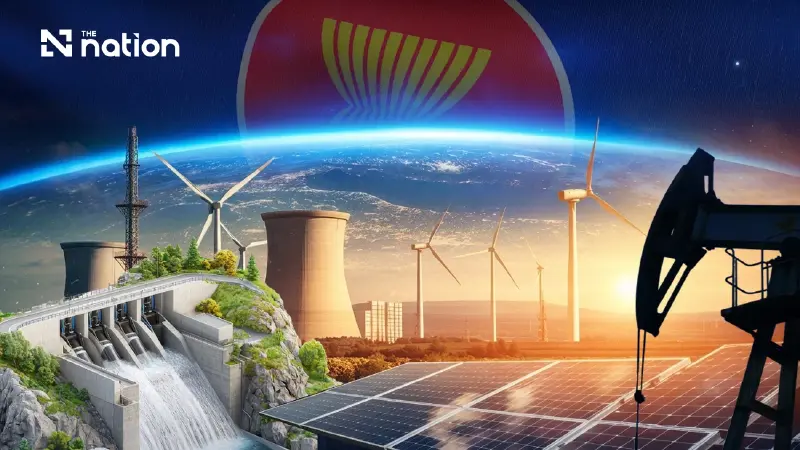


Thailand backs regional electricity trade, strategic petroleum reserves and biofuels as ASEAN develops cross-border power connections.
- According to the ninth ASEAN Energy Outlook (AEO9), energy demand in the ASEAN region is projected to be four times its current level by the year 2060.
- This projected surge in demand is driven by economic growth, urbanization, industrial development, and new sources like data centers.
- Meeting this demand and facilitating a clean energy transition will require an estimated investment of approximately $400 billion annually.
- A key regional initiative to manage this growth and enhance energy security is the advancement of the ASEAN Power Grid (APG) for cross-border electricity trade.
Energy demand in the Association of Southeast Asian Nations (ASEAN) is expected to reach about four times current levels by 2060, according to the joint media statement from the 44th ASEAN Ministers on Energy Meeting (AMEM), held on Wednesday (October 7, 2026).
The statement said the meeting launched the ninth ASEAN Energy Outlook (AEO9), an updated document for medium- and long-term energy planning.
Economic growth, urbanisation, industrial development and emerging sources of demand, including data centres, are expected to drive the increase over more than three decades.
The meeting also acknowledged current conditions and the ASEAN Coordinated Transition Scenario (ACTS), which emphasises regional cooperation, alongside estimated investment needs of about 400 billion dollars a year.
These investment needs were linked to continued momentum in clean energy investment despite macroeconomic pressures and disruptions to global oil supplies.
Thailand backs seven areas of energy cooperation
Energy Minister Akanat Promphan, who led the Thai delegation, said ASEAN members had worked together to advance their energy cooperation framework in seven areas: electricity, petroleum, clean coal, energy efficiency and conservation, renewable energy, regional energy policy and planning, and nuclear energy.
Discussions were also held with dialogue partners and international organisations, including the East Asian grouping, ASEAN Plus Three, the International Energy Agency and the International Renewable Energy Agency.
The talks aimed to strengthen energy cooperation and achieve its goals, while exploring cooperation to address ASEAN’s energy crisis and improve regional energy security.
Thailand remained fully committed to advancing cross-border electricity trade under the ASEAN Power Grid (APG), alongside developing oil stockpiles and establishing strategic petroleum reserves to strengthen energy security.
It was also promoting the production and use of biofuels, including ethanol and biodiesel, to replace fossil fuels.
Thailand expressed confidence that these measures would improve its readiness for energy crises, help meet climate goals and build long-term resilience and security for the country and the region.
LTMS-PIP as a model for multilateral power trade
The statement also reported progress under the Lao People’s Democratic Republic-Thailand-Malaysia-Singapore Power Integration Project (LTMS-PIP).
It referred to successful cross-border electricity trading, as well as approvals for multilateral and multidirectional trading under the project.
For future work, the meeting set out a Joint Study Framework (JSF) between Cambodia and Laos to develop cross-border electricity links, alongside connections between Cambodia and Vietnam and between the Philippines and Indonesia.
“The meeting recognised that these initiatives can strengthen grid resilience and provide an important foundation for broader regional electricity trade under the APG,” the statement said.
The ASEAN Power Grid was being promoted as a major regional flagship initiative to strengthen energy security, regional economic integration and power system resilience, and support the adoption of renewable energy.
ASEAN Power Grid advances towards 2045 vision
Progress under the APG included finalising a strategic work plan for its task force, drawing on recommendations from the ASEAN Interconnection Masterplan Study (AIMS) III.
Work also covered the development of a regional planning framework to support coordinated power system planning throughout the region and preparations for the forthcoming AIMS IV, in support of the APG vision for 2045.
The meeting also noted that the Heads of ASEAN Power Utilities/Authorities (HAPUA) had aligned activities for 2026–2027 with the APG agenda.
These covered regional planning, key grid interconnection projects and multilateral electricity trade.
Significant progress was also noted on the ASEAN Regulatory Guidelines for Facilitating Submarine Power Cable Activities.
The guidelines set out regulatory principles and best practices that member states could adapt to promote and facilitate the development of submarine power cable infrastructure throughout the region.
They covered the development, installation, maintenance, repair and protection of future subsea electricity interconnections.
Some countries would continue their domestic consultations and procedures, with the issue to be taken forward at meetings during Singapore’s ASEAN chairmanship in 2027.
