
Thailand weighs biofuel tax cuts to help farmers and reduce imports
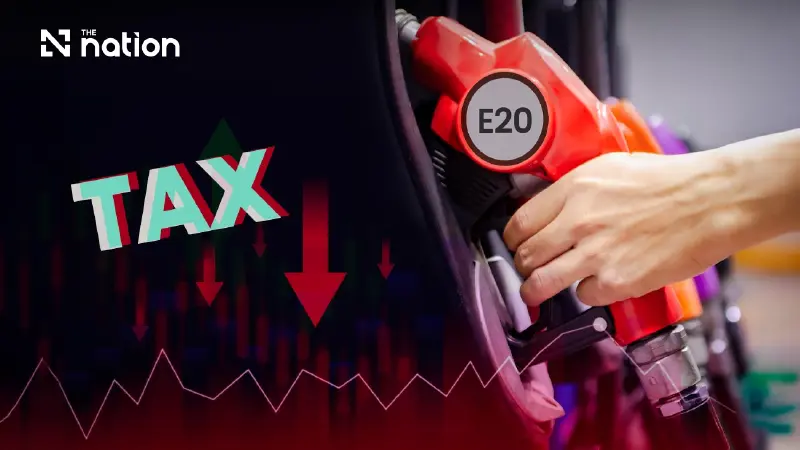


Ekniti outlines price incentives for E20 and B20, with proposed excise relief intended to benefit Thai sugar cane, cassava and oil palm growers.
- The Thai government is considering cutting excise taxes on biofuels, specifically E20 and B20, to make them cheaper than fully imported diesel.
- The tax relief is intended to directly benefit local farmers who grow the crops used for biofuel production, such as sugar cane, cassava, and oil palms.
- A primary motivation for the policy is to reduce Thailand's heavy reliance on foreign energy imports, increase self-reliance, and shrink the national trade deficit.
Finance Minister Ekniti Nitithanprapas outlined the government’s fuel excise tax policy at Government House on Monday (October 26, 2026).
The minister was responding to the prime minister’s remarks about possible tax cuts limited to E20 and biodiesel, alongside calls from various groups for diesel excise tax cuts as well.
Government policy focused on promoting a transition to biofuels, particularly E20 and B20, with ethanol and palm oil used as blending components.
The main aim was to use the excise tax structure to create a “price difference” between diesel sourced entirely from abroad and fuels blended with biofuels, encouraging consumers to switch to alternative energy.
The benefits of the tax relief would flow directly to Thai farmers.
“When it comes to the price of diesel we have to import from abroad, if it is blended with ethanol or palm oil, which we call B20 or E20, we want our tax cuts to benefit farmers who grow sugar cane, cassava and oil palms,” Ekniti said.

According to the minister, Thailand was one of the world’s largest energy importers, with crude oil bought mainly from the Middle East and natural gas also imported.
With war continuing abroad, heavy dependence on foreign energy was having a severe impact and leaving the country with a persistently very large trade deficit.
The government regarded existing approaches as unsustainable and saw self-reliance as the lasting solution, using agricultural products that Thai people could grow and process domestically, including producing ethanol from sugar cane and cassava.
Producing biodiesel from palm oil would also help break the cycle of dependence and significantly reduce energy imports, alongside support for solar power to reduce imports of natural gas used to generate electricity.
On the Oil Fuel Fund’s debt burden of more than THB100 billion and proposals for the Ministry of Finance to consider guaranteeing additional loans, the minister explained that close discussions and coordination with the Ministry of Energy would be needed.
Thailand had several mechanisms to support the public, including the fund and excise taxation.
Ultimately, however, excise tax cuts and spending from the fund were like the government’s “left pocket and right pocket”.
“Whether we cut excise tax or use the Oil Fuel Fund, Thailand is currently running a fiscal deficit. Cutting excise tax increases the deficit and reduces revenue, so the government has to borrow more. But we now believe that giving borrowed money directly to the public is more targeted. That is the rationale for the solar power support programme for the public,” he added.
